…Sudan blames war, Niger blames refineries, Malawi blames vanishing billions
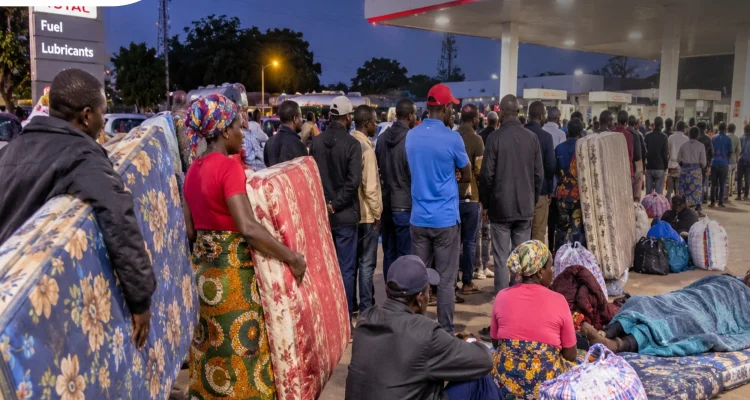
Malawi’s petrol stations have become overnight campgrounds, with desperate motorists spending days and nights in fuel queues as the country’s shortage deepens.
Reports by leading international media outlets, including Reuters, The Guardian and Al Jazeera, have placed Malawi among three African countries hardest hit by the 2026 oil shock. But Malawi’s situation stands out, with motorists reportedly sleeping at filling stations for days while waiting for fuel throughout October and November.
The crisis has attracted international attention, with headlines such as “Malawi motorists sleep at petrol stations” (Reuters, October 13, 2026), “Malawi’s fuel crisis forces desperate drivers to queue for days” (The Guardian, October 21, 2026) and “Malawi’s fuel crisis causes chaos” (Al Jazeera, November 20, 2026). Their reports paint a picture of endless queues, frustrated motorists and rising costs across the country.
Yet beyond the empty pumps and stranded motorists lies a deeper crisis: allegations of corruption involving billions of kwacha and senior government officials across multiple sectors.
Critics have described the incumbent administration’s handling of fuel security as among the worst in Malawi’s history, pointing to prolonged shortages that have turned access to fuel into a daily struggle for ordinary people and businesses.
The only war in Malawi is political. Yet while politicians fight their battles, motorists continue sleeping in queues and filling stations run dry.
At the centre of the crisis is a severe foreign exchange (forex) shortage, compounded by high fuel import costs, a weakening kwacha and logistical bottlenecks. The result is a country struggling to secure a commodity that keeps its economy moving.
With a population of approximately 23 million, Malawi ranks sixth on Global Finance magazine’s 2026 list of the world’s poorest countries by GDP per capita (PPP), at $1,758. Corruption is cited as one of the factors contributing to the country’s economic troubles.
The cost of fuel has made the situation even worse. In January this year, The African Exponent ranked Malawi first in Africa for having the highest fuel prices, a position it has maintained through much of 2026. October rankings again placed the country at the top, with a litre costing approximately $3.23.
Malawi is not alone in facing severe fuel shortages. Sudan and Niger have also been hit hard, but the causes of their crises are markedly different.
Sudan’s fuel crisis is driven by war, now in its fourth year, with global oil shocks, currency collapse and import bottlenecks worsening the situation.
Niger’s problem is largely refinery-driven. Its daily fuel output is reportedly running about 1.4 million litres below demand, forcing the country to seek emergency supplies, including fuel shipped across the border by Algeria in early November 2026.
Malawi’s crisis, however, has a different face.
It has no war destroying its infrastructure and no broken refinery crippling production. Instead, it is battling depleted foreign exchange reserves, expensive imports and a long trail of corruption allegations involving billions of kwacha.
Sudan blames war. Niger blames refineries. Malawi is left confronting a painful question: where are the billions, and why are motorists still sleeping at filling stations?
The only war here in Malawi is political.