
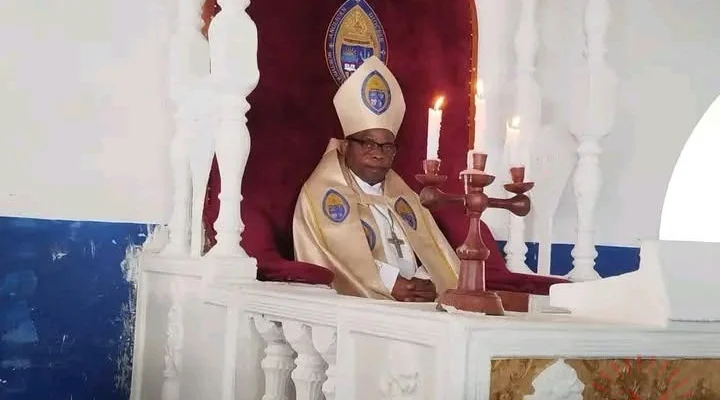
Malawians must stop relying heavily on foreign investors and start putting their own money into businesses that can create jobs and grow the economy, Anglican Bishop of Northern Malawi Dr Fanuel Magangani has said.
Magangani challenged citizens to take a leading role in the country’s economic transformation, arguing that Malawi cannot achieve meaningful development if its people remain spectators while waiting for foreign capital.
He made the remarks on Sunday during the inauguration of St Mark’s Church as the Cathedral of the Anglican Diocese of Northern Malawi in Mzuzu. The development follows the establishment of the Diocese of Likoma, which has taken over St Peter’s Cathedral on Likoma Island.
The bishop identified health, agriculture and education as some of the sectors offering significant investment opportunities, urging local entrepreneurs to turn these areas into profitable ventures that can generate employment and build national wealth.
He said Malawians with financial resources should look beyond waiting for government intervention and consider investing in industries that can increase domestic production and foreign exchange earnings.
His appeal comes as the country continues to grapple with foreign exchange shortages, weak industrial production and heavy dependence on imported goods.
Investing in local manufacturing, agricultural processing, healthcare and education could help keep more money circulating within Malawi while creating opportunities for small and medium-sized businesses.
However, local investors also need an enabling business environment, including access to affordable financing, reliable infrastructure, technology and markets, to compete and expand their operations.
Meanwhile, Bishop of the Anglican Diocese of Upper Shire, the Right Reverend William Mchombo, has called for unity following the creation of the Diocese of Likoma, warning against divisions and unhealthy competition arising from the church’s restructuring.
Mchombo said the creation of new dioceses should strengthen the church’s mission, improve pastoral services and bring religious leadership closer to communities rather than create rivalry among dioceses.
The Anglican Church in Malawi has expanded from four to seven dioceses following the creation of Likoma, Lake Malawi and Central Highlands, alongside the reorganisation of the former Diocese of Lake Malawi.
The seven dioceses are Likoma, Upper Shire, Lake Malawi, Central Malawi, Northern Malawi, Southern Malawi and Central Highlands.