Floods may have washed away businesses in Kaigwazanga, but 17 entrepreneurs are getting a fresh chance to rebuild through a K10 million fund, under a five-year K25 billion project aimed at turning disaster recovery into economic empowerment.
For some families, the floods that hit the area earlier this year meant losing more than property. Small businesses that provided daily income were disrupted, leaving owners struggling to meet household needs and find the resources to start again.
Months later, Hope Fields Initiative (HFI) is offering some of these entrepreneurs an opportunity to regain their financial footing through business financing rather than relying solely on emergency relief.
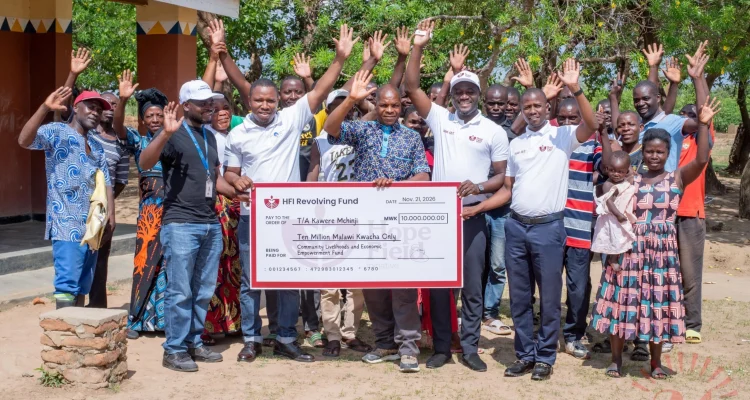
The organisation handed over K10 million through its revolving fund to an initial group of 17 beneficiaries on Saturday, November 21, at Kaigwazanga Primary School under Traditional Authority Kawere in Mchinji.
The funding is intended to help the beneficiaries revive or strengthen their businesses, restore income and gradually rebuild the economic stability they lost following the disaster.
The intervention follows a pledge made by Salvation for All Ministries International (SAMI) founder and president Apostle Clifford Kawinga during HFI’s humanitarian response to the floods earlier this year.
Representing Traditional Authority Kawere, Senior Group Kambandekha thanked Apostle Kawinga for fulfilling his promise, describing the support as timely for a community still working to overcome the effects of the disaster.
For HFI, however, providing the money is only part of the process. Ensuring that the beneficiaries turn the financing into productive business activities is equally important.
HFI Director Gerald Gondwe urged the recipients to use the funds for their intended purpose, emphasising the need for responsible management to achieve the objectives of the initiative.
The Kaigwazanga intervention is part of HFI’s five-year, K25 billion project, which seeks to promote sustainable livelihoods and economic empowerment in communities.
Under the project, the organisation plans to provide K150 million in loans annually through its revolving fund, with repayments expected to allow more entrepreneurs to access financing in subsequent cycles.
Unlike one-off financial assistance, the revolving model is designed to keep resources in circulation, giving more people an opportunity to access capital as previous beneficiaries repay their loans.
This approach places responsibility on recipients to make productive use of the financing while creating opportunities for others who may also need support to establish or rebuild businesses.
For the 17 beneficiaries, the immediate challenge is to turn the K10 million support into functioning businesses capable of generating reliable income and supporting their families.
Their progress will also provide an important measure of whether the revolving fund can deliver its intended impact beyond the initial group.
Ultimately, the success of the intervention will not simply be reflected in the K10 million handed over, but in businesses restored, household incomes recovered and more people gaining access to opportunities through the K25 billion development ambition.