The first clinical trial of an Ebola vaccine in the Democratic Republic of Congo’s worst-ever outbreak began Friday, the World Health Organization announced, as cases surpassed 9,700 and deaths exceeded 4,600.
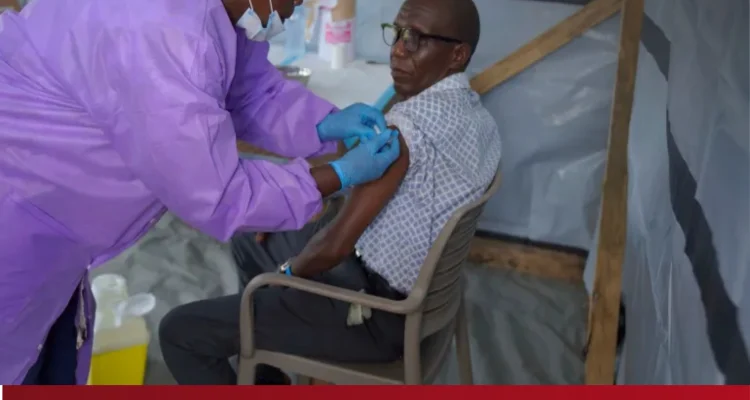
Through X (formerly Twitter), WHO Director-General Tedros Adhanom Ghebreyesus said the first shot of Ervebo, currently approved only for the Zaire strain, was administered in Bunia, capital of northeastern Ituri province and epicentre of the epidemic.
Named “Tumaini” (“hope” in Swahili), the trial will test whether Ervebo offers cross-protection against the Bundibugyo species driving the outbreak, for which no approved vaccines or treatments exist.
Tumaini’s framework is a single trial designed to evaluate the safety, efficacy and immunogenicity of multiple vaccine candidates using a ring vaccination approach, immunising high-risk contacts of confirmed cases.
According to AFP, Two Bundibugyo-specific candidates are expected to join “shortly”: a ChAdOx1 adenoviral vector jab from the University of Oxford and an mRNA vaccine from US-based Moderna. Both are funded by the Coalition for Epidemic Preparedness Innovations (CEPI).
Pregnant women and children aged 12 and older will be included, populations typically excluded from clinical studies.
WHO emergencies director Chikwe Ihekweazu called it a potential milestone: if successful, it would yield the first clear evidence of vaccine efficacy against Bundibugyo virus, transforming outbreak response and future preparedness.
Ebola, spread through bodily fluids, causes haemorrhagic fever and has killed more than 15,000 people across Africa over the past 50 years.
DRC declared its 17th outbreak on May 15; two days later, the WHO triggered a public health emergency of international concern, its second-highest alert level.