

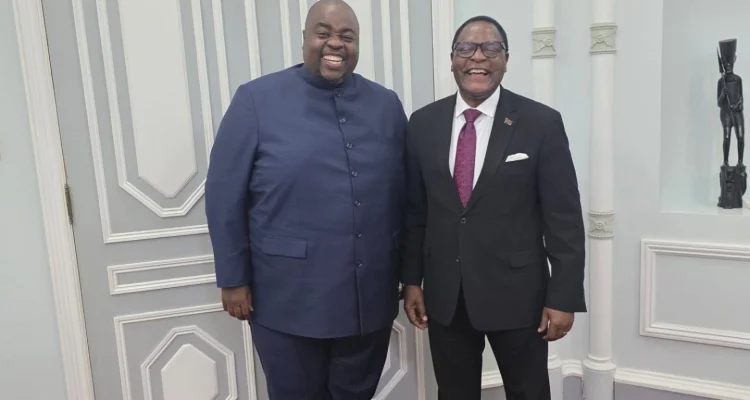
Malawi’s former army commander, Paul Valentino Phiri, has been arrested over alleged illegal arms trafficking, with social media commentators linking the case to controversial Zimbabwean businessman Wicknell Chivayo. The allegations have brought fresh scrutiny to a suspected weapons route into Sudan and the financiers who may have kept it running.
The arrest comes amid separate allegations linking Chivayo to Sudanese gold. His access to presidents across the region adds a political dimension to the story, but the available evidence does not establish that he financed the shipments under investigation.
The Anti-Corruption Bureau (ACB) said retired Valentino Phiri was arrested on Thursday, 1 October, “on five counts relating to abuse of office and dealing in terrorist property”. The bureau said “the charges arise from allegations concerning his role in facilitating illegal arms trafficking in June and July 2025”..
The alleged Malawi route
According to reporting by the Platform for Investigative Journalism (PIJ Malawi), sources alleged that a cargo aircraft carrying heavy weaponry arrived at Kamuzu International Airport, where its cargo was briefly offloaded before being reloaded and flown out.
Documents allegedly identified the Malawi Defence Force as the end-user, while the weapons were reportedly destined for Sudan through Chad. PIJ said it had not seen the alleged intelligence report or the ACB complaint and had not independently established the flight dates, shipping manifests or recipients.
Phiri’s arrest moves the matter into criminal proceedings, but the allegations remain to be proved. The ACB has not publicly identified Chivayo as a financier or participant in the account reviewed for this article.
Chakwera walks in
In August 2021, Chakwera’s office announced that he was expected to travel to South Sudan to witness the arrival of goods exported from Malawi under a trade arrangement. Media reports identified the exports as including maize flour, while subsequent coverage described a deal covering maize, maize flour, groundnuts and beans.
That announcement concerned South Sudan, a separate country from Sudan, and preceded the alleged arms trafficking by almost four years. The reporting reviewed provides no evidence connecting those agricultural exports to the case against Phiri. Chivayo’s meeting with then-president Lazarus Chakwera was reported on 15 July 2025, within the period now under investigation. Contemporary reporting also documented his meetings with Kenyan President William Ruto and Tanzanian President Samia Suluhu Hassan.
The timing provides a point for investigators to examine, but it does not establish involvement in arms trafficking. Without verified shipment dates, it is also impossible to claim that his Malawi visit occurred days before a weapons flight.
A separate allegation came from Kenyan activist Boniface Mwangi. According to Kenya Insights, Mwangi accused Chivayo in June 2026 of helping Ruto move gold smuggled from Sudan through Dubai.
The publication acknowledged that the accusation was not accompanied by flight manifests, customs records, a financial trail or a named source. The allegation therefore remains unsubstantiated and does not establish a connection to the Malawi shipments.
Kenya’s weapons questions
Kenya’s connection to the Sudan conflict extends beyond allegations about Chivayo. In February 2025, the Rapid Support Forces (RSF) and allied groups signed a charter in Nairobi to establish a parallel government.
In June that year, Bellingcat and Kenya’s Daily Nation identified Kenyan-labelled ammunition crates in footage from an alleged RSF depot near Khartoum. Independent weapons specialists examined markings indicating that some ammunition had been intended for Kenya’s Ministry of Defence.
The investigation did not establish precisely how the crates reached Sudan. Kenya’s Ministry of Defence said it did not recognise the crates or inscriptions and distanced itself from the allegations. Kenya also defended its engagement with the RSF as an effort to promote dialogue and peace.
Those findings present a separate weapons trail requiring answers. They do not establish that the Kenyan-labelled ammunition travelled through Malawi or that Chivayo handled it.
Gold financing the war
The relationship between gold and the RSF’s finances is documented more firmly. In 2023, the United States Treasury identified Al Junaid, a company controlled by RSF commander Mohamed Hamdan Dagalo and his brother, as a major source of revenue through gold mining and exports.
In January 2025, Treasury sanctioned UAE-based Capital Tap Holding, saying it had supplied money and military equipment to the RSF. It also identified AZ Gold as a purchaser of Sudanese gold, presumably for the RSF’s benefit, which subsequently transported the metal to Dubai.
The same announcement described companies used to obscure business dealings and bank accounts accessible to the RSF’s procurement director. These findings document a financing and procurement network supporting the RSF, but do not, by themselves, place Chivayo inside it.
Chivayo’s plane crash
Chivayo died in a helicopter crash on 30 September, a day before Phiri’s arrest. Zimbabwean President Emmerson Mnangagwa confirmed his death the following day.
Chivayo’s presidential access was unusually public. In August 2026, he shared a video showing Ruto personally ‘chauffer’ driving him and his wife to a waiting helicopter after a family ceremony in Kenya.
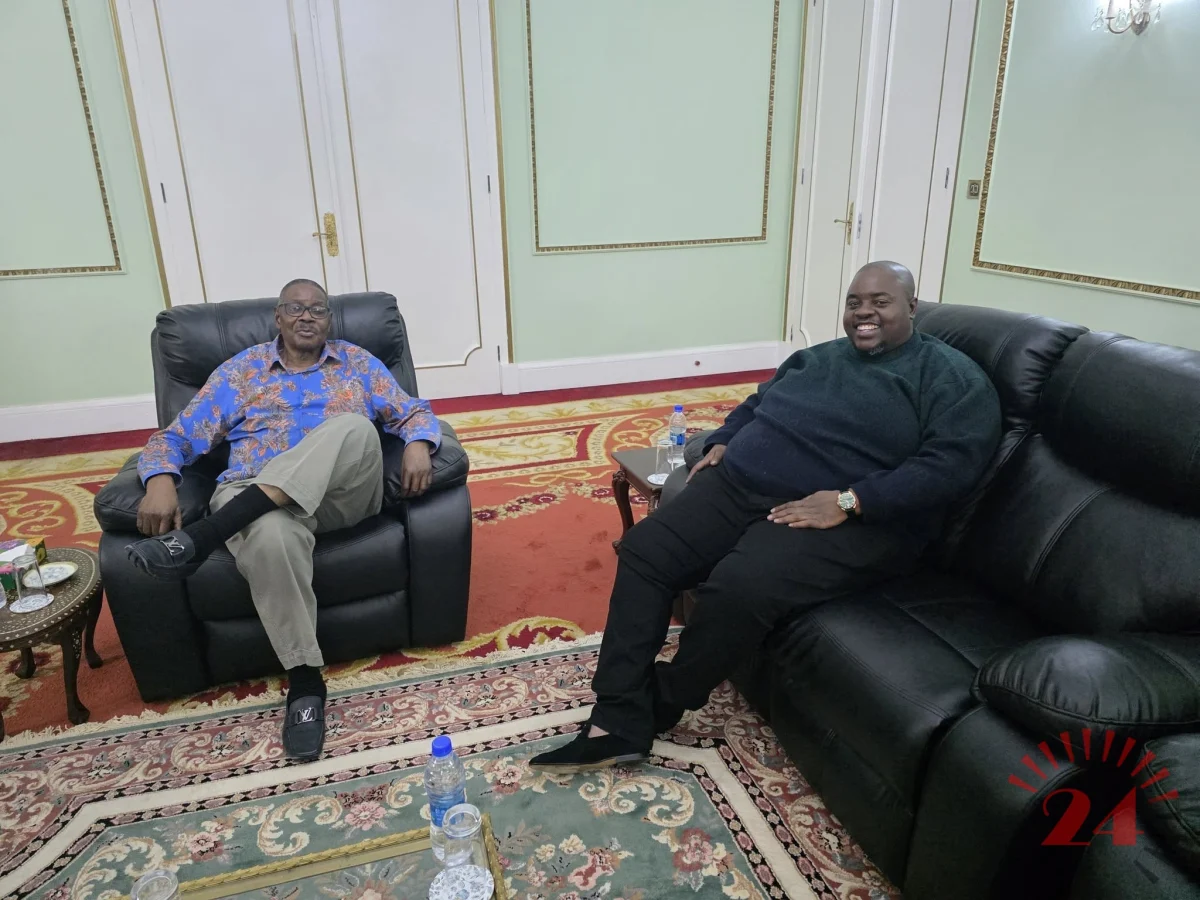
He was a prominent supporter of Zimbabwean President Emmerson Mnangagwa and maintained relationships with Malawi’s political leaders. His meetings with Peter Mutharika were reported in 2019 and again during Mutharika’s current presidency, while his meeting with Chakwera was documented in July 2025.
Those relationships warrant scrutiny where they intersect with public contracts, donations or procurement decisions. Presidential access alone, however, does not establish criminal conduct.
For Malawi, the central questions remain who financed the alleged weapons shipments, who authorised them and whether military end-user documents were used to conceal their destination. Establishing any role for Chivayo will require evidence linking him to the aircraft, cargo, payments or people involved.