

With families stuck in darkness and businesses losing income, civil society organisations say Malawi’s power crisis is being driven by a genuine shortage of electricity, not simply failures at EGENCO and the Ministry of Energy.
The CSOs have defended the Ministry of Energy and Electricity Generation Company (EGENCO) over Malawi’s persistent power blackouts, saying their engagements with the two institutions established that the country is facing a genuine electricity supply deficit.
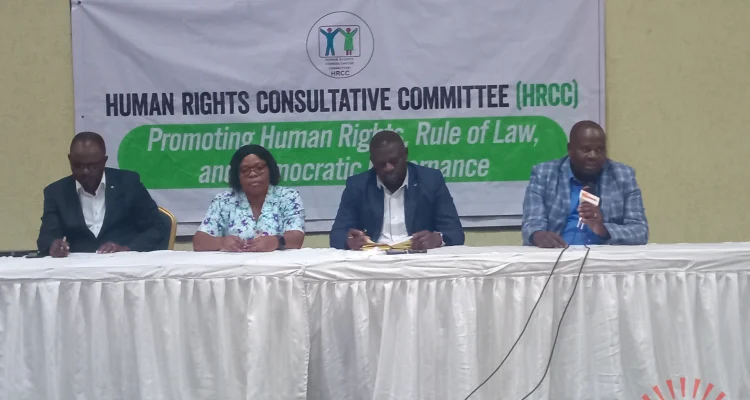
The Human Rights Consultative Committee (HRCC), in collaboration with the Malawi CSO-Led Black Economic Empowerment Movement (MaBLEM) and other CSOs, held a joint briefing in Lilongwe on Thursday following engagements with the Minister of Energy and EGENCO to establish the causes of the ongoing electricity challenges.
HRCC chairperson Robert Mkwezalamba said the engagements, including a visit to EGENCO’s Mapanga Diesel Power Plant, gave the organisations a clearer picture of the challenges facing the country’s electricity generation system.
“The current electricity situation reflects both immediate technical challenges and longer-term structural issues affecting the energy sector,” said Mkwezalamba.
The CSOs said Malawi currently has an electricity supply deficit of approximately 100 megawatts, particularly during morning and evening peak demand periods.
They attributed the deficit to several challenges, including the loss of approximately 20MW at Nkula following a generator failure, reduced output at Kapichira due to transformer limitations, limited availability of diesel generation units and transmission losses within the ESCOM network.
The organisations also said delayed maintenance, lack of critical spare parts and foreign exchange constraints have contributed to the deterioration of generation capacity over several years.
On the controversial issue of diesel generators, the CSOs said their visit to Mapanga showed that EGENCO is focused on rehabilitating its existing diesel generation fleet rather than hiring new generators.
The delegation observed that five of the 10 generators at the plant were operational, supporting EGENCO’s position that the company already owns diesel generation equipment which is being restored to supplement hydropower during peak demand.
The CSOs have therefore called for continued support towards the rehabilitation programme and urged EGENCO and ESCOM to provide regular public updates on maintenance, procurement and restoration works.
Mkwezalamba said the electricity crisis should also be viewed as a long-term problem requiring investment in generation and transmission infrastructure, rather than one that can be resolved through short-term interventions.
The organisations have called on Government to continue supporting rehabilitation efforts, prioritise foreign exchange for critical equipment and accelerate investment in new generation capacity.
They have also urged Parliament to strengthen oversight of the energy sector and called on the media and civil society to ensure that public discussions on electricity are based on verified technical and financial information.
The CSOs said reliable electricity is essential not only for households but also for businesses, agriculture, health, education and industrial development.
The CSOs have defended the Ministry of Energy and Electricity Generation Company (EGENCO) over Malawi’s persistent power blackouts, saying their engagements with the two institutions established that the country is facing a genuine electricity supply deficit.
The Human Rights Consultative Committee (HRCC), in collaboration with the Malawi CSO-Led Black Economic Empowerment Movement (MaBLEM) and other CSOs, held a joint briefing in Lilongwe on Thursday following engagements with the Minister of Energy and EGENCO to establish the causes of the ongoing electricity challenges.
HRCC chairperson Robert Mkwezalamba said the engagements, including a visit to EGENCO’s Mapanga Diesel Power Plant, gave the organisations a clearer picture of the challenges facing the country’s electricity generation system.
“The current electricity situation reflects both immediate technical challenges and longer-term structural issues affecting the energy sector,” said Mkwezalamba.
The CSOs said Malawi currently has an electricity supply deficit of approximately 100 megawatts, particularly during morning and evening peak demand periods.
They attributed the deficit to several challenges, including the loss of approximately 20MW at Nkula following a generator failure, reduced output at Kapichira due to transformer limitations, limited availability of diesel generation units and transmission losses within the ESCOM network.
The organisations also said delayed maintenance, lack of critical spare parts and foreign exchange constraints have contributed to the deterioration of generation capacity over several years.
On the controversial issue of diesel generators, the CSOs said their visit to Mapanga showed that EGENCO is focused on rehabilitating its existing diesel generation fleet rather than hiring new generators.
The delegation observed that five of the 10 generators at the plant were operational, supporting EGENCO’s position that the company already owns diesel generation equipment which is being restored to supplement hydropower during peak demand.
The CSOs have therefore called for continued support towards the rehabilitation programme and urged EGENCO and ESCOM to provide regular public updates on maintenance, procurement and restoration works.
Mkwezalamba said the electricity crisis should also be viewed as a long-term problem requiring investment in generation and transmission infrastructure, rather than one that can be resolved through short-term interventions.
The organisations have called on Government to continue supporting rehabilitation efforts, prioritise foreign exchange for critical equipment and accelerate investment in new generation capacity.
They have also urged Parliament to strengthen oversight of the energy sector and called on the media and civil society to ensure that public discussions on electricity are based on verified technical and financial information.
The CSOs said reliable electricity is essential not only for households but also for businesses, agriculture, health, education and industrial development.