
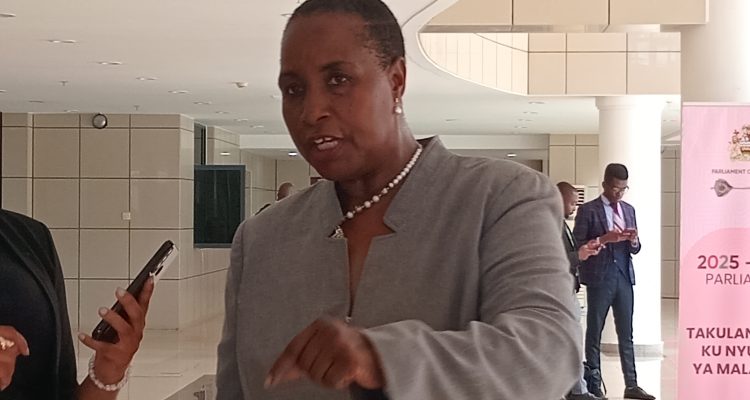
Opposition Malawi Congress Party spokesperson Jessie Kabwira has dismissed the newly presented K10.978 trillion national budget as detached from the realities facing ordinary Malawians, branding it a continuation of what she called a “pakalapakala government.”
Her remarks came moments after Finance Minister Joseph Mwanamvekha tabled the 2026–27 fiscal plan in Parliament on Friday, outlining an ambitious recovery strategy anchored on economic reforms and fiscal consolidation.
Mwanamvekha described the budget as people-centred and transformative, projecting 4.1 percent GDP growth and a reduction in inflation to 15 percent, while trimming the fiscal deficit to 9 percent of GDP.
But Kabwira said the figures offered little comfort to struggling households, arguing that the budget failed to ease the tax burden on citizens already grappling with high VAT, rental taxes, and rising living costs.
She warned that fuel price pressures would ripple across the economy, pushing up transport and commodity prices at a time when many families remain in the grip of hunger and food insecurity.
The minister presented the plan against the backdrop of a public debt stock of K23.9 trillion, equivalent to about 90.9 percent of GDP, with total revenue and grants projected at K8.126 trillion, against an expenditure of K10.978 trillion.
Education received the largest allocation at K1.28 trillion, including K47.6 billion ring-fenced for free public primary and secondary schools. At the same time, while health was allocated K1.02 trillion, with funding for medicines and new dialysis centres.
Agriculture was allotted K931.1 billion, including support for irrigation, mega farms, and the fertilizer subsidy programme, alongside K60 billion to replenish the Strategic Grain Reserve.
Infrastructure projects, including major road rehabilitations and airport upgrades, were allocated K664.4 billion, while a reformed Constituency Development Fund will see K5 billion directed to each constituency.
Kabwira, however, accused the government of regional imbalance in infrastructure spending and criticised what she described as vague CDF guidelines without clear timelines, insisting the budget was neither inclusive nor responsive to the daily struggles of Malawians.