Disband The Flames: Malawi football needs five years of rebuilding, not more excuses
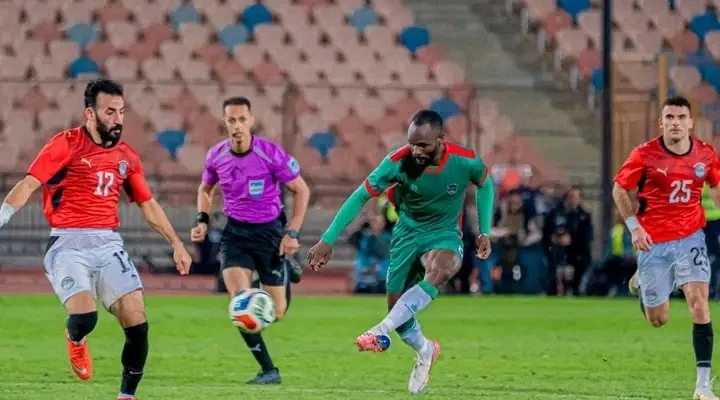
Malawi’s national men’s football team, the Flames, have reached a point where another public apology, another coaching reshuffle and another promise of improvement should no longer be accepted as satisfactory responses to the country’s persistent football disappointments.
The humiliating 5-0 defeat against Egypt in Cairo on Friday, November 13, 2026, has exposed the painful gulf between Malawi’s football ambitions and the actual competitiveness of its senior national team.
Five goals conceded, no goals scored and an overwhelmingly one-sided contest against an Egyptian side that had only recently appointed a new head coach.
If this is what Malawi’s senior national football team has become, perhaps the country needs to stop pretending that another short-term intervention will solve a problem that has been allowed to grow for years.
It is time to consider a radical proposition: Dissolve the current Flames senior national team project, suspend its international competitive participation for five years and rebuild Malawi’s football foundations from the grassroots upwards.
This is not a proposal to abandon football. It is a demand to rescue Malawian football from a cycle of underperformance, excuses, temporary solutions and misplaced national expectations.
*Five goals against a national footballing conscience*
Egypt did not merely defeat Malawi. It exposed the extent of the competitive gap between the two national teams.
Nasser Maher opened the scoring in the sixth minute before Omar Marmoush doubled Egypt’s advantage in the 10th minute.
Mohamed Hany added the third goal in the 39th minute, leaving Malawi with an almost impossible task before the half-time whistle.
Mohamed Salah then completed the punishment with goals in the 83rd and 94th minutes, the latter from the penalty spot.
The final score was Egypt 5, Malawi 0.
Egypt dominated possession and controlled the encounter, leaving Malawi struggling to impose itself against an opponent that dictated the tempo, created opportunities and exploited defensive weaknesses.
What makes the defeat even more difficult to swallow is that Egypt had appointed Ali Maher only six days before the encounter.
A new coach, limited preparation time and a recently reorganised technical setup did not prevent Egypt from dismantling Malawi.
Meanwhile, Malawi entered the contest under Kalisto Pasuwa, a coach expected to bring tactical organisation and renewed competitiveness to the national team.
The question Malawians must now confront is simple: if a newly appointed Egyptian coach could organise his team to produce such a commanding performance, why did Malawi look so vulnerable?
*The Flames have run out of excuses*
For too long, Malawian football has been trapped in a familiar cycle.
A disappointing result is followed by explanations about inadequate preparations, player availability, injuries, tactical difficulties, limited resources or insufficient time together.
Sometimes these explanations are legitimate. Football is complicated, and no national team wins every match.
However, explanations cannot become permanent substitutes for measurable progress.
The public deserves to know what the national team is building, what its long-term football philosophy is and why repeated disappointments have not produced a fundamental change in approach.
The problem cannot simply be reduced to one coach, one goalkeeper or one group of defenders.
The 5-0 defeat requires a much broader examination of player development, tactical preparation, domestic competition, technical leadership, talent identification and football administration.
Even the return fixture against Egypt should not be treated as an opportunity to manufacture another temporary sense of optimism.
Malawians need evidence of structural improvement, not another motivational speech.
*Why should Malawi continue financing a cycle of disappointment?*
The Flames represent the country internationally and attract public attention, institutional support and financial resources.
Their participation in international competitions requires expenditure on preparations, technical personnel, travel, accommodation, allowances, logistics and other operational requirements.
Such expenditure must be accompanied by transparent accountability and measurable sporting objectives.
The question is not whether Malawi should spend money on football.
The question is whether the country’s football resources are being invested in a manner that produces sustainable national-team competitiveness.
If the same structural weaknesses continue appearing in international matches, it becomes reasonable to question whether the current approach deserves another cycle of public investment without fundamental reform.
The country cannot continue treating national-team participation as an achievement in itself.
Qualification ambitions must be supported by a credible football development system.
*Dissolve the current project and rebuild from the grassroots*
My proposed solution is radical, but Malawi needs a serious national football conversation rather than another round of predictable disappointment.
The Football Association of Malawi (FAM), together with the Ministry responsible for Sports, should consider a five-year national football reconstruction programme built around the following proposals.
1). Dissolve the current senior national team structure
The existing Flames project should be formally wound down and subjected to a comprehensive performance review.
This should include an independent assessment of the technical department, player selection, coaching structures, talent identification and football administration.
No individual should be automatically guaranteed a place in the next national-team project because of reputation, experience or previous service.
2). Suspend senior national-team participation for five years
Malawi should consider a five-year suspension of the senior men’s team’s participation in international competitive tournaments while a comprehensive rebuilding programme is implemented.
This would be a controversial decision, but it would force the country to confront the depth of its football development challenges.
However, such a suspension should only proceed after consultation with CAF and FIFA, with full consideration of membership obligations, sanctions, funding implications and the consequences for Malawi’s international football standing.
It should not mean abandoning youth football, women’s football, domestic competitions or grassroots development.
3). Invest heavily in grassroots football
Instead of concentrating national resources on preparing the senior team for one international fixture after another, Malawi should prioritise football development at district, community, school and academy levels.
Every district should have a structured youth football development programme.
Primary and secondary schools should become important centres of talent identification.
Local academies should receive technical support, qualified coaches, equipment and properly maintained training facilities.
The country should establish a sustainable pathway through which talented young footballers can progress from community competitions into district teams, regional selections and eventually national representation.
4). Establish a new national football development philosophy
Malawi needs a recognisable playing identity that is developed consistently from youth football to the senior national team.
This should include technical ability, tactical intelligence, physical conditioning, discipline, ball retention, defensive organisation and attacking creativity.
A national football development programme should not change direction every time the country appoints a new coach.
5). Demand accountability from football administrators
FAM must explain how national-team development priorities are established, how resources are allocated and how performance is evaluated.
Football administration should be measured against transparent targets rather than the number of tournaments attended or international fixtures played.
The country needs measurable improvements in youth development, coaching standards, domestic competition and international competitiveness.
*The November 17 return match must not become another public-relations exercise*
The Flames are scheduled to face Egypt again on Tuesday, November 17, 2026, at Bingu National Stadium in Lilongwe, with kick-off scheduled for 3:00 p.m. Malawi time.
The return fixture presents an opportunity for the players and technical team to respond to the Cairo humiliation.
But Malawians should not be distracted by the possibility of a temporary improvement in the scoreline.
Even if the Flames win the return encounter, one result cannot erase the structural questions raised by the 5-0 defeat.
The country needs to examine the entire football development system rather than allowing a single victory or defeat to determine the national conversation.
Egypt’s five goals should become a catalyst for serious institutional reflection.
*Five years to build a team worthy of the national colours*
A five-year reconstruction programme would require patience, political will, competent football administration and sustained investment.
During that period, Malawi should develop competitive district leagues, strengthen school football, establish properly managed academies and improve the quality of domestic coaching.
The country should also introduce regular assessments of emerging players and provide opportunities for talented footballers to compete in regional and international youth competitions.
The ultimate objective should be to return with a senior national team built around technically developed, tactically intelligent and internationally competitive players.
The Flames should represent the culmination of a functioning football development system, not an institution expected to manufacture success from inadequate foundations.
*Malawi deserves more than football nostalgia*
Malawi has a proud football history, passionate supporters and generations of talented footballers.
The problem is not that Malawians lack an appetite for football or that the country has no potential.
The real question is whether the institutions responsible for developing that potential have established a system capable of producing sustained international competitiveness.
Supporters cannot be expected to celebrate participation while repeatedly watching their national team struggle against stronger opponents.
Nor should every disappointing performance be followed by another promise that things will improve next time.
Enough of the excuses. Enough of the temporary solutions. Enough of treating national-team participation as an achievement.
The 5-0 humiliation in Cairo should force Malawi to confront an uncomfortable possibility: perhaps the current approach to developing the Flames has exhausted its usefulness.
It is time to put grassroots football ahead of international appearances, long-term development ahead of short-term public relations and institutional accountability ahead of endless explanations.
If that means rebuilding the senior national-team project from scratch, the country should have the courage to examine that option seriously.
Malawi does not need another Flames team assembled merely to fulfil international fixtures. It needs a properly developed national football team capable of competing with Africa’s best.
Five years of serious rebuilding may be a difficult sacrifice, but continuing to repeat the same mistakes without confronting their underlying causes is not a sustainable alternative.