
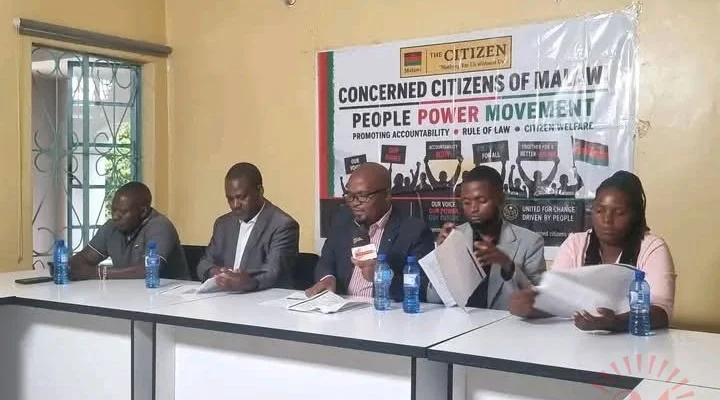
The planned nationwide demonstrations over fuel shortages and persistent electricity blackouts have been postponed after the organisers opted to engage government in dialogue.
The Concerned Citizens of Malawi-People Power Movement (CCM-PPM) had planned to hold the protests on Tuesday, November 17, 2026, to pressure government to address the energy crisis affecting households and businesses.
Speaking during a press briefing in Blantyre, the movement’s co-chairperson, Oliver Nakoma, said the decision followed indications that government was willing to meet the organisation and discuss its concerns.
Nakoma, however, warned that postponing the demonstrations did not mean the movement had abandoned its demands.
“Postponement of the demonstration is a strategic decision from our end, not surrender,” he said.
CCM-PPM had planned to mobilise protesters in Blantyre, Zomba, Lilongwe and Mzuzu, while encouraging people in other districts to present peaceful petitions through local authorities.
Movement disowns unauthorised protests
Nakoma also distanced CC-PPM from any demonstrations that individuals or organisations might organise using its name despite the postponement.
He said the movement would not take responsibility for protests that had not been authorised by its leadership.
The clarification is intended to distinguish demonstrations officially organised by CC-PPM from activities initiated independently by other groups.
Energy crisis remains unresolved
Despite the postponement, fuel shortages and electricity blackouts continue to disrupt transport, businesses, industries and household activities.
Limited foreign currency availability has also affected the country’s ability to finance fuel imports, adding to the pressure on an already struggling energy sector.
CC-PPM had planned to use the demonstrations to demand practical and sustainable solutions, arguing that the shortages were affecting the cost of living and economic productivity.
Meanwhile, the Human Rights Defenders Coalition (HRDC) has separately announced plans to demonstrate on November 17 over fuel shortages and electricity blackouts.
This means CC-PPM’s decision does not automatically affect protests organised independently by HRDC or other organisations.
Government dialogue faces credibility test
The decision to pursue dialogue now puts government under pressure to demonstrate that its willingness to engage the movement will lead to tangible improvements.
For households struggling with electricity interruptions and transport operators affected by fuel shortages, the key question is whether the proposed discussions will produce solutions or simply delay further protests.
CC-PPM faces the task of maintaining pressure on government while giving dialogue an opportunity to address the grievances behind its planned demonstrations.
Nakoma’s position is that the movement has chosen negotiations as its next course of action, not abandoned its campaign.
The outcome of the proposed engagement will determine whether the postponement marks progress towards resolving the energy crisis or merely a temporary pause in the protests.