
…accuses APM of shielding the powerful
..says Ansah being sidelined
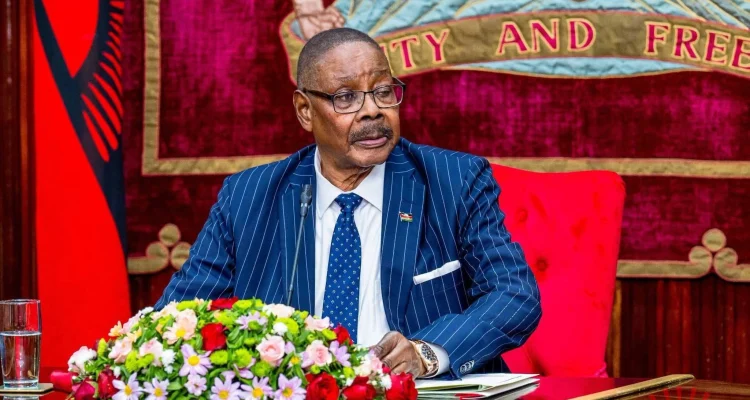
It is a brutal verdict on President Peter Mutharika’s first year in power.
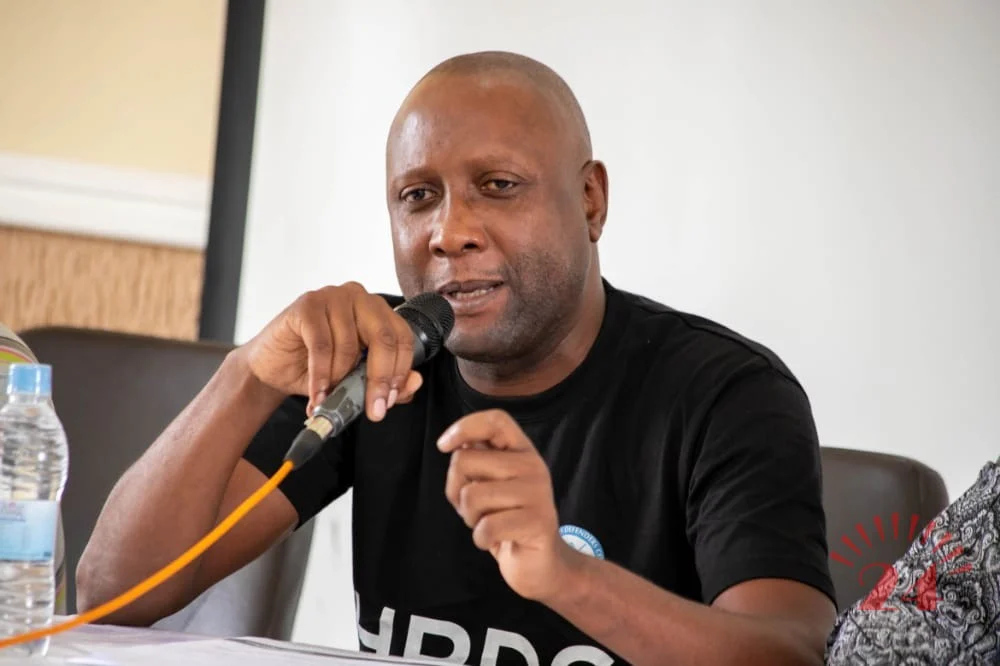
While the administration points to progress, the Human Rights Defenders Coalition (HRDC) has painted a far darker picture, accusing government of shielding the powerful, silencing critics, weakening independent institutions and leaving ordinary Malawians to bear the cost of failing services.
In a damning assessment of the administration, HRDC accuses government of protecting politically connected figures while squeezing ordinary Malawians with higher taxes, failing services and rising economic hardship.
The coalition also says Mutharika has sidelined First Vice-President Jane Ansah, weakened independent institutions and allowed political interference to creep into Parliament, the Malawi Electoral Commission and law enforcement.
It says the growing failures raise a bigger question: whether Mutharika is actually in control of the government he leads.
“Today, HRDC’s assessment of his first year in office finds a government that has broken that promise, persecuted its opponents, silenced its critics, sidelined its own Vice-President, overridden Parliament and the Malawi Electoral Commission, and presided over the collapse of basic services,” the coalition said.
HRDC said the administration had failed to match Mutharika’s warning at Kamuzu Stadium on October 4, 2025, that the “honeymoon of plundering government resources is over”.
The coalition cited the discontinuation of several corruption cases involving figures linked to the government, including former Finance Minister Joseph Mwanamvekha and Henry Mathanga, as well as the K5 billion Cementgate case involving Deputy Minister of Homeland Security Norman Chisale and others.
It further questioned why some people who were arrested in corruption-related cases have since secured senior government positions, citing Peter Mukhito, Roza Mbilizi and Mathanga as examples.
“Government has gone further than simply dropping the cases, it has rewarded the accused,” HRDC said.
The coalition also raised fresh allegations involving billions of kwacha at the Amaryllis Hotel, Blantyre Water Board, Southern Region Water Board, ESCOM and NOCMA, while questioning the circumstances surrounding a multi-million-kwacha contract allegedly awarded by SMEDI to a newly registered company.
HRDC said the Anti-Corruption Bureau’s own leadership crisis was worsening the problem, arguing that the institution has operated without a substantive Director General for nearly two years.
The coalition also accused government of using public institutions as political rewards, alleging that defeated DPP loyalists had been appointed to senior positions at water boards and the National Youth Council of Malawi without transparent, merit-based processes.
“Public institutions are increasingly being treated as rewards for political loyalty rather than as platforms for public service,” HRDC said.
The coalition further accused government of shrinking civic space, pointing to the arrest of CDEDI executive director Sylvester Namiwa on treason and false-news charges and alleged threats surrounding HRDC’s planned demonstrations along the Karonga-Chiweta Road.
HRDC said Ansah’s treatment was another sign of the administration’s growing accountability crisis, alleging that the First Vice-President had been excluded from major national events, stripped of key portfolios and stopped from receiving Cabinet meeting invitations.
The coalition said Ansah’s office budget had also fallen from K11 billion in the revised 2025/26 budget to K6.81 billion in 2026/27.
HRDC said Parliament had also come under pressure after Speaker Sameer Suleman proposed 12 joint committees to investigate troubled public institutions before the committees were suspended following legal action and a meeting between Suleman and Mutharika.
It further accused government of undermining the independence of the Malawi Electoral Commission, saying the dispute over MEC’s proposed relocation and the sealing of its Njewa warehouse had contributed to the postponement of fresh elections in Nsanje South and Mangochi East.
The coalition said ordinary Malawians were paying the price for the wider governance failures through prolonged power cuts, water shortages, fuel queues and passport backlogs.
“Over 150,000 passport applications sit backlogged against roughly 274,000 received,” HRDC said, adding that Lilongwe and Blantyre were facing daily water deficits of 32 million and 28 million litres respectively.
The coalition also attacked the government’s austerity drive, arguing that ordinary Malawians were being asked to pay more taxes while government continued spending on luxury vehicles, foreign travel and other expenses.
HRDC cited the increase in VAT from 16.5 percent to 17.5 percent, a new 40 percent top income tax band and additional charges on bank transfers, mobile money and rental income.
It also questioned the cost and purpose of Mutharika’s four private trips to South Africa since taking office, saying the President had spent more than 50 days abroad at an estimated charter cost of K250 million per trip without publicly disclosing the full expenses.
The coalition further said the government’s free secondary education promise had failed to remove the financial burden from families, with guardians still paying significant boarding and development fees.
On security, HRDC said human trafficking, violent crime and alleged corruption within law enforcement showed a security system under severe strain.
The coalition cited allegations of police and immigration officials being linked to an Ethiopian smuggling syndicate operating from Dzaleka Refugee Camp, as well as the killing of obstetrician-gynaecologist Victoria Bobe and the abduction of a British national in Blantyre.
It also accused government of politically persecuting opposition figures, saying at least eight opposition politicians were detained for more than 30 days without charge after the 2025 elections.
HRDC said the High Court ruled the detentions unconstitutional in January 2026, but government had not brought charges or prosecutions against the affected politicians.
“The question is no longer simply what has gone wrong, but whether President Mutharika is exercising the leadership required to govern Malawi,” the coalition said.
HRDC has called for the restoration of independence to the offices of the Director of Public Prosecutions and the Anti-Corruption Bureau, transparent appointments to parastatals and respect for Parliament and MEC.
It has also demanded presidential answers on Ansah’s treatment, transparent reporting on the electricity, water, fuel and passport crises, evidence of austerity savings and an end to what it describes as the harassment and silencing of human rights defenders.
The coalition said it would continue pushing for respect for human rights and accountability under the Mutharika administration.