

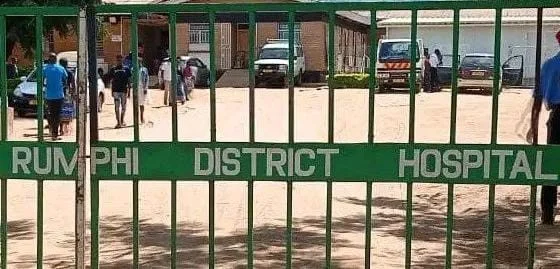
Patients at Rumphi District Hospital are bearing the brunt of persistent power blackouts, with unreliable electricity disrupting services at the district’s key referral facility.
Rumphi District Council has says frequent electricity blackouts and the absence of a reliable backup power system at Rumphi District Hospital, which also serves as a referral facility for the district, are negatively affecting the delivery of essential health services.
The council says prolonged power interruptions are leaving the hospital without electricity, disrupting operations across the facility and creating serious challenges for health workers attending to patients.
Rumphi District Council Chairperson Alfred Butao told Malawi24 that the situation is particularly concerning because the hospital relies heavily on electricity to support a wide range of critical services.
Butao said whenever the power supply is interrupted, the entire hospital is plunged into darkness, making it difficult for health workers to continue performing their duties and potentially putting patients’ lives at risk.
“Whenever electricity goes out, the entire facility is plunged into darkness,” Butao said.
He said the lack of a dependable alternative source of electricity means hospital operations are significantly affected whenever the national power grid fails.
The power disruptions can affect the smooth delivery of services that require a continuous electricity supply, including patient care, lighting, the operation of medical equipment, laboratory services and other essential hospital activities.
Butao said the district council is now considering engaging the area’s four Members of Parliament to explore possible solutions to the power challenge at the hospital.
He said the council intends to discuss the situation with the legislators and identify ways in which they can collectively support efforts to ensure that the hospital has a dependable backup power supply.
Meanwhile, Rumphi District Civil Society Network Chairperson Jaih Kanyondo has called on the council to take urgent action by purchasing and installing a reliable backup power system at the hospital.
Kanyondo said ensuring that the hospital has an alternative source of electricity should be treated as a priority because interruptions in power supply can have serious consequences for patients.
He urged the council to invest in a suitable backup system capable of keeping essential hospital operations running whenever electricity from the national grid is unavailable.
According to Kanyondo, such an intervention would help protect patients, support health workers and ensure that vital services are not brought to a standstill because of power outages.
The concerns come amid continued challenges faced by health facilities across Malawi in accessing reliable electricity, with frequent outages potentially affecting the quality and safety of healthcare delivery.
Hospitals require uninterrupted power to provide adequate lighting, operate essential medical equipment, preserve certain medicines and laboratory materials, and ensure safe patient care, particularly during emergencies and at night.
Frequent blackouts can therefore place additional pressure on health workers, who are required to continue providing services under difficult conditions.
A dependable backup system, such as a generator or an appropriate alternative energy solution, could help minimise disruptions and ensure that critical departments remain operational during power outages.
The Rumphi District Council’s planned engagement with the four Members of Parliament is expected to provide an opportunity for local leaders and other stakeholders to explore funding and other possible interventions to address the problem.
For residents who depend on Rumphi District Hospital for healthcare services, reliable electricity is not merely an infrastructure concern but an essential component of ensuring timely and safe access to healthcare.
The council and civil society organisations are therefore calling for concrete action to ensure that power interruptions no longer compromise the delivery of essential health services at the district’s main public hospital.