


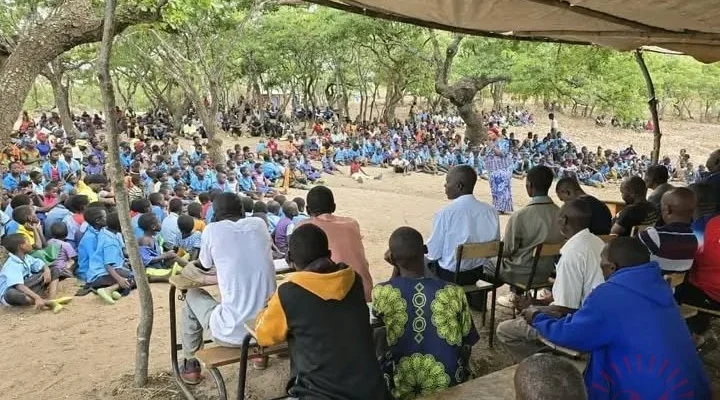
Malawi is short of K324.8 billion needed to prepare for a potentially devastating El Niño weather phenomenon, raising fears that millions of people could face hunger if the country fails to act before the effects of prolonged dry spells hit.
The 2026/27 National El Niño Preparedness Plan, published by the United Nations on October 5, 2026, estimates that Malawi needs K488.5 billion to implement planned interventions. However, only K163.7 billion has been mobilised from government, development partners, humanitarian organisations and non-governmental organisations, leaving a deficit of nearly two-thirds of the required funding.
The funding shortfall comes as the United Nations Office for the Coordination of Humanitarian Affairs (OCHA) warns that Malawi remains at the “in readiness” stage, meaning preparedness plans have been developed but anticipatory action has not yet been formally activated. OCHA cautions that money released after October could arrive too late to prevent widespread crop failures.
The agency has urged government and its partners to use the remaining time to build reserves and finance early interventions that could protect livelihoods and essential services before the weather conditions deteriorate.
The potential consequences are severe. Malawi’s cereal harvest could fall by as much as 30 percent during the 2026/27 farming season, potentially leaving at least four million people in need of humanitarian assistance. The resulting food shortages could worsen malnutrition and force government and aid agencies to spend more on emergency food relief. UNICEF has separately warned that Malawi could experience its strongest El Niño on record, putting children and women at particular risk.
Africa Risk Capacity (ARC) Group Director General Jean-Chrysostome Ngabitsinze has called on African governments to move away from relying on emergency funding after disasters strike, arguing that countries need stronger agricultural insurance and pre-arranged financing to respond to climate shocks.
Ngabitsinze has stressed the importance of linking early-warning systems to financing arrangements that release resources once predetermined climate-risk thresholds are reached. “We may not be able to prevent the next drought. But we can change what happens when it comes,” he said.
Chief Secretary to the Government Justin Saidi has also appealed to the private sector to help close Malawi’s preparedness funding gap, saying government cannot meet the entire cost alone.
“We need more partners to ensure Malawi is adequately prepared before the weather shock worsens,” Saidi said during a government-private sector engagement in Lilongwe.
Saidi described the preparedness plan as a national commitment that requires contributions from businesses, development partners and other organisations.
Malawi Confederation of Chambers of Commerce and Industry (MCCCI) president Ronald Ngwira has warned that the looming weather threat extends beyond agriculture, saying disruptions to production could trigger higher food prices, reduced household incomes, increased food imports and further pressure on foreign exchange.
“El Niño is an economic risk,” Ngwira said, calling for businesses to work with government to reduce the potential damage. “This calls for the private sector and businesses to be part of the solution.”
Minister of Natural Resources Patricia Wiskes has urged government departments to turn weather forecasts into practical interventions rather than allow the warnings to cause panic.
“Malawi’s experience with climate extremes, including the devastating impacts of Cyclone Freddy and prolonged dry spells, demonstrates that failure to act on forecasts can increase the cost of disasters,” Wiskes said.
She called on the agriculture, health, disaster management, water, energy and transport sectors to incorporate scientific forecasts into their preparations.
Meanwhile, agricultural companies and industry players are stepping up efforts to alert farmers to the expected weather conditions. JTI Leaf Malawi is among the companies intensifying early-warning awareness among contracted growers, while the Tobacco Commission says industry players have agreed to increase farmer engagement through extension services and mass media to promote recommended farming practices.
Department of Disaster Management Affairs (DoDMA) spokesperson Lucy Bandazi has acknowledged that funding remains uneven across sectors, with some critical areas receiving little support despite encouraging contributions towards food security interventions.
“At the same time, the overall picture is uneven, with clusters such as health, nutrition, energy, and water and sanitation receiving very little support,” Bandazi said.
She said government was continuing to engage development partners and expressed confidence that collaboration would help address the outstanding requirements.
With the 2026/27 farming season underway, Malawi faces a race against time to turn preparedness plans into funded action before prolonged dry spells destroy crops, deepen food insecurity and leave millions of people dependent on emergency assistance.
Editorial note: The strongest angle is the gap between the money needed and what has actually been secured. I have brought that forward and reduced some institutional language. Before publication, verify the October funding position, the claim that anticipatory action has not been activated, and the attribution of the quotations, particularly the statement by Patricia Wiskes.







Mesa ndalama mwapatsa amwenye zija izi in the name of compensation