
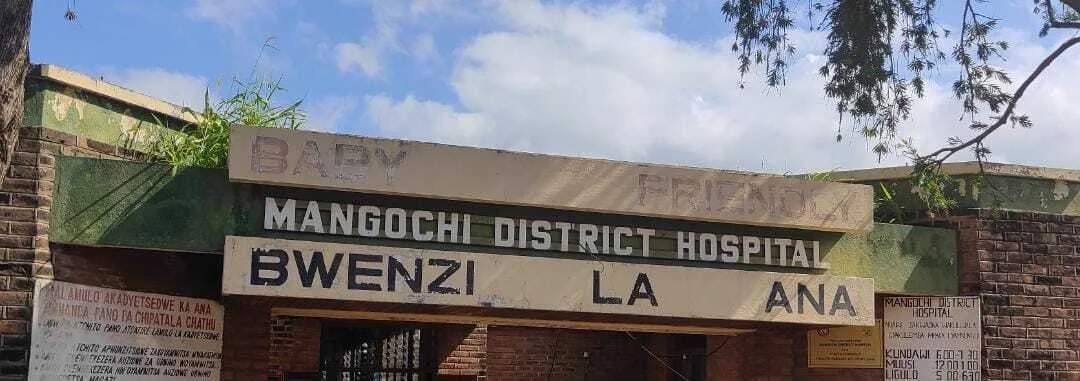
Whatever men and women in Mangochi are doing after dark, it is keeping the district’s labour wards busy. Up to 1,800 babies are born in Mangochi District every month, and the district hospital alone delivers about 60 a day, roughly one every 24 minutes, in a maternity wing so crowded that some mothers have been sleeping on the floor.
“Across the district, we record between 1,200 and 1,800 deliveries every month, and that is a lot of work for our maternal and child health workers,” Mangochi District Health Office Senior Nursing and Midwifery Officer Ignasio Jowasi has been quoted as saying by The Sunday Times.
The district figure covers Mangochi District Hospital and the several health centres and private clinics it oversees; 44 health facilities in the district provide maternity care. The hospital itself attends to between 80 and 100 pregnant women every day and treats an average of 50 babies daily in its nursery ward, reported The Sunday Times. Jowasi told the paper that close to 20 newborns die in the district each month.
The numbers have climbed since July, when The Nation reported that Mangochi district director of health and sanitation services Henry Chibowa said: “We record more than 50 deliveries a day and admit over 500 patients in a facility designed for 170.”
Teenage mothers
Teenage pregnancy is a major worry. According to Jowasi, Mangochi’s adolescent pregnancy rate is 42 percent against a national rate of 32 percent, and the district recorded about 60 teenage pregnancies in September alone.
Mangochi and Mzimba North are piloting care designed for pregnant adolescents under a project funded by the French Embassy and led by the Ministry of Health, with technical support from Nutrition International. It runs until July 2027 and covers 22 of the 44 health facilities in Mangochi that provide maternity care.
Too many mothers, too few midwives
The strain came to national attention in July, when Minister of Health and Sanitation Madalitso Baloyi, a trained midwife, spent a night on duty in the hospital’s maternity wing. Baloyi said 48 babies were delivered during the 24 hours she was there.
She found some patients sharing beds and others sleeping on the floor and in corridors. The antenatal ward, with 25 beds, was holding about 300 women, according to the Malawi Guardian.
Senior nursing officer Olive Ngwira said the hospital has 110 midwives across eight sections against a requirement of about 300. The labour ward has 28 midwives working in shifts of six, and some shifts run with only four.
The visit followed concerns raised in Parliament by Mangochi Municipal MP Rodrick Chiwaya over staff shortages, limited bed space and the lack of a guardian shelter. Chiwaya had asked government to expand the maternity wing.
Baloyi said the Ministry of Health would recruit more health workers. She also urged Mangochi District Council to use Constituency Development Fund money to expand wards and improve sanitation, and said the ministry was looking for development partners to help with infrastructure and theatre equipment.
Relief from Makanjira
Some pressure is expected to shift to the new Makanjira Comprehensive Emergency Obstetric and Newborn Care facility, built by the Embassy of Iceland at a cost of over K2.4 billion. The facility, which offers labour and delivery, surgery, antenatal and postnatal care, is expected to serve about 120,000 people, many of whom struggle to reach the district hospital on the poor Mangochi-Makanjira road.
A fast-growing country
Mangochi had 1,148,611 people at the 2018 Population and Housing Census, the highest in the Southern Region. Nationally, the population stood at 17.6 million in 2018. The National Statistical Office’s projections, based on that census, expect it to reach 33.6 million by 2050. The United Nations’ World Population Prospects 2024 is higher: it puts Malawi at about 22.8 million this year and expects the country to pass 30 million before 2040 and reach about 37 million by 2050.
Malawi has cut its maternal deaths sharply in the past decade. The 2024 Demographic and Health Survey puts the maternal mortality ratio at 224 deaths per 100,000 live births, down from 439 in 2015/16. Government’s target is under 70 by 2030.