
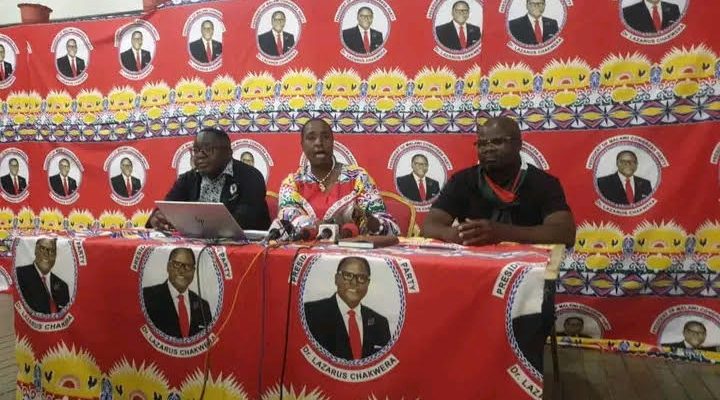
Recent remarks by Malawi Congress Party (MCP) spokesperson Jessie Kabwira, condemning the arrest of MCP members, raise serious concerns about political double standards and respect for the rule of law in Malawi.
Such statements risk undermining public confidence in law enforcement institutions and democratic accountability.
It must be stated clearly and without ambiguity: no political party, including the MCP, has the authority to instruct the Malawi Police Service on whom to arrest or not arrest.
The police are constitutionally mandated to investigate and arrest any individual reasonably suspected of committing a crime, regardless of political affiliation.
In a democracy governed by the rule of law, no one is above the law.
Ironically, Jessie Kabwira is well aware that during the Lazarus Chakwera-led MCP administration, many Malawians were arrested under similar circumstances, particularly on allegations related to cybercrime, public order, and offensive communication.
At the time, several of these arrests attracted widespread criticism from civil society and the media.
Nevertheless, the MCP government consistently defended these actions, insisting that the police were acting lawfully and independently.
During President Chakwera’s tenure, several Malawians experienced arrest, detention, or police summons under laws related to cybercrime and public order.
Journalists and online commentators were among those targeted, often for social media posts or publications critical of government officials. A notable example is investigative journalist Gregory Gondwe, who was arrested in 2021 over allegations linked to cyber harassment following the publication of stories critical of senior government figures.
In addition, social media activists and ordinary citizens were picked up from distant districts such as Karonga and Mzimba and transported to Lilongwe for questioning, frequently under cybercrime-related accusations. These incidents sparked national debate about the selective application of the law and the use of state institutions to intimidate critics.
Opposition supporters and government critics were also arrested or summoned by police over statements deemed offensive to the President or public officials, particularly before the repeal of Section 137A of the Penal Code and through the continued use of cyber laws.
At that time, the MCP administration maintained that the police were merely “doing their job” and that anyone arrested was required to answer to the law. That same standard must apply today, without exception.
It is, therefore, disingenuous for Jessie Kabwira and the MCP to now portray police arrests as political persecution simply because MCP members are affected.
If the party believed in the independence and mandate of the police when others were being arrested, it cannot now claim abuse of power when the same legal processes are applied to its own members. Democracy does not permit selective outrage.
The correct position in a constitutional democracy is not to shield party members from arrest, but to allow the law to take its course while ensuring that the constitutional rights of all suspects are fully respected.
The Malawi Police Service must remain independent and professional, free from political pressure or intimidation.
Political parties should refrain from issuing statements that appear to direct, threaten, or undermine law enforcement agencies.
If any MCP member believes they have been wrongfully arrested, the courts, not political press conferences, are the proper avenue for seeking justice.
The rule of law is only meaningful when it is applied equally to everyone: government officials, opposition members, ruling party supporters, and ordinary citizens alike.