
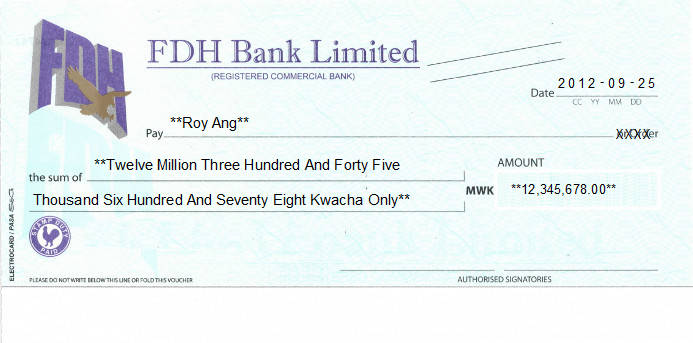
Malawi has taken a decisive step toward phasing out cheque payments as the country’s banking sector accelerates its shift to digital financial services, citing declining cheque usage and growing confidence in electronic alternatives.
The Bankers Association of Malawi (BAM) and the Reserve Bank of Malawi (RBM) confirmed the move in a joint update, outlining plans to gradually discontinue cheques in favour of faster, safer and more efficient digital payment systems.
The transition is anchored in an ongoing review of the Bills of Exchange Act, the law that currently governs cheque transactions.
According to the two institutions, amendments to the legislation are intended to modernise Malawi’s payments framework by accommodating technological advancements, strengthening consumer protections, reducing fraud risks and resolving long-standing ambiguities in the existing law.
Authorities aim to have the Bills of Exchange (Amendment) Act presented and enacted during the next parliamentary session.
BAM Chief Executive Officer Lyness Nkungula and RBM Governor, MacDonald Mwale, who jointly signed the statement, said a clear timeline for the eventual cessation of cheque usage will be announced once the legislative process is complete.
As the legal reforms progress, commercial banks are stepping up efforts to migrate customers to digital platforms.
The sector says electronic payments offer significant advantages, including improved operational efficiency, enhanced transaction security and stronger alignment with Malawi’s national objectives on financial inclusion and the development of a digital economy.
Banks have also pledged to provide tailored support to customers to ensure a smooth transition and sustained access to reliable alternative payment services.
For now, authorities have reassured the public that cheques remain a valid and accepted means of payment.
Their use will continue until all legal, business and administrative arrangements required for a full transition to digital payments are firmly in place.