


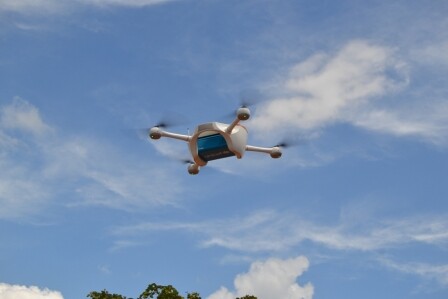
Government has partnered United Nations children’s fund (Unicef) to test the use of Unmanned Aerial Vehicles (UAVs or drones) in HIV testing of infants.
Infants who have HIV positive mothers need to be tested early so that they can receive treatment. However, in Malawi only half of babies with HIV have access to treatment, and their initial diagnosis is often delayed because of the poor state of the roads.
It currently takes an average of 11 days to get blood samples from Malawi’s remote health centres to a central laboratory for testing for the AIDS virus and a further eight weeks for the results to be delivered back.
That is where drones comes in; they will dramatically reduce the waiting time for the blood test results and more young children will be able to start HIV treatment.
The first successful test flight completed a 10km route unhindered travelling from a community health centre to the Kamuzu Central Hospital laboratory.
This is a positive development as drones can solve logistical challenges in health delivery in a country where 10,000 children died from HIV-related diseases in 2014. In the same year, nearly 40,000 children in Malawi were born to HIV positive mothers.
“This innovation could be the breakthrough in overcoming transport challenges and associated delays experienced by health workers in remote areas of Malawi.
“Quality care of these children depends on early diagnosis, which requires taking dried blood samples from the health centre to the central laboratory for testing.
“We hope that UAVs can be part of the solution to reduce transportation time and ensure that children who need it, start their treatment early,” said Mahimbo Mdoe, Unicef Representative in Malawi.
Minister of Health Peter Kumpalume also acknowledged the potential of the drones to solve a problem that has been there for a long time.
“It’s specialist testing we do for youngsters. If you delay giving them treatment most of them don’t live beyond two years old.
“So the earlier the detection and the earlier the intervention, the longer they live and become productive citizens of the country,” said Kumpalume.
The UAV flights are supported by US company, Matternet, who created the UAV being used in the test, designed exclusively for transportation. After the test flights, the cost comparison with road transport will be done, and if favourable, the second phase will carry out test flights from remote areas of the country.






That is better
Tikaphophola nd legeni kagwe
bola osatiphulisapo..
If they wanted to spying stuff they could have used the same drones and we wouldn’t even have noticed….amzathu tech anavaya heavy
It is just transferring bl samples from one health centre to central hospital for screening not kumayeza mmakomo
Tidya timeneto.. bola tomato
what technology will they be using? what will be the side effects to citizens? hope its not Laser,am afraid of radiation.
Where did you get laser and radiation from? I fail to see your reasoniNg
how will drones detect the H.I.V camera kkkkkkk? guess its within radiography technology, so all these they attract radiation.
Its carrying samples to go for screening Ku central hospital..the samples are collected from pipo who have visited the health centre….its just an easy way of transferring the samples kkkkkkkkkk knowledge is power kkkk
bola asabweletse matenda anyuwani kkkkkkkk
Shame to my country Malawi
Why
These drones will be stolen before even they try them Malawians are bad news
My thoughts exactly
Can someone tell me how the drones will reduce child deaths.Nalo boma kumawakanilapo zinazi azunguwa,ndimakumbuka in 2005 boma linapatsa cilolezo ma British solder’s kudzaponya mabomba mu kasungu national park pano nyama zinanthawa kulira kwafuti,pano mukulora kuyesa ka drones.Tipindulanji titatha kuyesa kathuko?
Mm.mmmm Malawi
Dziko lathu mavuto mayiko akunja akudelera kwambiri.ziko lathu ayesa posewelera koma azungu akuti ganizila bwanji.akuwona ngati ifeyo zitsiru eti
Ineso ndikila kagwe pafupi ndi nyumba yanga nditenga palibe wolanda nzake yikhala ndewu.kakhala ka mwana wanga
ka drone kameneka kaelekeze ku tela pafupi ndi nyumba yanga nditenga kakhala kanga kkkkk
Ngati sitikudziwa osamapanga comment chifukwa achipatala akudziwa zimene zimachitika pankhani yoyeza magazi a ana ang’ono chifukwa sizimayezedwa komwe amatengera magazi koma kuma central hospitals kokha.
Instead of sending this so called drone to deal wth corruption & issues associated wth hunger …afta all Aids got treatment…
Wow.!! am just curious, how can drone be used to deal with corruption issues?
Keep on wonderin dude …afta all wonders will neva end
Hahaha. You dont know do you. Think before you speak
Lonjezo Bande, I wasn’t even asking you idiot, shut the the fuck up troll,
U would have just responded if u know what I was asking about, don’t spew your ignorance here idiot
Bad news why they choose Flames of Fire
POWERFUL TRADITIONAL HEALER MASTER SPELLS CASTER
Professor Kweri Kweri wa baba
Whatsapp/call +260969892929 or +260954410259
I can cast a spell on your behalf regarding a relationship, your financial situation, future events, or whatever is important to you. I have the power and I use the power. I can change the course of your destiny. Contact me and I shall cast a spell for you. Tell me what it is you want and I shall go about my work. Is it someone or something you desire to have? Do you want wealth, or happiness, or a mate?
Some of the diseases / problems I can treat/ cure
1. We protect cars and home?
2. Do you want your business to succeed?
3. Do you have long painful periods?
4. Do you have bad luck?
5. Are you struggling to sell your property?
6. We help people with court cases?
7. We can help you to quit alcohol, smoking
8. Job promotion?
Lost lover specialist
1. We bring back lost lover
2. Do you want to win your loved one
3. We help single people to find partners
4. Do you want to be married?
5. Love attraction
6. Married problems & Divorce
8. Love portion
All these done in 3 – 7 Days, Privacy place strictly
confidential Result 100% Guaranteed and i have divine powers that enable you to connect to your forefathers or ancestors to give you guidance in life and enable you to change the course of your destiny
To inquire about my services, contact me by phone, e-mail. I will be happy to assist you 24 hours a day, 7 days a week. For an immediate response please contact me by phone.
Contact: Professor Kweri Kweri wa baba
Tel: +(260) 976 147 525
Whatsapp/call +260969892929{Whatsapp}
Email: [email protected]
WEBSITE: http://www.probaaba.com
Now they choose Malawi as the testing ground. If it will work, it will not even be used in Malawi or Malawi gvt will not afford it and now u r smiling. This this drone have never been used in any country on earth but they choose to test it there seeing thatalawi is the poorest country they can’t say anything. shame to my country. bwanji osayesera komwe achipangako?
Now they choose Malawi as the testing ground. If it will work, it will not even be used in Malawi or Malawi gvt will not afford it and now u r smiling. This this drone have never been used in any country on earth but they choose to test it there seeing thatalawi is the poorest country they can’t say anything. shame to my country. bwanji osayesera komwe achipangako?
papenepo aboma amakhala kuti alandira kanganyase .basi mkuvomera kuti aziyesere kwathu kuno akuziwa kuti kaya ndizowopya pa moyo wa munthu koma iwo bola apange chuma
zovuta mmmmh
Oh koma umphawi inu aaa sizinthudi mweee umakhala chidole cha aliyense,chinthu achipanga kwawo uko angelezi kuyesa akuzayesela kuno hoo
Have u been living under the rock like seriously? Drones have been in use for couple of years dude, do some research before you spew some ignorance here
Ish iwenso iyayi. Have you been living under a rock?
Its used in Haiti and Switzerland too
We will as well use the Hellicopter made in Madisi
Good news
Good news
kkkkkkkk do u cal this GOOD ?
So will these drones also bring treatment drugs to those who will be found HIV positive in the remote areas?
So will these drones also bring treatment drugs to those who will be found HIV positive in the remote areas?
Bola kazigwiradi ntchito yake yeni yeni.Otherwise legeni igwira ntchito yake.
Bola kazigwiradi ntchito yake yeni yeni.Otherwise legeni igwira ntchito yake.
mwala bwanji?
mwala bwanji?
bola ka drone kasakhale kakujambula zina n zina .not good for our security…
Quick thinking!
zoona ican also smell…
i can also sense something
bola ka drone kasakhale kakujambula zina n zina .not good for our security…
Quick thinking!
zoona ican also smell…
i can also sense something
Way to go Malawi fight to the last of your breath guyz and never give up until those who don’t see heaven in africa see it.
Way to go Malawi fight to the last of your breath guyz and never give up until those who don’t see heaven in africa see it.
Wellcome madrone bola asabwele ndi mavuto ena plz