
The story of Kalembo is not merely about an unfinished building. It is about time, distance, risk, and the quiet suffering of women whose most vulnerable moments are made harder by circumstances beyond their control.
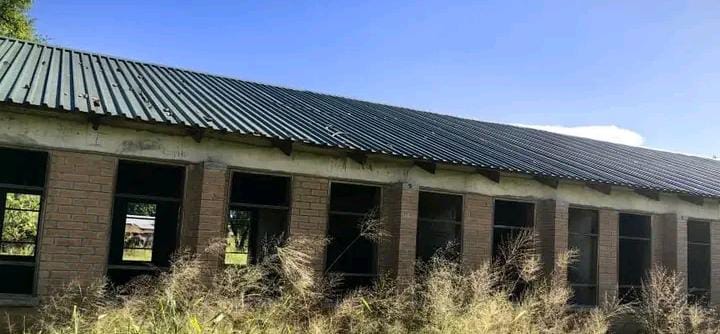
For more than a decade, communities surrounding Kalembo Health Centre in Balaka have lived with a painful contradiction a structure intended to protect life stands incomplete, while expectant mothers continue to undertake exhausting and sometimes dangerous journeys in search of care.
A stalled maternity wing is not just a paused project it is a suspension imposed on dignity, safety, and hope.
Pregnancy should not be a test of endurance. Yet, as described by Village Development Committee Chairperson Acid Meeting, women are forced to travel long distances to reach facilities in Balaka, Machinga, or Mangochi.
These are not casual trips; they are journeys often undertaken in discomfort, anxiety, and urgency. Every kilometre travelled during labour carries uncertainty.
Every delay introduces risk. Behind every statistic about maternal health lies a human story a mother, a child, and a family holding its breath.
What makes the situation particularly heartbreaking is that the maternity wing was never abandoned due to a lack of need. It was halted by the expiration of a project cycle.
District Commissioner Bibu Yusuf Mdala’s explanation that the construction fell under a Results-Based Financing initiative that phased out before completion reflects a broader challenge in development: communities continue to live with the consequences of timelines designed elsewhere.
Infrastructure meant to save lives cannot be treated as a temporary ambition. When a maternal health project ends but its buildings remain incomplete, the burden shifts silently onto ordinary citizens.
Women do not stop becoming pregnant because funding ceases. Babies do not delay their arrival to align with project schedules.
The promise of upgrading the facility into a Community Hospital, with support from the Embassy of Iceland, offers a glimmer of optimism. Yet communities have learned, through years of waiting, that promises must ultimately translate into bricks, equipment, and functioning services. Hope, when delayed too long, begins to feel fragile.
Health Rights Advocate George Jobe raises a deeply important concern Kalembo is not an isolated case. Across the country, unfinished health structures stand as visible reminders of interrupted intentions.
Each one represents resources invested but benefits unrealised. Each one signals a gap between planning and lived reality.
There is both a moral and an economic argument for completing stalled health projects.
From a human perspective, finishing such structures restores trust, improves access, and directly safeguards lives. From a fiscal standpoint, completing existing investments is often far more efficient than initiating new ones while older projects decay.
Most importantly, maternal health is not an optional service; it is foundational. Safe childbirth is a cornerstone of public health, community stability, and national development. When women lack nearby maternity care, entire families and future generations bear the consequences.
Kalembo’s unfinished maternity wing is therefore more than an infrastructure issue it is a question of priorities. It challenges policymakers, development partners, and local authorities to recognise that health facilities are not abstract projects, but lifelines woven into daily existence.
Communities should not have to wait more than a decade for essential services. Mothers should not have to gamble with distance. Hope should not be something that fades with each passing year of inaction.
Completing stalled health structures would not merely finish buildings. It would send a powerful message that the lives, safety, and dignity of citizens are not bound by project timelines, but are protected by an enduring commitment.