
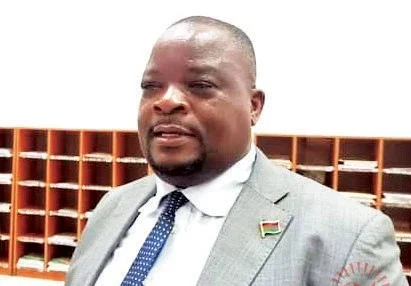
Blantyre Water Board thought it had dismissed its chief executive, but the decision has opened another battle, with Yeremia Chihana now demanding K193 billion in compensation.
The former chief executive is challenging the legality and fairness of his dismissal, setting the stage for a potentially costly employment dispute at the public water utility.
In a formal demand letter dated October 8, 2026, Chihana’s lawyers, Gobz & Rechtswissenschaft Legal Practitioners, said their client would pursue compensation, employment entitlements and recoverable legal costs through the Industrial Relations Court.
BWB dismissed Chihana on October 5 following disciplinary proceedings over alleged gross misconduct.
However, his lawyers argue that the allegations do not automatically justify summary dismissal and that the board must prove it followed the law.
The demand comes after the board ordered Chihana to hand over an official Ford Ranger, a laptop, a Samsung S26 Ultra smartphone and other outstanding official matters by October 9.
He was also instructed to vacate institutional housing by November 7.
Chihana’s lawyers say he will comply with the handover requirements, but insist that doing so should not be treated as acceptance of the dismissal, resignation or agreement to a mutual separation.
They argue that the board must establish a valid reason for the dismissal and demonstrate that it gave Chihana the required opportunity to defend himself.
Citing sections 57, 58 and 61 of the Employment Act, the lawyers maintain that employers must meet legal standards of fairness and justice when dismissing employees. They also challenge the board’s reliance on provisions governing gross misconduct and summary dismissal.
The lawyers further argue that an objection to the court’s jurisdiction over the earlier judicial review proceedings does not, by itself, prove the misconduct alleged against their client.
Following the Supreme Court of Appeal’s decision on October 6 concerning the judicial review proceedings, Chihana has opted to pursue compensation and other employment remedies through the Industrial Relations Court instead of seeking reinstatement or re-engagement.