

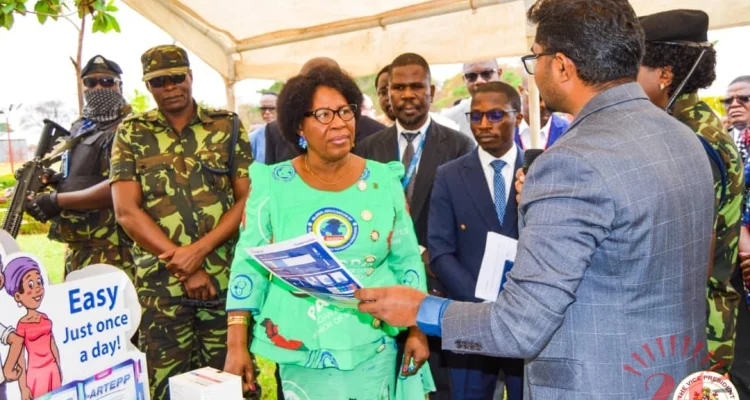
Vice President Jane Ansah has challenged African health professionals to stop looking elsewhere for answers to the continent’s health problems, calling for more research, innovation and better working conditions.
Ansah said Malawi and other SADC countries must invest in local solutions while creating workplaces that allow health workers to deliver quality care without being overwhelmed by long hours, pressure and psychological strain.
Speaking at Kalipano Hotel in Dowa during the official opening of the second Global Association of Clinical Officer and Physician Associates (GACOPA) Southern Africa Conference and the Physician Assistants Union of Malawi (PAUM) Biannual Conference, Ansah said Africa could no longer afford to remain heavily dependent on medicines, research and solutions developed elsewhere.
“We hear you, we see you for the good work you are doing,” Ansah told clinicians during an interview with local media.
She said governments must strengthen systems that support the mental health of health workers and provide adequate protective equipment, while encouraging clinicians to use conferences such as the gathering to debate practical solutions to challenges facing the sector.
Ansah said research and innovation should not be confined to laboratories or expensive equipment, arguing that communities and healthcare facilities can also generate solutions by finding smarter ways of addressing existing problems.
She said strengthening the health workforce was equally important, particularly as clinicians continue supporting patients from their homes through to hospitals.
According to Ansah, challenges such as shortages of medicines and medical equipment require research, improved working conditions and stronger collaboration among SADC countries.
She also stressed the importance of prevention, citing malaria as an example of a disease whose burden on health systems can be reduced by preventing infections before patients require treatment.
Ansah said the conference provides an opportunity for health professionals to examine how clinicians can improve patient care across different stages of the healthcare system.
She officially declared the PAUM Biannual Conference and GACOPA Southern Africa Conference open on behalf of President Peter Mutharika.
The event also saw the handover of the GACOPA leadership from Zambia to Malawi, with Ansah reminding the incoming leadership that the position comes with responsibility across the SADC bloc.
Ansah later received an award recognising her leadership and contribution to inspiring women.
GACOPA also honoured her for distinguished public service and leadership and for inspiring clinicians in Malawi and across Africa.
The ceremony ended with a group photograph involving Ansah, conference organisers, health professionals and other delegates.
Ansah said Malawi and other SADC countries must invest in local solutions while creating workplaces that allow health workers to deliver quality care without being overwhelmed by long hours, pressure and psychological strain.
Speaking at Kalipano Hotel in Dowa during the official opening of the second Global Association of Clinical Officer and Physician Associates (GACOPA) Southern Africa Conference and the Physician Assistants Union of Malawi (PAUM) Biannual Conference, Ansah said Africa could no longer afford to remain heavily dependent on medicines, research and solutions developed elsewhere.
“We hear you, we see you for the good work you are doing,” Ansah told clinicians during an interview with local media.
She said governments must strengthen systems that support the mental health of health workers and provide adequate protective equipment, while encouraging clinicians to use conferences such as the gathering to debate practical solutions to challenges facing the sector.
Ansah said research and innovation should not be confined to laboratories or expensive equipment, arguing that communities and healthcare facilities can also generate solutions by finding smarter ways of addressing existing problems.
She said strengthening the health workforce was equally important, particularly as clinicians continue supporting patients from their homes through to hospitals.
According to Ansah, challenges such as shortages of medicines and medical equipment require research, improved working conditions and stronger collaboration among SADC countries.
She also stressed the importance of prevention, citing malaria as an example of a disease whose burden on health systems can be reduced by preventing infections before patients require treatment.
Ansah said the conference provides an opportunity for health professionals to examine how clinicians can improve patient care across different stages of the healthcare system.
She officially declared the PAUM Biannual Conference and GACOPA Southern Africa Conference open on behalf of President Peter Mutharika.
The event also saw the handover of the GACOPA leadership from Zambia to Malawi, with Ansah reminding the incoming leadership that the position comes with responsibility across the SADC bloc.
Ansah later received an award recognising her leadership and contribution to inspiring women.
GACOPA also honoured her for distinguished public service and leadership and for inspiring clinicians in Malawi and across Africa.
The ceremony ended with a group photograph involving Ansah, conference organisers, health professionals and other delegates.