

.Another bag of donated maize may fill an empty granary today, but Northern chiefs say it will not end the hunger cycle threatening farming communities.
They are now turning their attention to irrigation farming, urging communities to produce food throughout the year instead of waiting for unpredictable rains or relying on handouts when harvests fail.
The chiefs say communities cannot continue depending entirely on rainfall or waiting for food donations whenever harvests fail. They believe helping farmers produce food throughout the year could offer a more sustainable answer to hunger and create opportunities for households to earn a living.
Speaking during a meeting with Salvation for All Ministries International (SAMI), Inkosi Mbelwa said the region’s traditional leaders had welcomed a proposal to support irrigation farming, arguing that it could help communities become self-reliant.
“We ask ourselves, how sustainable is that? So this initiative that has come about is going to help the communities to stand on their own rather than rely on handouts every time,” said Inkosi Mbelwa.
Inkosi Mbelwa was referring to maize donations previously made by SAMI founder Clifford Kawinga to communities in need. While acknowledging the importance of such assistance, he said long-term food security required communities to develop the capacity to produce their own food and generate income.
For many smallholder farmers, however, moving from rain-fed agriculture to irrigation is not a simple decision. Access to water, farming equipment, inputs and reliable markets can determine whether a farmer produces enough to feed a family or remains trapped in a cycle of low harvests and financial hardship.
Mbelwa said changing weather patterns had made farming increasingly difficult, as communities could no longer confidently predict when rains would come or how long they would last.
“We are aware that the climate is playing us now. We can no longer predict what is going to happen,” he said, adding that irrigation could help communities fight hunger and achieve economic independence.
He also pointed to the potential economic benefits of irrigation farming, saying farmers could earn money by selling their produce if markets were available.
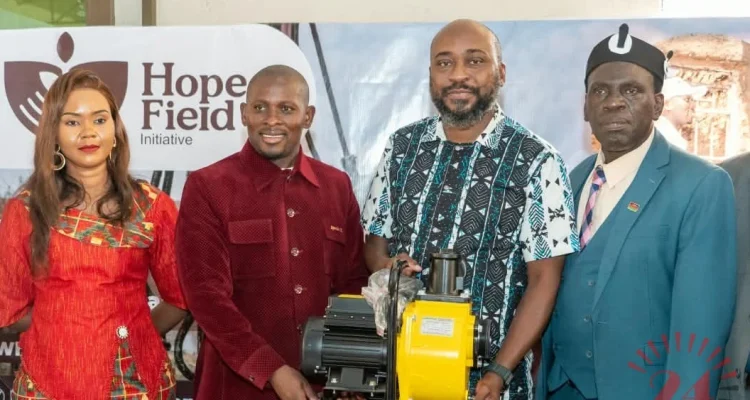
The chiefs’ support comes as Clifford Kawinga, founder of Salvation for All Ministries International (SAMI), seeks to introduce his Hope Field Initiative to farming communities in the Northern Region.
The programme proposes to support existing smallholder farmers with solar-powered irrigation systems, farm inputs, maize seed and fertiliser.
Kawinga said the initiative was born out of the realisation that preaching alone could not address the hardships faced by people struggling with hunger.
“We cannot preach somebody who is sick, somebody who is weak, somebody who is hungered,” he said.
He argued that Malawi needed to reduce its dependence on rainfall and invest in irrigation to prepare for future food shortages. He said the ministry was also supporting borehole drilling and agricultural equipment as part of its efforts to improve farming and access to water.
But food security is not the only concern facing communities. Kawinga also urged Malawians to find alternatives to charcoal burning, warning against unnecessary tree cutting.
“Let’s avoid cutting down trees unnecessarily. We can still find a better way, a better means of making money rather than cutting trees and using charcoal for making money,” he said.
His remarks raise a question that extends beyond the meeting: can improved agricultural livelihoods help families meet their food and financial needs without turning to activities that damage the environment?
For the Northern chiefs, irrigation is a step towards addressing that challenge. Mbelwa said the traditional leaders were prepared to support the initiative, which SAMI hopes to introduce in the region in January 2027 after consultations on local soil and weather conditions.
Whether the proposal will translate into reliable water supplies, better harvests and lasting income for farming households remains to be seen.