

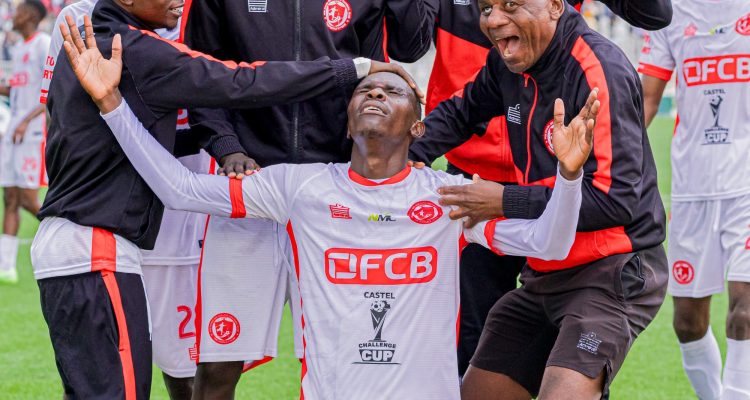
It’s now confirmed. Goshen Dedza Dynamos will face FCB Nyasa Big Bullets in this season’s Castel Challenge Cup final at Bingu National Stadium later this month.
The two teams emerged as winners over Blue Eagles and Mzuzu City Hammers in the semifinals of the competition that were played at Kamuzu Stadium.
For Dynamos, Lady Luck smiled at them as they scored in the final seconds of the additional minutes to level the score line before winning 4-3 on penalties following a 1-1 result in the regulation time.
As for Bullets, they needed a strike in each half from Wongani Lungu to overcome a very resilient Hammers to reach their second final in this competition since its launch in 2023.
Let’s now analyze how the two teams made it through to the final.
Semifinal One
Goshen Dedza Dynamos (1) 4-3 (1) Blue Eagles FC
From the onset, Alex Ngwira’s side dominated the proceedings over Declerck Msakakuona’s charges.
Using a 4-4-2 formation, they relied heavily on their two wingers, Bright Masebo and Wellington Chimutu, but they had more challenges in the midfield where Gilbert Chirwa was in control.
Dynamos started the match with over 60% possession while Eagles hoped to compensate for the shift by throwing more men behind the ball. It was ineffective, and the press became more aggressive to steal back the ball higher up the pitch.
Plenty of chances were created by the hosts but they failed to convert.
After 20 minutes of play, the momentum shifted as Eagles began to press. They carved out a chance through Tonic Viyuwi, but he was unable to beat Donnex Mwakasinga.
Msakakuona’s men played without a game plan. Whenever in possession, they could just kick the ball away from their area and expect to score from a mistake, but Dynamos, through Lughano Kaira and Daniel Mpoya were very organised in the defensive role.
Ngwira’s men had a chance to score from the spot, but Chifuniro Mpinganjira failed to convert as his spot kick was saved by Precious Masamba.
This save almost proved decisive when Micium Mhone scored for Eagles from Mwakasinga’s goalkeeping error that saw him rushing for a ball he wasn’t sure of to allow the winger to slot the ball into an empty net.
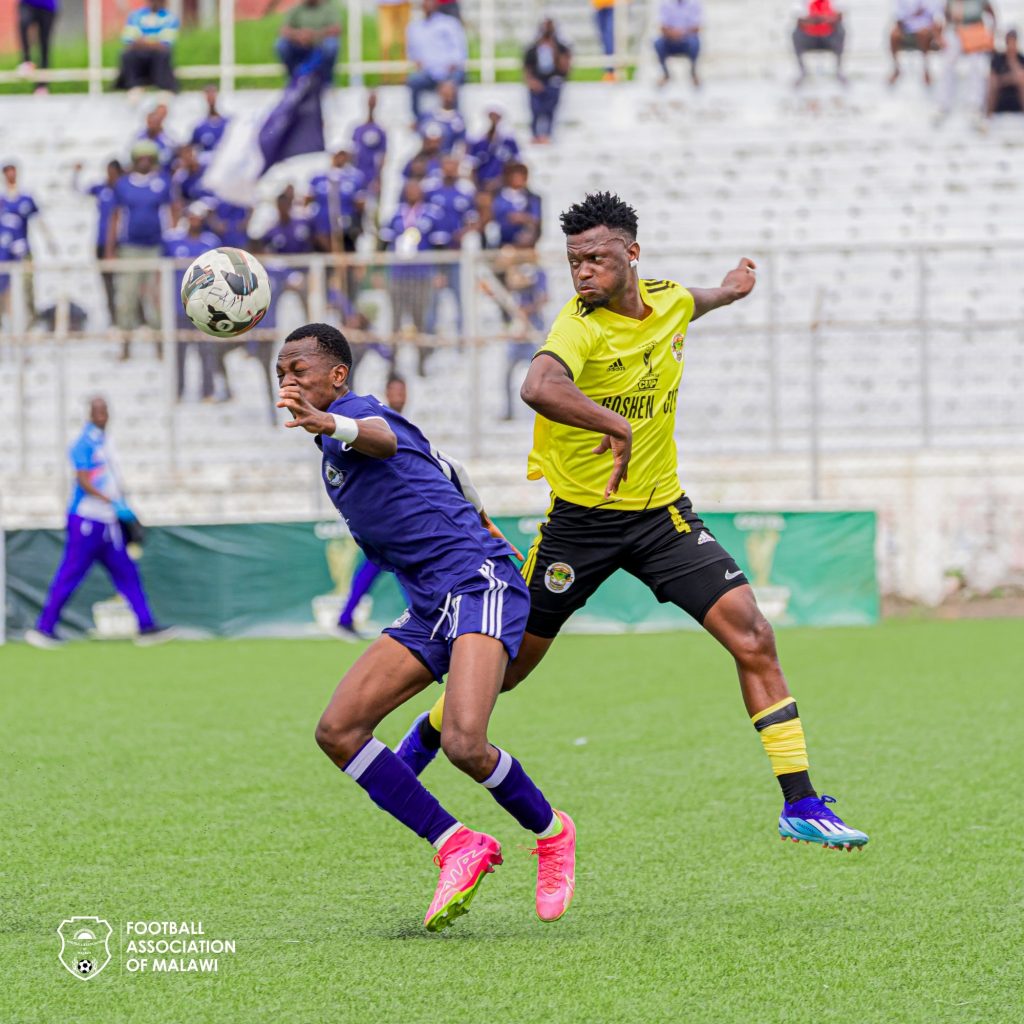
Image: Dynamos vs. Eagles in semifinal One
Tactical error by Msakakuona
Msakakuona made a surprising change with ten minutes to go, bringing on Sankhani Mkandawire for the impressive Benet Konyo. The substitute looked ill-prepared for the closing moments, especially up against the aggressive Gift Magola, who had come on for Mpinganjira, and the lively Luke Chima.
The tactical lapse was exposed in the dying seconds of added time as Maxwell Gustava and Mkandawire both fumbled the ball, gifting Magola the chance to slot home the equalizer for 1–1.
More often than not, a team that mounts a late comeback carries the momentum into the shootout—and that proved true when Lanken Mwale missed his sudden-death penalty, sending Dynamos into their first-ever Cup final since their promotion to top-flight football in 2022.
Ngwira’s tactical prowess
Similar to some games earlier in this season competition, a man-marking scheme against a double pivot frustrated opponent.
This was the same case against Ekhaya FC in the quarterfinals when Moses Banda and Blessings Malinda were completely closed down by Edward Dakalira and Aggry Msowoya to close all the spaces which Enos Chatama’s men were hoping to exploit.
Against Eagles, Ngwira did the same. He identified a weakness in Msakakuona’s midfield: thus, only having Chirwa as an aggressive number 8 while John Banda, with his age, couldn’t cope.
Ngwira’s approach was shifting Dakalira into a more attacking position and pairing him as two No.8s Msowoya. This pulled Eagles’ midfield out of shape, and consequently created lots of scoring for Dynamos, and had it been that Mpinganjira was clinical enough in the final third, the match could have ended in the first 20 minutes.
The match was decided on penalties, but Dynamos had a good game plan with their good transition from the back into the offensive zones.
Eagles, on the other hand, had too many tired legs and they should thank their goalkeeper for keeping the game at 1-1 as he produced a series of saves to keep his team in the game.
Semifinal Two
FCB Nyasa Big Bullets 2-0 Mzuzu City Hammers
This was an interesting contest between the two sides.
Meeting for the second straight semifinal showdown in this competition, Bullets were aiming for revenge, having been ousted through penalties last year, while Hammers, who eliminated both Silver Strikers and Mighty Wanderers out of this competition, had a point to prove.
For Bullets, it was a matter of chasing their tenth cup final appearance in five years, while Hammers chased their second straight final slot in this competition.
However, Bullets were technically and tactically superior as they got the better of their opponents with a comfortable 2-0 win to reach their second final in the Castel Challenge Cup in three years.
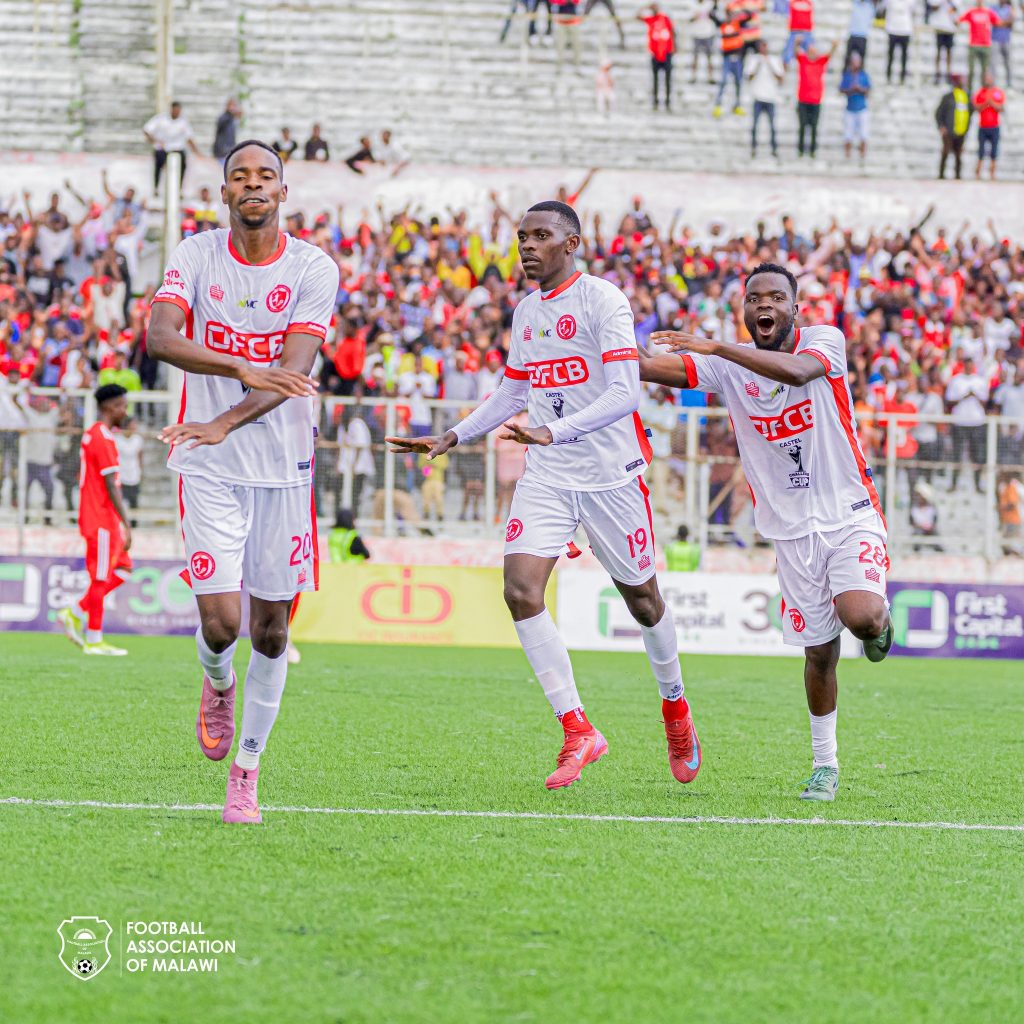
Image: Bullets players celebrating a goal their second goal against Hammers
Tactical viewpoint
Gilbert Chirwa had everyone under the assumption that he would go with his trusted 4-3-3, with which he has been using throughout the competition.
Instead, he set up a 3-4-3 formation. Chirwa’s own formational surprise was a relatively minor one, with both Chawanangwa Gumbo and Wongani Lungu deployed as two number 10’s to overload the midfield.
But, Hammers, through Lazarus Nyemera, also used two pacey attackers in Isaiah Nyirenda and Gift Chunga to counter-press, and this made it very difficult for Bullets to find an easy path in Hammers’s defensive spaces.
Hammer’s mimicking of Bullets’ lineup allowed the midfield to be indeterminate. Yankho Singo was being tracked or immediately pressed while on the ball and only successfully played passes via quick distribution, not something he is prone to do.
Chirwa was trying to get him to play quicker, but it was not happening. And indeed, Singo had a poor first half despite a great multitude of touches, with a few errant passes and turnovers that drew significant attention as well.
Hammers’ unfamiliarity with their formation and high press meant that there were open lanes to be had, but, as Chirwa reflected afterwards in his post-match interview, they were not the lanes for which Bullets had prepared and planned.
As a result, the passes were not finding their intended recipients and the runs were being tracked better than what the Bullets might have been expecting.
In the first half, Hammers spent most of the game in their own half defending in a 5-2-3.
For Bullets, Paul Master was the centre point, attacking between Gumbo and Singo, who held the Central attacking role, and Lungu as the single pivot.
Hammers’s double pivots initially screened and blocked attempted passes into Ephraim Kondowe and Phodo.
When Bullets’ back line began stepping forward with the ball, one of Hammers’ pivots was forced to jump out.
This caused a few problems when it was on Bullets’ left, because Anorld Phiri often tracked and covered Phodo’s movement.
But on Bullets’ right, Yamikani Mologeni found a clever pocket to receive between the lines, especially when Hammers’ left centre back, Chisomo Sambani, couldn’t jump out due to Mologeni’s positioning.
Mologeni was able to play a few dangerous crosses and passes into the box early on, but Hammers defended well until they failed to track down Lungu, who scored a brace. Lungu, the former Hammers captain, is Bullets’ most creative threat within Hammers’ block.
Releasing Alex Orotomal
Alex Orotomal’s hold-up play was key during Hammers’ rare attacks.
However, Bullets dealt with most of Hammers’ attempted balls over. His aerial threat limited the Bullets’ offensive plans as the attention focused on taming his threat.
This worked, but there was a moment when Orotomal almost won a penalty for Hammers when he won the ball away from Khumbo Banda. However, referee Easter Zimba waved play on, saying Banda had first touched the ball before the leg, a decision that was protested by the visitors.
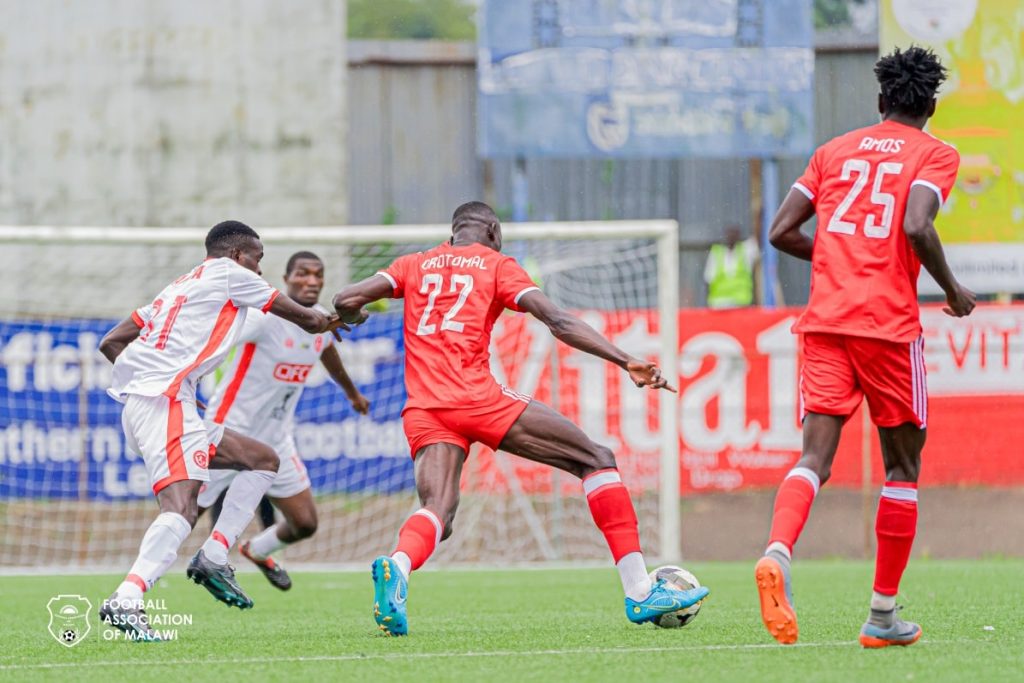
Image: Orotomal in action against Khumbo Banda
Yamikani Mologeni’s impact
Throughout the match, Mologeni attacked their opponents with much more aggression and purpose.
He continued to hold the width, but began to drive at Hammers’s wing-back markers, looking to cut inside and cross, or knock and run on the outside and deliver.
All the two goals that Bullets scored were orchestrated by Mologeni, who, in this competition, has contributed to six of the ten goals with his assists.
He was key to Bullets’ success after struggling to break a resilient defence, and opted for a highly pressing full-back who got the better of Sambani to create the two goals.
Overall, Hammers posed more threats to Bullets, but their experience at this stage was an edge over the Mzuzu-based side.
Images courtesy of the Football Association of Malawi