

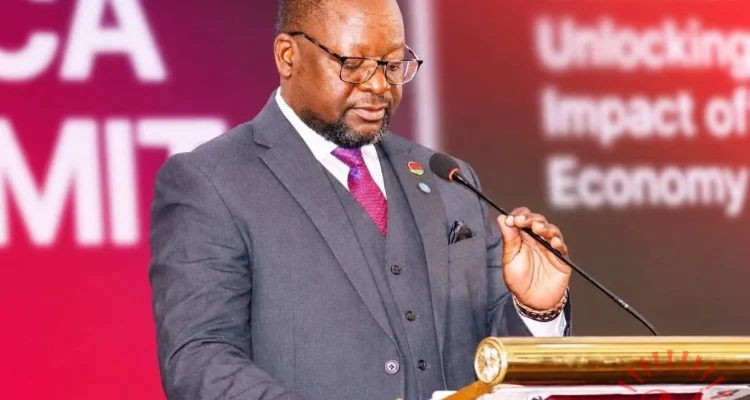
Information Minister and Democratic Progressive Party (DPP) spokesperson Shadric Namalomba has questioned Parliament’s role in dealing with corruption allegations, insisting that suspected criminal offences should be investigated by law enforcement agencies.
In a post on his official Facebook page, Namalomba said those with evidence of corruption should submit it to the Anti-Corruption Bureau (ACB), arguing that Parliament does not arrest criminals.
“Corruption is a serious crime, not a talking point. If there is evidence, bring it forward. Hand it over to the Anti Corruption Bureau,” Namalomba wrote.
He added: “Parliament does not arrest criminals; that is the job of law enforcement. Let the ACB investigate and let the courts decide.”
Namalomba ended his post by directly challenging the anti-corruption agency, asking: “ACB, where are you?”
His remarks come amid an ongoing public debate over corruption, the management of public resources and the role of Parliament in holding public institutions accountable.
Earlier today, Speaker of the National Assembly Sameer Suleman criticised some leaders for allegedly stealing public money and wasting resources such as fertiliser that could help improve the lives of poor Malawians.
Speaking at the Dawah 2026 Islamic gathering in Lilongwe, Suleman said it was regrettable that some people entrusted with leadership were allegedly involved in stealing funds and mismanaging resources meant to benefit vulnerable citizens.
Suleman’s remarks came as he pushed for parliamentary scrutiny of issues affecting public services and government institutions, including fuel supply, electricity, fertiliser distribution, pension delays and passport services.
In September, the Speaker announced plans for parliamentary committees to investigate 12 issues. However, the proposed investigations have faced a legal challenge, with the High Court temporarily stopping Parliament from establishing or operationalising the committees pending further proceedings.
The debate raises questions about the respective responsibilities of Parliament and law enforcement agencies in addressing concerns over public resources.
While the ACB investigates suspected corruption, Parliament has an oversight role that includes scrutinising public expenditure and holding government institutions accountable.
In a post on his official Facebook page, Namalomba said those with evidence of corruption should submit it to the Anti-Corruption Bureau (ACB), arguing that Parliament does not arrest criminals.
“Corruption is a serious crime, not a talking point. If there is evidence, bring it forward. Hand it over to the Anti Corruption Bureau,” Namalomba wrote.
He added: “Parliament does not arrest criminals; that is the job of law enforcement. Let the ACB investigate and let the courts decide.”
Namalomba ended his post by directly challenging the anti-corruption agency, asking: “ACB, where are you?”
His remarks come amid an ongoing public debate over corruption, the management of public resources and the role of Parliament in holding public institutions accountable.
Earlier today, Speaker of the National Assembly Sameer Suleman criticised some leaders for allegedly stealing public money and wasting resources such as fertiliser that could help improve the lives of poor Malawians.
Speaking at the Dawah 2026 Islamic gathering in Lilongwe, Suleman said it was regrettable that some people entrusted with leadership were allegedly involved in stealing funds and mismanaging resources meant to benefit vulnerable citizens.
Suleman’s remarks came as he pushed for parliamentary scrutiny of issues affecting public services and government institutions, including fuel supply, electricity, fertiliser distribution, pension delays and passport services.
In September, the Speaker announced plans for parliamentary committees to investigate 12 issues. However, the proposed investigations have faced a legal challenge, with the High Court temporarily stopping Parliament from establishing or operationalising the committees pending further proceedings.
The debate raises questions about the respective responsibilities of Parliament and law enforcement agencies in addressing concerns over public resources.
While the ACB investigates suspected corruption, Parliament has an oversight role that includes scrutinising public expenditure and holding government institutions accountable.