
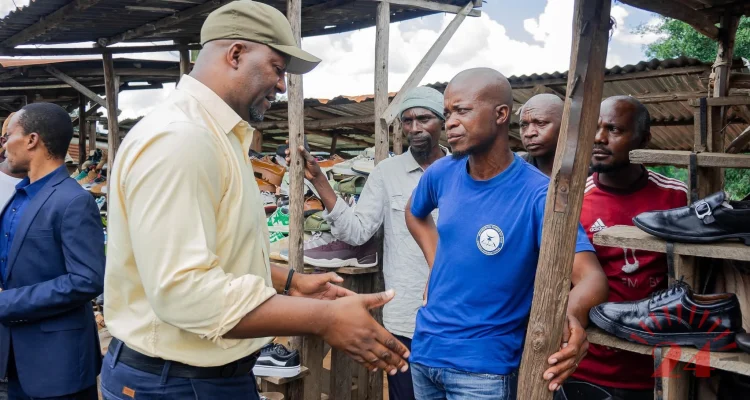
The patience that has kept many young Malawians waiting for better days is beginning to run thin.
UDF leader Atupele Muluzi says young people are tired of speeches while jobs remain scarce, fuel is hard to find and the cost of basic goods keeps rising.
Speaking on the country’s economic situation, Muluzi said the forex crisis sits at the heart of many of the challenges affecting ordinary Malawians, including fuel shortages, medicine shortages and struggling businesses.
“Our young people don’t need another speech. They’re running out of patience. They need opportunity. They need jobs. They need electricity. They need fuel, affordable medicines. They need investment. They need hope,” Muluzi said.
Muluzi questioned why Malawi has failed to resolve its foreign exchange crisis, saying the country needs approximately $3.3 billion every year to pay for fuel, fertiliser, medicines and other essential imports but generates only about $1 billion from exports.
He said the resulting $2.3 billion gap has for years been partly covered through donor support and borrowing, a model he said is no longer sustainable.
Muluzi also highlighted the wide gap between the official and parallel-market exchange rates, saying the dollar is trading at around K1,800 officially compared to about K4,000 on the parallel market.
He said the disparity encourages arbitrage, discourages investors from bringing foreign currency into the country and contributes to shortages and higher prices, leaving ordinary Malawians to bear the consequences.
Muluzi welcomed the government’s reported negotiations with the IMF and World Bank, saying Malawi needs an injection of foreign exchange to stabilise the economy and support a credible reform programme.
However, he said external financing alone cannot solve the problem and called for exchange-rate liberalisation alongside measures to attract investment into mining, energy, tourism, agriculture and manufacturing.
“We must produce more dollars,” Muluzi said, arguing that Malawi has minerals, energy potential, land, tourism opportunities and a major asset in its people.
He said investors need confidence that they can bring dollars into Malawi, access foreign exchange and repatriate legitimate returns.
Muluzi further called for difficult economic decisions to be made now, saying continued delays would increase the pressure on Malawians, particularly young people seeking jobs and better opportunities.
“Our young people cannot afford another decade of waiting,” he said.
He called for Malawi to move from shortages to production, borrowing to investment and uncertainty to confidence, arguing that the country can turn around its economic situation if decisive reforms are implemented.