

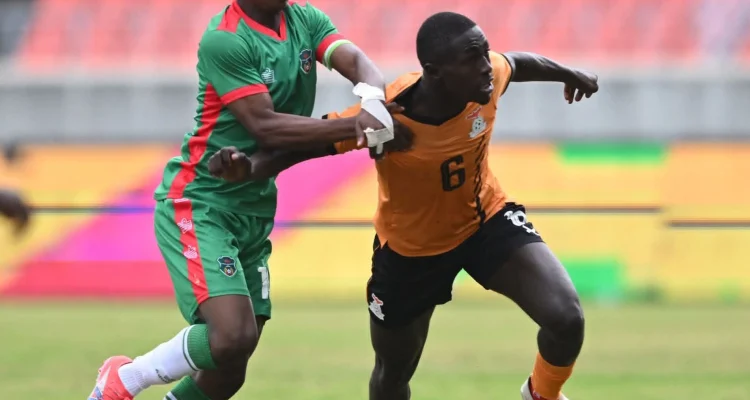
Malawi’s Under-20 side’s 2-0 defeat to Zambia in the COSAFA tournament leaves behind a frustrating question: if the Junior Flames were capable of competing with Zambia in the second half, why did they spend so much of the opening 45 minutes struggling to impose themselves?
The answer lies partly in how differently Malawi approached the two halves. In the first half, Zambia controlled much of the game by pressing Malawi’s build-up, forcing misplaced passes and creating dangerous situations around the Junior Flames’ defence.
Malawi repeatedly struggled to play through that pressure. Instead of using the midfield to connect defence and attack, they often went directly for long balls. Against a Zambian defence that was taller, stronger and comfortable dealing with aerial situations, that approach made it difficult for Malawi’s forwards to get into the game.
The midfield was particularly important. Malawi’s forwards were often isolated because there was not enough progressive passing from behind them. When possession was recovered, the next pass frequently went backwards or long, allowing Zambia to regain their shape rather than forcing them to defend continuously.
Zambia, meanwhile, were much more aggressive without the ball. They chased Malawi’s defenders and goalkeeper during build-up, creating mistakes and turning them into attacking opportunities. Malawi gave Zambia more time and space when the roles were reversed, allowing the Zambians to build attacks with greater comfort.
The danger was clear even before Zambia scored. They had two goals ruled out after VAR intervention, one for offside and another for a foul in the build-up. Malawi survived those moments, but the pattern was worrying: Zambia were repeatedly finding ways into dangerous areas while Malawi struggled to create sustained pressure of their own.
Then came the second half, and almost immediately the game looked different.
Malawi pressed higher, made fewer mistakes and began moving the ball with greater purpose. Instead of constantly trying to bypass Zambia, they started combining through midfield. The match became more balanced, and the Junior Flames began looking like a team capable of troubling their opponents.
The attack around the 74th minute was perhaps the clearest example. Malawi produced a beautiful passing move, moving the ball through Zambia’s defensive structure with patience and intelligence. But once again, the final product was missing. The move ended without the quality pass or finish needed to turn good football into a goal.
That moment summed up Malawi’s night. The ability was there, but the execution was inconsistent.
By the 77th minute, the game had become an end-to-end contest. Malawi were no longer simply trying to survive; they were pushing Zambia and looking for an equaliser. But while their football had improved, they still had to maintain concentration at the other end.
Zambia eventually punished that lapse in the 79th minute. A short corner was taken without enough pressure from Malawi, allowing the ball to be delivered into an area where three Zambian players were left unmarked. Billy Daka rose highest and headed Zambia into the lead.
The goal was not simply about Zambia’s physical advantage. It was about organisation. After working hard to improve their open-play performance, Malawi switched off at a set piece and paid the price.
They pushed for an equaliser and even had a penalty appeal reviewed by VAR in the 90th minute, but the decision did not go their way. Zambia held firm as Malawi searched for a way back into the game.
Then came the second goal in the sixth minute of added time.
Malawi struggled with their build-up and lost possession twice before reaching halfway. Zambia worked the ball down the left and sent a cross through the box. Several Malawi players appeared to stop, expecting the ball to go out for a goal kick, but Zambia continued playing.
They recovered the ball, sent it back into the danger area and Daka, left unmarked, controlled and powered his finish into the net.
It was a painful ending because Malawi had already demonstrated that they could compete. Their problem was that the better version of the team arrived too late and was still accompanied by lapses that Zambia knew how to exploit.
The defeat therefore raises questions beyond the scoreline. Malawi need greater composure when building from the back, better communication between midfield and attack, more intelligent choices when facing physically stronger opponents and, perhaps most importantly, concentration until the final whistle.
The second half provided encouragement because it showed that Malawi did not have to spend the entire game playing around Zambia’s strengths. When they pressed, combined and kept the ball on the ground, they looked far more competitive.
But football at this level often punishes teams for giving away too much ground before finding their rhythm. Against Zambia, Malawi’s early mistakes created a mountain they ultimately could not climb.
The Junior Flames leave the match with a defeat, but also with a clear lesson: the football they produced in the second half was not beyond them. The challenge is to start with that courage, composure and intent, rather than discovering it only after the game has already begun slipping away.
The answer lies partly in how differently Malawi approached the two halves. In the first half, Zambia controlled much of the game by pressing Malawi’s build-up, forcing misplaced passes and creating dangerous situations around the Junior Flames’ defence.
Malawi repeatedly struggled to play through that pressure. Instead of using the midfield to connect defence and attack, they often went directly for long balls. Against a Zambian defence that was taller, stronger and comfortable dealing with aerial situations, that approach made it difficult for Malawi’s forwards to get into the game.
The midfield was particularly important. Malawi’s forwards were often isolated because there was not enough progressive passing from behind them. When possession was recovered, the next pass frequently went backwards or long, allowing Zambia to regain their shape rather than forcing them to defend continuously.
Zambia, meanwhile, were much more aggressive without the ball. They chased Malawi’s defenders and goalkeeper during build-up, creating mistakes and turning them into attacking opportunities. Malawi gave Zambia more time and space when the roles were reversed, allowing the Zambians to build attacks with greater comfort.
The danger was clear even before Zambia scored. They had two goals ruled out after VAR intervention, one for offside and another for a foul in the build-up. Malawi survived those moments, but the pattern was worrying: Zambia were repeatedly finding ways into dangerous areas while Malawi struggled to create sustained pressure of their own.
Then came the second half, and almost immediately the game looked different.
Malawi pressed higher, made fewer mistakes and began moving the ball with greater purpose. Instead of constantly trying to bypass Zambia, they started combining through midfield. The match became more balanced, and the Junior Flames began looking like a team capable of troubling their opponents.
The attack around the 74th minute was perhaps the clearest example. Malawi produced a beautiful passing move, moving the ball through Zambia’s defensive structure with patience and intelligence. But once again, the final product was missing. The move ended without the quality pass or finish needed to turn good football into a goal.
That moment summed up Malawi’s night. The ability was there, but the execution was inconsistent.
By the 77th minute, the game had become an end-to-end contest. Malawi were no longer simply trying to survive; they were pushing Zambia and looking for an equaliser. But while their football had improved, they still had to maintain concentration at the other end.
Zambia eventually punished that lapse in the 79th minute. A short corner was taken without enough pressure from Malawi, allowing the ball to be delivered into an area where three Zambian players were left unmarked. Billy Daka rose highest and headed Zambia into the lead.
The goal was not simply about Zambia’s physical advantage. It was about organisation. After working hard to improve their open-play performance, Malawi switched off at a set piece and paid the price.
They pushed for an equaliser and even had a penalty appeal reviewed by VAR in the 90th minute, but the decision did not go their way. Zambia held firm as Malawi searched for a way back into the game.
Then came the second goal in the sixth minute of added time.
Malawi struggled with their build-up and lost possession twice before reaching halfway. Zambia worked the ball down the left and sent a cross through the box. Several Malawi players appeared to stop, expecting the ball to go out for a goal kick, but Zambia continued playing.
They recovered the ball, sent it back into the danger area and Daka, left unmarked, controlled and powered his finish into the net.
It was a painful ending because Malawi had already demonstrated that they could compete. Their problem was that the better version of the team arrived too late and was still accompanied by lapses that Zambia knew how to exploit.
The defeat therefore raises questions beyond the scoreline. Malawi need greater composure when building from the back, better communication between midfield and attack, more intelligent choices when facing physically stronger opponents and, perhaps most importantly, concentration until the final whistle.
The second half provided encouragement because it showed that Malawi did not have to spend the entire game playing around Zambia’s strengths. When they pressed, combined and kept the ball on the ground, they looked far more competitive.
But football at this level often punishes teams for giving away too much ground before finding their rhythm. Against Zambia, Malawi’s early mistakes created a mountain they ultimately could not climb.
The Junior Flames leave the match with a defeat, but also with a clear lesson: the football they produced in the second half was not beyond them. The challenge is to start with that courage, composure and intent, rather than discovering it only after the game has already begun slipping away.