

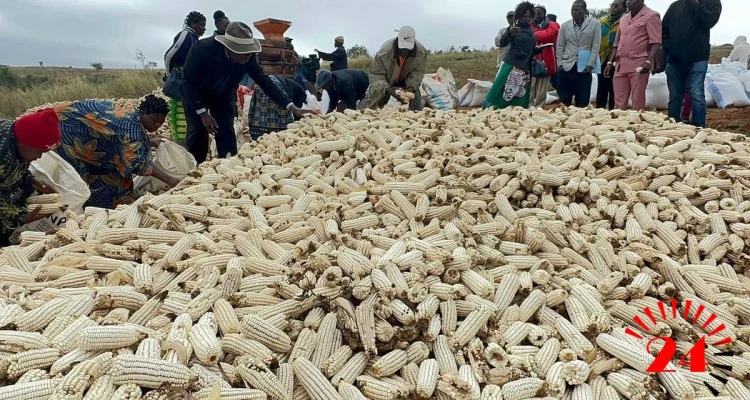
Maize prices in Malawi have begun to ease as the main harvest progresses, offering short-term relief to households, though overall supply remains insufficient to meet national demand.
A Famine Early Warning Systems Network (FEWS NET) assessment in its Key Message Update for May-September 2026, released on June 9, indicates that maize production is expected to be average, supported by generally favourable rainfall during the 2025/26 agricultural season.
Harvesting started in April in the Southern Region and has since expanded to central and northern areas, with the south largely completing the season.
However, the report highlights weather-related setbacks that constrained yields in some parts of the country. Below-average rainfall and dry spells during the flowering stage affected production in the Southern Lakeshore, Middle Shire and Lower Shire zones, while flash floods between March 15 and 20 caused localised crop losses in several central and southern districts.
According to the Ministry of Agriculture, the main harvest accounts for about 80 percent of national output, with the remainder coming from irrigated and residual-moisture production.
FEWS NET notes that increased market supply has started easing prices, with average maize grain costs falling about 15 percent between March and April, from K1,025 to K892 per kilogramme.
Despite the decline, prices remain around 85 percent above the 2022-2024 average, limiting access for many low-income households reliant on market purchases. In southern markets, reductions reached about 25 percent due to improved availability and weaker demand.
Agriculture policy expert Leonard Chimwaza said delays in releasing updated crop estimates from the Ministry of Agriculture continue to hinder planning for food security interventions.
“If they released the figures, we would have a practical outlook of what Malawi will harvest for planning purposes,” he said.
Earlier projections by the Reserve Bank of Malawi placed maize output at 3.3 million metric tonnes for the 2025/26 season, up from 2.9 million the previous year. However, this remains below the estimated national requirement of about 3.5 million metric tonnes, sustaining concerns over a structural supply gap.