
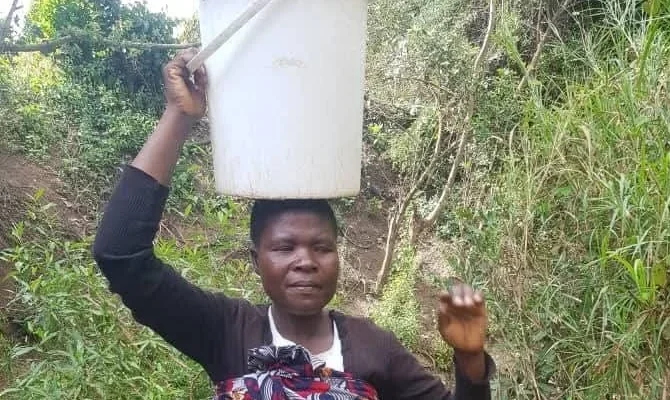
“It feels like we have been rescued from a long suffering,” said Mwai Machira in Bauleni, pausing as she set down a bucket that, only weeks ago, would have taken her hours to fill from the Linengwe River. “We were really struggling. Life had become very difficult.”
For weeks, communities in Ntcheu’s Group Village Headman Mkutumula 2 area had been surviving on unsafe river water after piped supplies were interrupted for extended periods. The disruption pushed villages such as Tepeka, Chiphwafu, and Bauleni back into dependence on the Linengwe River, where people and livestock shared the same water source.
That situation has now begun to ease following an intervention by Italy-based organisation Il Pozzo dei Desideri, which has drilled six boreholes across the affected communities.
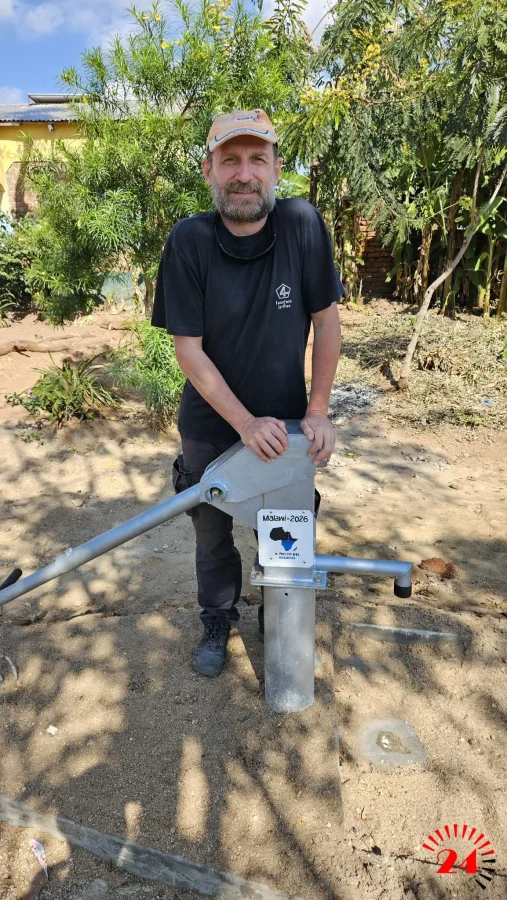
The boreholes have been installed in Bauleni, Kalasa, Tepeka, Chiphwafu, and Mkutumula, where two separate water points were constructed to serve households spread across the large village. According to the organisation’s founder, Matteo Ferrari, the distribution was guided by the need to reach the widest number of families in areas hardest hit by water shortages.
Early estimates indicate that the new boreholes will serve more than 700 families, offering a more reliable source of clean water in communities where intermittent piped supply had forced residents back into unsafe river sources.
“It is a big relief,” said Solomon Butao, Vice Chairperson of the Area Development Committee. “People have suffered for so long since water is often redirected elsewhere and the supply becomes inconsistent. Our rivers are small and dry quickly, leaving us without safe water. We are thankful for this initiative. It will help save lives.”
For residents like Machira, the change is already visible in daily routines that are no longer dominated by long walks to the river.
The queues at water points are shortening, and the constant worry over waterborne diseases such as cholera is beginning to ease as households shift away from untreated sources.
Still, despite the drilling of six boreholes, residents say the challenge remains significant, as many other villages in the area have come forward appealing for similar support but have yet to be reached. Even so, there is renewed hope after Matteo Ferrari indicated that his organisation plans to return with another wave of assistance to expand access to safe water.
Residents also point out that while boreholes have eased pressure, the underlying issue with piped water persists. They say supply is sometimes deliberately diverted for extended periods to other areas within the system, leaving local communities without water for weeks at a time.
For now, however, in villages that had begun to resemble a return to an older and harsher way of life, the new boreholes have restored not just access to water, but a fragile sense of stability.