
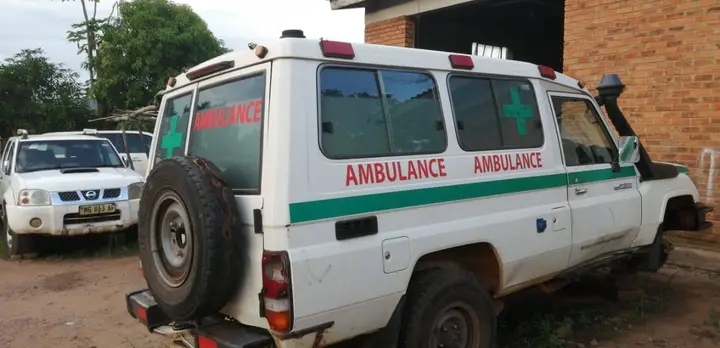
The revelation that the Nkhata Bay District Health Office is failing to raise K9 million to repair an ambulance for Chintheche Rural Hospital should deeply trouble every Malawian.
This is not merely a mechanical issue it is a governance, equity, and public health crisis quietly unfolding along the lakeshore.
Chintheche Rural Hospital serves a population of over 30,000 people, including patients referred from surrounding health facilities. In such a setting, an ambulance is not a luxury; it is a lifeline.
When it breaks down, the consequences are immediate and severe: delayed referrals, heightened maternal and neonatal risks, preventable deaths, and unbearable financial pressure on already impoverished families.
While District Senior Health Promotion Officer Christopher Singini has assured the public that referral cases are being managed using ambulances from Nkhata Bay District Hospital, this arrangement is neither sustainable nor dignified.
Borrowing ambulances from another facility merely shifts the problem elsewhere and further strains an already fragile health system. Emergencies do not wait for logistics, fuel availability, or vehicle rotations between facilities.
More troubling is the admission that the district relies heavily on Other Recurrent Transactions (ORT) funds to maintain essential services, including ambulance repairs. ORT funds are notoriously limited and overstretched, as they are expected to cover a wide range of operational needs.
That a critical service such as ambulance maintenance must compete with routine expenses exposes chronic underfunding and weak prioritisation within the health sector.
The human cost of this failure is already evident. According to Chintheche Ward Councillor Moses Kamanga, some patients in need of referral services are forced to dig deep into their pockets to hire private vehicles.
This is a cruel irony in a country that prides itself on providing free public healthcare. For the rural poor, hiring a vehicle can mean selling livestock, borrowing at exploitative rates, or simply giving up sometimes with fatal consequences. Equally concerning is the apparent disconnect between local leadership and service delivery.
Chintheche Constituency Legislator Noah Chimpeni’s admission that he was unaware of the issue raises serious questions. How can a matter affecting thousands of constituents, involving life-saving equipment, escape the attention of an area’s elected representative? This points to weak communication, poor accountability, or worse the normalisation of crisis in rural health facilities.
The reliance on appeals to “well-wishers” to repair a public ambulance presents another uncomfortable reality. While community and donor support are valuable, essential health services should never depend on charity.
Ambulances are a vital component of public healthcare and must be planned for, budgeted for, and maintained by the state. Anything less signals an abdication of responsibility.
This situation demands urgent action. The Ministry of Health must intervene to provide emergency funding for the repair of the Chintheche ambulance. At the district level, clearer maintenance plans and contingency funds for critical equipment are essential.
Lawmakers and councillors must actively monitor and advocate for health service challenges in their areas not learn about them after the damage has been done.
Ultimately, the broken ambulance at Chintheche Rural Hospital symbolises a broader failure: when rural health systems are allowed to quietly decay, the poorest pay the highest price. K9 million may seem insignificant in national budget terms, but for a woman in labour, a child with severe malaria, or a trauma patient requiring urgent referral, it is the difference between life and death.
Malawi must decide whether rural lives matter as much as urban ones. Fixing the ambulance would be a good place to start.