

Families could retain the support of relatives convicted of certain offences under Malawi’s non-custodial sentencing system, which allows eligible offenders to serve their sentences in their communities rather than in prison.
The approach could help families avoid some of the economic difficulties that arise when a breadwinner is imprisoned, particularly where children and other dependants rely on that person for their daily needs.
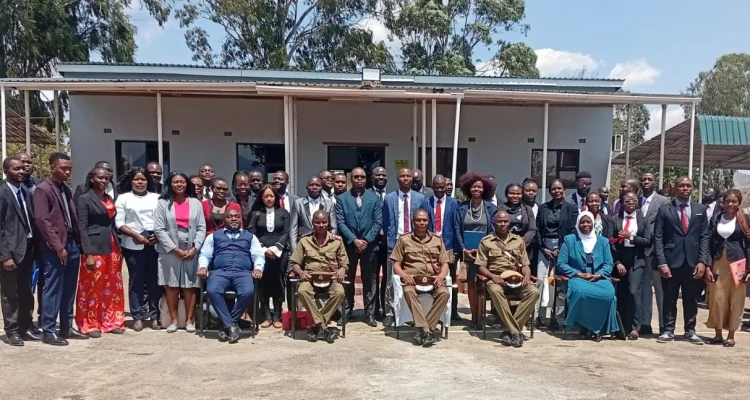
Nearly 100 community corrections officers are undergoing a two-month orientation at the Malawi Prison Training School in Blantyre to equip them with skills to manage non-custodial sentences.
The training, which began in September 2026, covers the management of sentences that include community service, probation, public works and parole.
Malawi Prison Service spokesperson Steve Meke said the approach would allow offenders to remain with their families while serving their sentences and contributing to national development.
He said: “Family ties will be enhanced because these offenders will be in their respective homes and also be in a position to support their families at the same time contributing to national development.”
The officers are expected to serve in districts without prison formations or stations, including Salima, Machinga, Phalombe and Mchinji.
Their deployment could improve the management of community-based sentences in these areas, although the impact will depend on how effectively offenders are supervised and supported throughout their sentences.
Meke also said the approach was intended to ease congestion in Malawi’s prisons and reduce government spending on feeding and managing inmates.
“Our prisons are congested, but with this non-custodial sentence element, we hope to reduce prison population and at the same time enhance the rehabilitation of offenders,” he said.
However, keeping offenders in their communities does not automatically guarantee successful rehabilitation or protect families from financial hardship. The effectiveness of the system will depend on compliance with sentencing conditions, proper supervision and opportunities for offenders to reform.
For families, the potential benefit is significant: eligible relatives may be able to remain at home, maintain family relationships and continue contributing to household needs while being held accountable for their offences.
The real test will be whether the system can balance rehabilitation and family support with public safety and accountability.
The approach could help families avoid some of the economic difficulties that arise when a breadwinner is imprisoned, particularly where children and other dependants rely on that person for their daily needs.
Nearly 100 community corrections officers are undergoing a two-month orientation at the Malawi Prison Training School in Blantyre to equip them with skills to manage non-custodial sentences.
The training, which began in September 2026, covers the management of sentences that include community service, probation, public works and parole.
Malawi Prison Service spokesperson Steve Meke said the approach would allow offenders to remain with their families while serving their sentences and contributing to national development.
He said: “Family ties will be enhanced because these offenders will be in their respective homes and also be in a position to support their families at the same time contributing to national development.”
The officers are expected to serve in districts without prison formations or stations, including Salima, Machinga, Phalombe and Mchinji.
Their deployment could improve the management of community-based sentences in these areas, although the impact will depend on how effectively offenders are supervised and supported throughout their sentences.
Meke also said the approach was intended to ease congestion in Malawi’s prisons and reduce government spending on feeding and managing inmates.
“Our prisons are congested, but with this non-custodial sentence element, we hope to reduce prison population and at the same time enhance the rehabilitation of offenders,” he said.
However, keeping offenders in their communities does not automatically guarantee successful rehabilitation or protect families from financial hardship. The effectiveness of the system will depend on compliance with sentencing conditions, proper supervision and opportunities for offenders to reform.
For families, the potential benefit is significant: eligible relatives may be able to remain at home, maintain family relationships and continue contributing to household needs while being held accountable for their offences.
The real test will be whether the system can balance rehabilitation and family support with public safety and accountability.