
Malawi entered April with a brief measure of relief on the food front, but the calm looks fragile.
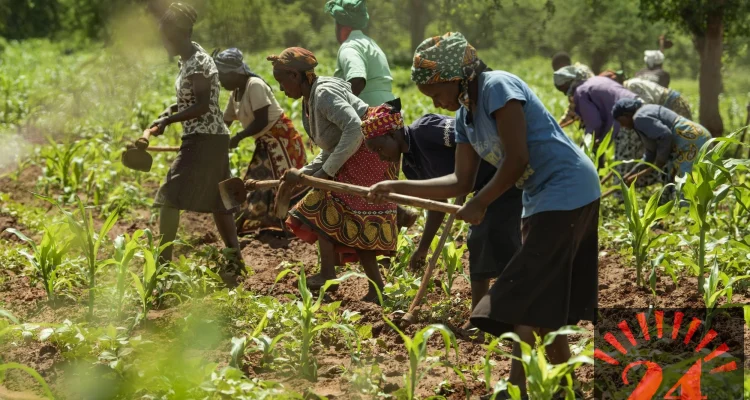
The latest AGRA Food Security Monitor states that the start of the 2026 harvest improved access to own-produced food, farm labour income, and crop sales in much of central and northern Malawi, helping to support minimal food security outcomes there.
However, the report warns that southern and parts of central Malawi remain stressed after consecutive climate shocks and localized flooding that affected more than 300,000 people, while rising fuel and fertilizer costs linked to the conflict in the Middle East are already constraining recovery.
That local strain is colliding with a worsening global cost environment. The report says global food commodity prices rose again in April, with the FAO Food Price Index up 1.6 percent to 130.7, its third straight monthly increase, while grain and oilseed markets also strengthened.
At the same time, global fertilizer prices moved sharply higher, with urea up 49.6 percent year-on-year and DAP, MA, P, and potash also rising, driven by supply disruptions, energy shocks,s and tighter shipping through the Strait of Hormuz.
For Malawi, that is not an abstract international story. It is a cost shock that hits farms, markets,s and transport all at once. The monitor says Malawi recorded a 26 percent jump in both petrol and diesel prices between March and April, feeding directly into the cost of moving food and agricultural inputs.
Fertilizer prices also surged, with the report describing Malawi and Mozambique as facing the steepest escalation in the region, including urea prices that jumped 36 to 58 percent in a single month and stood roughly 88 to 90 percent above a year earlier.
The crop and market picture inside Malawi is mixed, and that is precisely why the country remains vulnerable. Maize prices fell 17 percent month-on-month in dollar terms as harvest inflows reached the market, and the report says bean prices also declined 6 percent as supply improved.
Rice eased by 3 percent month-on-month, though the report still places Malawi among the region’s high-priced rice markets in absolute terms. In other words, the harvest is cooling prices, but not enough to erase the underlying structural pressure.
The deeper problem is that the reprieve is uneven. The report says the harvest is improving food access across much of central and northern Malawi, yet southern districts remain under stress because repeated shocks have weakened household purchasing power and recovery remains incomplete.
It also notes that localized flood damage has already affected livelihoods, while high food prices and elevated inflation continue to squeeze non-food spending. That means families are not simply buying less food; they are also cutting back on school, health, and other essentials.
The policy response is shifting toward resilience, but it is still a defensive strategy. The monitor says Malawi, along with Ethiopia and Kenya, is emphasizing organic, organomineral, and regenerative approaches, including compost, biochar blends, and biological nitrogen fixation, while also relying on existing inorganic stocks and exploring local fertilizer production.
That is sensible, but it is not a fast fix. Malawi is being forced to improvise because global fertilizer markets are being buffeted by geopolitics, and the country’s dependence on imports leaves farmers exposed to shocks they do not control.
The blunt conclusion is this: Malawi has not escaped the food shock. It has merely bought time for the harvest. If fuel and fertilizer remain expensive, the pressure will move back into the next planting season, then into the next harvest, and then into household diets. For now, Malawi is getting a seasonal reprieve. That is not the same as security.