

The way maize issues and tribal voting are being framed in Malawi’s political discourse reflects a serious misunderstanding of how government and democracy actually function.
Let us begin with the maize issue, which has unnecessarily been turned into a political weapon.
When the National Food Reserve Agency (NFRA) announced that it had sufficient maize stocks for the time being, questions were raised about why the government was not compelled to purchase more maize locally.
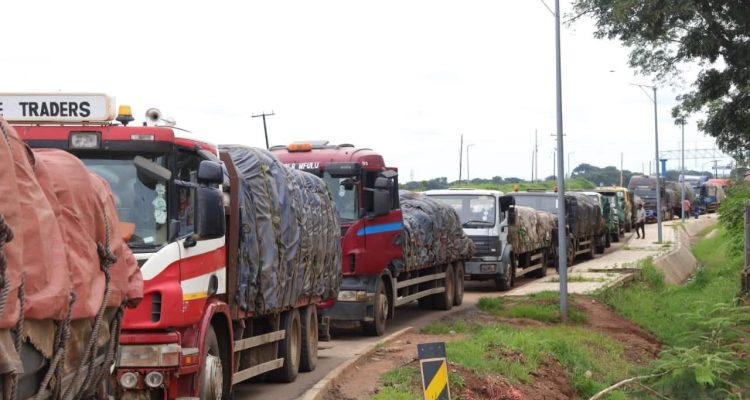
What many critics overlook is the context in which earlier decisions were made. When the Democratic Progressive Party (DPP) administration assumed office, it appealed to Malawians who had maize to sell it to the government. However, many traders and maize holders declined, opting to wait for higher prices.
Faced with an urgent food security situation and a lack of cooperation from local sellers, the government was left with little choice but to procure maize from Zambia. In hindsight, those who refused to sell locally missed an opportunity. It is therefore unfair to fault the government for decisions that were driven by necessity rather than ill intent.
This brings us to the more troubling issue: the misuse of ethnicity in politics.
The argument that Chewa voters could not have voted for APM simply because they were dissatisfied with Chakwera is logically flawed.
Electoral history clearly demonstrates that Malawian voters do not always vote along tribal lines. In fact, many Chewa voters supported APM in previous elections.
If Chewa voters were guided solely by ethnicity, how then do we explain Chakwera’s poor performance in several Chewa-dominated areas?
The uncomfortable truth is simple: Chakwera did not lose because he is Chewa; he lost because of poor governance.
Arthur Peter Mutharika governed as president for all Malawians, regardless of tribe or region. Claims to the contrary insult voters who based their choices on economic performance, development initiatives, and public policy.
It is equally wrong to suggest that Chakwera lost because other tribes rejected him. Should we then argue that Malawians refused to vote for him merely because he is Chewa? Such thinking is divisive, careless, and deeply harmful to national unity.
In reality, many Chewa voters themselves rejected Chakwera and the MCP government not out of self-hatred, but because they were dissatisfied with weak leadership, unfulfilled promises, and an administration increasingly associated with serious corruption allegations.
Linking Chewa identity to Chakwera’s failures is both unjust and misleading. Chewa voters, like all Malawians, are independent thinkers who vote based on performance. Ultimately, it was Chewa voters alongside others across the country who rejected Chakwera and the MCP.
Malawi must move away from tribal blame games and political propaganda. Elections are decided by trust, performance, and credibility not ethnicity. When our politics embraces this reality, our democracy will be far stronger.