

By Davies Munthali
This season’s unrelenting rains did not just fall on Malawi.
They carved a path of ruin. Roads have vanished, villages have been swept away, and the country itself seems to have turned against its people.
The catastrophe, however, is not purely natural.
It is the culmination of years of deforestation, a crisis long predicted and now violently fulfilled.In Kasungu district, the M1, a national economic lifeline, has been severed near Mpasadzi.
To the west, along the M5 in Nkhotakota, the damage is measured in human displacement. Communities have been erased by floodwaters, forcing thousands into temporary camps, their livelihoods washed away in an instant.
For years, the Department of Forestry warned this would happen.
Director of Forestry Titus Zulu became the steady voice of that caution. “When the roots are gone,” he repeated in public forums and interviews, “the soil has no anchor.”
Today, his refrain echoes across ravaged landscapes like a bitter prophecy.
Zulu has advocated tirelessly for the enforcement of the Forest Act, legislation designed to curb illegal land clearing and rampant charcoal production.
Yet these efforts collide daily with the realities of poverty.
In a nation where informal economies thrive on forest resources, the law is often viewed not as protection, but as persecution.
“We are cutting the very branch we sit on,” says environmental activist Mathews Malata, who amplifies the forestry department’s message with the Mr. Green campaigns. “These floods are not an act of God. They are an act of deforestation.”
In response, this year’s National Forestry Season, which runs from December through April, has taken on the character of an emergency intervention.
Under the theme “Trees and Forests for Community Resilience,” the government, alongside NGOs and community groups, is racing to plant millions of indigenous seedlings.
The focus is on species with deep, stabilizing roots, placed deliberately on barren slopes and eroded riverbanks.
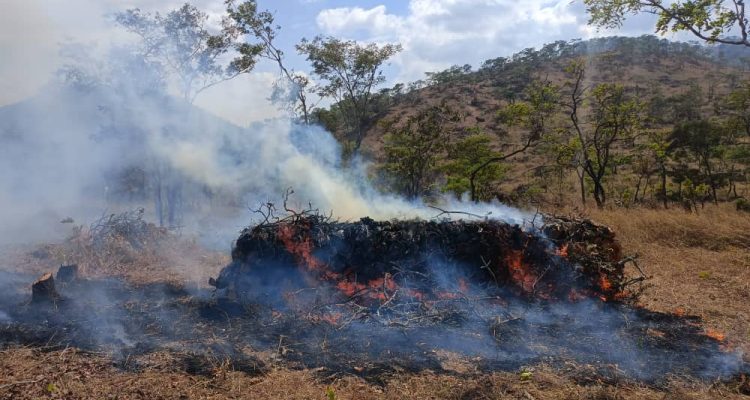
But the mission is fraught. Even as new trees go into the ground, the pressure to cut mature ones for charcoal and agriculture persists.
Legal frameworks exist, but enforcement remains inconsistent, underfunded, and often geographically outmatched.
Amid the crisis, however, a fragile resilience is taking root. In areas hardest hit, like Nkhotakota, some communities are now leading reforestation efforts.
Having witnessed the alternative, a wall of water where their homes once stood, they are volunteering in numbers, a shift documented by local officials and shared widely on social media.
The narrative of Malawi’s floods is now split into two acts.
The first was written by water and wind, a story of destruction etched into shattered infrastructure and shattered lives.
The second is being written now, with hands in the soil. It is a story of reckoning and recovery.
It poses a fundamental question to the nation: Can lessons be learned in time? Can a country rebuild its natural defenses, tree by tree, before the next rains gather?
The answer will determine not just the landscape of Malawi, but the fate of its people.