

Malawi’s efforts to stabilise public finances through tax reforms risk falling short unless long-standing structural weaknesses in the value added tax (VAT) system are addressed, economists and international financial institutions have warned.
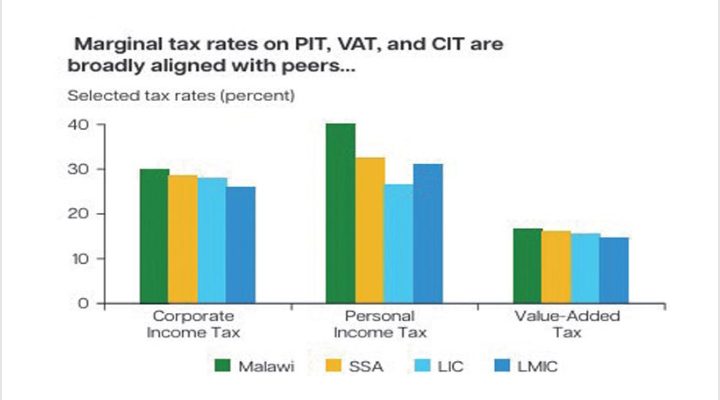
In its December 2025 Public Finance Review, the World Bank says Malawi’s VAT system remains among the least efficient in the region, largely due to widespread exemptions that narrow the tax base and weaken revenue mobilisation.
The warning comes as the government moves to broaden the tax base under the 2025/26 Mid-Year Budget Review and recent VAT amendments that removed exemptions and zero-rating on selected goods.
Authorities have also increased the VAT rate from 16.5 percent to 17.5 percent, effective April 1, 2026.
Despite the rate increase, the Bank notes that Malawi generates significantly less VAT revenue per unit of consumption than its peers.
The VAT efficiency ratio declined from 0.2 in 2021 to 0.12 in 2022, compared to levels above 0.5 in Mozambique and Zambia.
The Bank attributes the weak performance to extensive exemptions, noting that only about 44 percent of household consumption is taxed, while the benefits to low-income households remain limited.
Economics Association of Malawi president Bertha Bangara-Chikadza said the reforms could strengthen fiscal discipline but cautioned that weak enforcement and inflationary pressures could undermine the anticipated gains.
Centre for Social Concern executive director Agnes Nyirongo warned that higher VAT could exacerbate inequality, as low-income households spend a larger share of their income on consumption.
She noted that newly taxed items including water, animal products, buses and laundry soap could drive up living costs in the absence of adequate social protection.
While the World Bank and the International Monetary Fund support broadening the VAT base, both stress that stronger tax administration and careful sequencing of reforms are essential to safeguard economic growth and protect vulnerable households.