

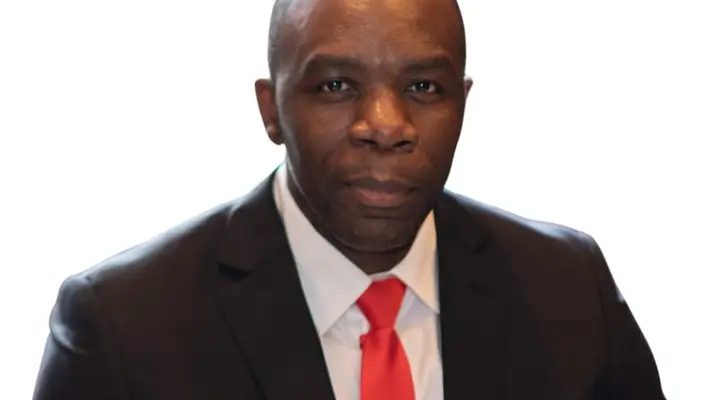
Chalo Mvula’s recent assertions regarding the arrests of Malawi Congress Party (MCP) members are not only exaggerated but also dangerously misleading.
His claim that the nation’s economy could collapse merely because a handful of opposition figures were detained is unfounded and disregards both the broader economic realities and the legal framework in Malawi.
The country’s economy driven by agriculture, mining, energy, and services is shaped by structural factors such as global commodity prices, foreign investment, and fiscal management.
There is no credible evidence to suggest that the arrest of a few politicians could singlehandedly destabilize macroeconomic stability.
Linking routine law enforcement actions to national economic ruin is therefore irresponsible, especially coming from someone of Mvula’s political stature.
Mvula’s remarks appear more like political theater than objective critique.
The arrests he condemns including those of Richard Chimwendo Banda, Jessie Kabwila, and Vitumbiko Mumba are part of ongoing legal investigations.
Malawi’s police and judiciary operate under established laws and due process, and there is no verified evidence indicating that these actions were intended to target the opposition unfairly.
By portraying these arrests as a “dangerous game” orchestrated by the Democratic Progressive Party (DPP), Mvula politicizes the legal system, framing lawful enforcement as a partisan attack and thereby generating unnecessary tension in the political landscape.
Furthermore, Mvula’s assertion that international donor confidence will automatically wane as a result of these arrests is both simplistic and misleading. Malawi’s international partners and financial institutions, such as the World Bank, IMF, and bilateral donors, base their engagement on comprehensive evaluations that include macroeconomic indicators, fiscal discipline, policy consistency, and governance standards.
While political stability is one of many factors considered, donors rarely respond to isolated political events in isolation, particularly when legal processes are transparent and due process is observed. Suggesting that donor confidence is immediately at risk exaggerates the impact of routine political accountability measures and risks misleading the public about the realities of international cooperation.
By framing these legal actions as a threat to national stability, Mvula’s statements risk sowing distrust in Malawi’s democratic institutions.
The constitution provides mechanisms for law enforcement, judicial review, and political accountability.
Public discourse benefits when political leaders engage constructively with these institutions rather than using them to stoke partisan alarmism.
Exaggerated claims such as linking individual arrests to economic collapse do not foster rational debate, instead, they deepen divisions and undermine confidence in lawful governance.
In conclusion, Chalo Mvula’s recent comments constitute an irresponsible overstatement that politicizes lawful law enforcement.
Rather than promoting informed discussion or accountability, his statements risk misleading the public, eroding trust in Malawi’s governance systems, and inflaming partisan tensions.
Malawi’s democracy and economy are resilient enough to withstand lawful political and legal processes, and reducing complex national outcomes to the arrest of a few politicians is both factually inaccurate and dangerously simplistic.