

Malawi’s long-running battle with runaway public spending has taken an unexpected turn, with the World Bank reporting that government has finally stayed within its approved budget.
The World Bank says for the first time, Malawi has recorded a notable improvement in public financial management after executing its national budget within the expenditure limits approved by Parliament
The development, which the Bank says signals progress in efforts to restore fiscal discipline, comes as Malawi continues to grapple with high public debt, rising interest costs and weak economic growth.
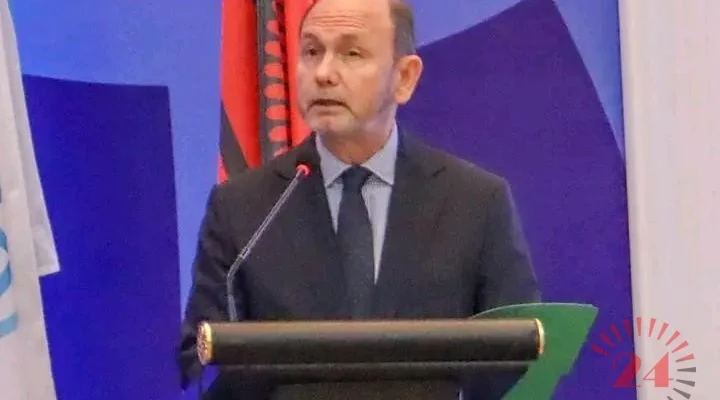
World Bank Division Director for Malawi, Tanzania, Zambia and Zimbabwe, Firas Raad, disclosed the development on Thursday in Lilongwe when he officially opened the launch of the 23rd Malawi Economic Monitor (MEM), titled Building Stability to Unlock Growth.
Raad said the latest figures indicate that government has begun exercising greater control over public expenditure, contributing to a reduction in the country’s primary deficit.
“For the first time in several years, the budget was executed within the approved limits, and the government recorded a significant reduction in its primary deficit,” Raad said, citing findings from the report.
According to the 23rd MEM, Malawi’s fiscal deficit declined to 8.8 percent of Gross Domestic Product (GDP) in the 2025/26 financial year, from an average of 10.7 percent over the preceding three years.
The World Bank attributes the improvement to tighter expenditure controls, an increase in the Value Added Tax (VAT) rate and the introduction of electronic invoicing, which is intended to strengthen revenue collection and reduce leakages.
The Bank says the development demonstrates that fiscal consolidation measures are beginning to produce results, although it cautions that Malawi’s public finances remain highly vulnerable.
The latest assessment comes after years of persistent fiscal pressures that have contributed to rising public debt and increased government borrowing.
The World Bank has previously warned that Malawi’s fiscal imbalances and high debt levels have constrained economic and social development, while costly domestic borrowing has increased the share of public revenue allocated to interest payments.
Despite the improvement in the fiscal deficit, the World Bank says government continues to face substantial pressure from the cost of servicing its debt.
High interest payments consume a significant proportion of domestic revenue, leaving fewer resources available for productive investment and essential social services.
The Bank says this situation risks crowding out expenditure that could otherwise support infrastructure, health, education and other areas critical to economic development.
Public debt also remains elevated, with Malawi still facing debt distress. The World Bank therefore says the recent fiscal improvement should be viewed as the beginning of a longer adjustment process rather than a resolution of the country’s debt challenges.
The latest MEM identifies stronger fiscal discipline, increased domestic revenue mobilisation, debt restructuring and improved public-sector efficiency among the measures needed to strengthen Malawi’s fiscal position.
While the improvement in public finances offers some indication of stabilisation, the World Bank says Malawi continues to face a more fundamental challenge, with economic growth remaining too weak to substantially improve living standards.
The latest MEM projects real GDP growth at 2.7 percent in 2026, up from an estimated 2.5 percent in 2025.
However, with Malawi’s population growing by approximately 2.6 percent annually, the projected economic expansion leaves limited room for growth in income per person.
The World Bank says growth at such levels remains insufficient to generate meaningful improvements in household incomes or significantly reduce poverty.
The Bank’s latest assessment also points to persistent structural constraints, including unreliable electricity, foreign-exchange market distortions, weak domestic supply chains and a difficult business environment. These factors continue to limit private investment, productivity and export diversification.
The World Bank says Malawi now needs to build on the progress made in fiscal management by creating conditions that enable the private sector to increase investment and create jobs.
The 23rd MEM identifies four broad areas requiring reform: restoring macroeconomic stability, creating a more dynamic private sector, improving service delivery and resilience, and strengthening critical infrastructure.
The report also highlights the need for reliable electricity, improved transport systems, better access to regional power markets and reforms capable of encouraging investment in productive sectors.
Mining, tourism and agriculture are among the sectors identified in recent World Bank assessments as having potential to attract private investment, increase exports and create employment if key policy and infrastructure constraints are addressed.
The 23rd MEM also focuses on the performance of state-owned enterprises (SOEs) and their impact on public finances.
The report says many SOEs remain financially fragile despite significant growth in their assets and continue to depend on government transfers, subsidies and guarantees.
According to the World Bank, losses, weak cash flows, poor debt-servicing capacity and weak governance at some SOEs can create additional fiscal risks for government.
The Bank says these risks can arise through government guarantees, arrears and other liabilities that may ultimately have to be absorbed by the public sector.
It recommends reforms targeting high-risk entities, including stronger governance, greater operational transparency, improved revenue collection, better debt management and greater independence and expertise on boards.
The World Bank’s assessment presents a mixed picture of Malawi’s economy.
On one hand, the execution of the national budget within approved limits and the narrowing of the fiscal deficit indicate progress in efforts to restore fiscal discipline.
On the other hand, high debt-servicing costs, debt distress, weak economic growth, foreign-exchange shortages and structural weaknesses continue to constrain the economy.
The Bank says sustained implementation of reforms will be necessary if the recent fiscal improvements are to translate into stronger private investment, higher productivity, more jobs and improved household incomes.
The 23rd Malawi Economic Monitor therefore places fiscal discipline within a broader objective of building economic stability capable of unlocking investment and sustainable growth, rather than treating deficit reduction as an end in itself.
The World Bank says for the first time, Malawi has recorded a notable improvement in public financial management after executing its national budget within the expenditure limits approved by Parliament
The development, which the Bank says signals progress in efforts to restore fiscal discipline, comes as Malawi continues to grapple with high public debt, rising interest costs and weak economic growth.
World Bank Division Director for Malawi, Tanzania, Zambia and Zimbabwe, Firas Raad, disclosed the development on Thursday in Lilongwe when he officially opened the launch of the 23rd Malawi Economic Monitor (MEM), titled Building Stability to Unlock Growth.
Raad said the latest figures indicate that government has begun exercising greater control over public expenditure, contributing to a reduction in the country’s primary deficit.
“For the first time in several years, the budget was executed within the approved limits, and the government recorded a significant reduction in its primary deficit,” Raad said, citing findings from the report.
According to the 23rd MEM, Malawi’s fiscal deficit declined to 8.8 percent of Gross Domestic Product (GDP) in the 2025/26 financial year, from an average of 10.7 percent over the preceding three years.
The World Bank attributes the improvement to tighter expenditure controls, an increase in the Value Added Tax (VAT) rate and the introduction of electronic invoicing, which is intended to strengthen revenue collection and reduce leakages.
The Bank says the development demonstrates that fiscal consolidation measures are beginning to produce results, although it cautions that Malawi’s public finances remain highly vulnerable.
The latest assessment comes after years of persistent fiscal pressures that have contributed to rising public debt and increased government borrowing.
The World Bank has previously warned that Malawi’s fiscal imbalances and high debt levels have constrained economic and social development, while costly domestic borrowing has increased the share of public revenue allocated to interest payments.
Despite the improvement in the fiscal deficit, the World Bank says government continues to face substantial pressure from the cost of servicing its debt.
High interest payments consume a significant proportion of domestic revenue, leaving fewer resources available for productive investment and essential social services.
The Bank says this situation risks crowding out expenditure that could otherwise support infrastructure, health, education and other areas critical to economic development.
Public debt also remains elevated, with Malawi still facing debt distress. The World Bank therefore says the recent fiscal improvement should be viewed as the beginning of a longer adjustment process rather than a resolution of the country’s debt challenges.
The latest MEM identifies stronger fiscal discipline, increased domestic revenue mobilisation, debt restructuring and improved public-sector efficiency among the measures needed to strengthen Malawi’s fiscal position.
While the improvement in public finances offers some indication of stabilisation, the World Bank says Malawi continues to face a more fundamental challenge, with economic growth remaining too weak to substantially improve living standards.
The latest MEM projects real GDP growth at 2.7 percent in 2026, up from an estimated 2.5 percent in 2025.
However, with Malawi’s population growing by approximately 2.6 percent annually, the projected economic expansion leaves limited room for growth in income per person.
The World Bank says growth at such levels remains insufficient to generate meaningful improvements in household incomes or significantly reduce poverty.
The Bank’s latest assessment also points to persistent structural constraints, including unreliable electricity, foreign-exchange market distortions, weak domestic supply chains and a difficult business environment. These factors continue to limit private investment, productivity and export diversification.
The World Bank says Malawi now needs to build on the progress made in fiscal management by creating conditions that enable the private sector to increase investment and create jobs.
The 23rd MEM identifies four broad areas requiring reform: restoring macroeconomic stability, creating a more dynamic private sector, improving service delivery and resilience, and strengthening critical infrastructure.
The report also highlights the need for reliable electricity, improved transport systems, better access to regional power markets and reforms capable of encouraging investment in productive sectors.
Mining, tourism and agriculture are among the sectors identified in recent World Bank assessments as having potential to attract private investment, increase exports and create employment if key policy and infrastructure constraints are addressed.
The 23rd MEM also focuses on the performance of state-owned enterprises (SOEs) and their impact on public finances.
The report says many SOEs remain financially fragile despite significant growth in their assets and continue to depend on government transfers, subsidies and guarantees.
According to the World Bank, losses, weak cash flows, poor debt-servicing capacity and weak governance at some SOEs can create additional fiscal risks for government.
The Bank says these risks can arise through government guarantees, arrears and other liabilities that may ultimately have to be absorbed by the public sector.
It recommends reforms targeting high-risk entities, including stronger governance, greater operational transparency, improved revenue collection, better debt management and greater independence and expertise on boards.
The World Bank’s assessment presents a mixed picture of Malawi’s economy.
On one hand, the execution of the national budget within approved limits and the narrowing of the fiscal deficit indicate progress in efforts to restore fiscal discipline.
On the other hand, high debt-servicing costs, debt distress, weak economic growth, foreign-exchange shortages and structural weaknesses continue to constrain the economy.
The Bank says sustained implementation of reforms will be necessary if the recent fiscal improvements are to translate into stronger private investment, higher productivity, more jobs and improved household incomes.
The 23rd Malawi Economic Monitor therefore places fiscal discipline within a broader objective of building economic stability capable of unlocking investment and sustainable growth, rather than treating deficit reduction as an end in itself.