

Ghana has launched a formal inquiry into a series of deadly building collapses that have claimed lives across the country.
The move places state accountability at the centre of a crisis that has exposed concerns over construction standards, regulatory oversight and public safety.
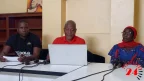
Interior Minister Muntaka Mohammed-Mubarak has inaugurated a 13-member Committee of Inquiry tasked with investigating the causes of recent building collapses and identifying those responsible.
“The collapse of a building is not merely a structural failure. It is often a failure of systems, processes, oversight and accountability,” Mohammed-Mubarak said.
“We owe it to the victims and future generations to ensure that the lessons from these incidents lead to meaningful reforms.”
The committee has the legal authority to summon witnesses, gather evidence and submit recommendations that the government is expected to act on.
Ghana has recorded several fatal building collapses in recent years involving structures that failed during construction or while occupied.
In March this year, three people died after a three-storey building being used as a church collapsed on worshippers in Accra’s New Town area. Local residents told media outlets the unfinished structure had stood for years despite visible signs of weakness.
In May, another building collapse in Accra’s North Industrial Area killed two people and injured several others, intensifying concerns over construction standards and enforcement.
At least five people have died in two major building collapses reported in Accra this year alone.
Experts and media investigations in Ghana have repeatedly pointed to poor workmanship, substandard materials, unauthorised construction and weak enforcement of building regulations as common factors behind the incidents.
Accra recorded at least five major building collapses between 2012 and 2016, resulting in 19 deaths. The deadliest was the 2012 Melcom disaster near Achimota, which killed 14 people. Other incidents included the 2014 Grand View Hotel collapse in Nii-Boi Town, which claimed four lives, and the collapse of an Export Development and Agricultural Investment Fund (EDAIF) building in Cantonments, which killed one person. A hostel collapse at Central University in Dawhenya caused no fatalities.
More recent incidents include a multi-storey building collapse in Cantonments that killed three people and the collapse of an unfinished building near Accra’s Airport area.
Investigations into previous incidents have repeatedly pointed to structural weaknesses, poor workmanship and substandard construction practices as contributing factors.
The problem is not unique to Ghana.
Across Africa, fatal building collapses have exposed weaknesses in urban planning systems, regulatory oversight and enforcement of construction standards.
In 2014, 116 people died when a multi-storey guesthouse at the Synagogue, Church of All Nations (SCOAN) in Lagos, Nigeria, collapsed. Eighty-one of the victims were South Africans.
Similar incidents have been reported in countries including Kenya, Tanzania and South Africa, often without triggering independent investigations or prosecutions.
The Ghana inquiry is expected to place pressure on regulators, engineers and local authorities to account for building approvals, inspections and enforcement practices that may have been bypassed or ignored.
The committee will submit its findings to the Interior Ministry, after which the government is expected to act on its recommendations.
For Malawi, the development highlights the role of independent inquiries in addressing public tragedies and strengthening public accountability.
Malawi’s recent high-profile investigations include the inquiry into the military plane crash that killed Vice President Saulos Chilima and eight others in June 2024.
The country also continues to follow court proceedings linked to the 2020 petrol-bomb attack on UTM Party offices in Lilongwe’s Area 24, which claimed the lives of three members of the Tambala family. Security guard Selemani Tambala, his wife Ayiles and their son Shukuran died from severe burns sustained in the attack.
The arson attack, which occurred ahead of Malawi’s Fresh Presidential Election, became one of the country’s most politically sensitive criminal cases, with several suspects facing murder charges.
Both the Chilima plane crash investigation and the Tambala family case have generated intense public debate, with critics and some sections of society questioning the transparency, independence and handling of the processes.
Ghana’s approach, which gives a formal committee powers to compel witnesses and gather evidence, is likely to renew discussion about how Malawi investigates major disasters and whether existing mechanisms provide sufficient public confidence.