

Should Malawi or SA Govt be held accountable for the ever massive repatriation of undocumented Malawians?
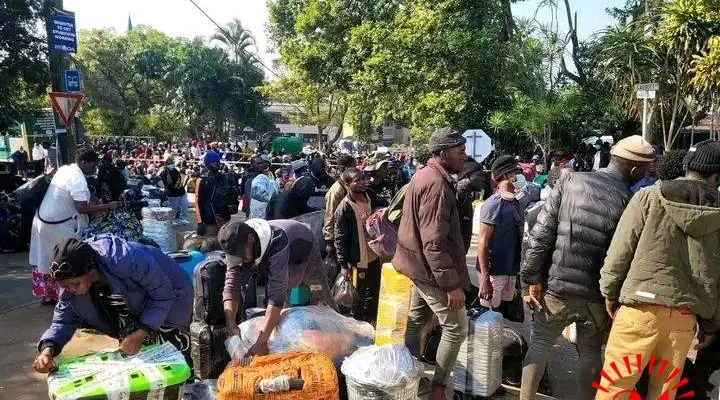
The large-scale repatriation of Malawian nationals from South Africa has sparked debate over whether responsibility lies with the Government of Malawi, the Government of South Africa, or both.
An objective assessment suggests that the issue is driven by a combination of economic migration, immigration enforcement, labour market pressures, and humanitarian concerns rather than a single government’s actions.
Recent reports indicate that more than 38,000 Malawians have been processed for repatriation from South Africa during recent operations.
Many returned voluntarily through assisted repatriation programmes, while others were deported after being found without valid immigration documentation.
A significant number of undocumented Malawians fled their workplaces and residences following anti-illegal immigration operations, protests, and fears of arrest or deportation.
Many reported concerns about intimidation, xenophobic and afrophobic attacks, harassment, loss of employment, lack of access to food, and uncertainty regarding their legal status.
Others sought temporary refuge at Malawi’s diplomatic missions or designated assembly points while awaiting repatriation.
Human rights organisations have repeatedly called for the protection of migrants from violence regardless of their immigration status.
Sadly, reports from temporary repatriation centres in Sherwood and Musina described overcrowding, inadequate shelter, limited sanitation facilities, shortages of food and bedding, and prolonged waiting periods before transportation home.
Such conditions have raised humanitarian concerns.
Although governments face logistical challenges during large-scale repatriation exercises, international human rights principles require that all people—including undocumented migrants—be treated with dignity and provided with basic necessities.
It is important to appreciate that economic factors remain the principal reason many Malawians migrate to South Africa.
The adverse conditions in Malawi include high unemployment, low wages, limited industrial growth, poverty, currency instability, and the search for better educational and business opportunities.
In fact, South Africa’s comparatively larger economy has historically attracted migrants from across Southern Africa including Malawi.
So migration issues are not new in South Africa. They were there during apartheid period. They were there during the Nelson Mandela regime. They are there even now.
However, while the motivations of leaving one’s country for better opportunities are understandable, entering or remaining in another country without legal documentation violates immigration laws.
Therefore, on humanitarian and ubuntu perspective, the economic reasons are reasonably very compelling, but they do not exempt migrants from complying with legal immigration procedures.
It has been observed that some anti-illegal immigration groups argue that undocumented foreign nationals reduce employment opportunities for South Africans.
However, there is currently no conclusive evidence demonstrating that the number of Malawians or other undocumented migrants repatriated directly corresponds to an equal number of jobs subsequently created for South African citizens.
In fact, labour market outcomes are influenced by numerous factors, including economic growth, investment, skills shortages, business confidence, and broader economic policies.
Similarly, there is insufficient evidence to conclude that chasing or harassing undocumented migrants alone creates sustainable employment opportunities.
As a matter of fact, economists unanimously agree that long-term job creation depends primarily on economic expansion, investment, education, industrial development, and entrepreneurship rather than immigration enforcement alone.
The hard truth is that even if immigration control improves compliance with labour laws, but it is not, by itself, a comprehensive employment strategy.
So the claim that foreign nationals are largely responsible for various crimes in South Africa is also highly contested.
While some undocumented migrants have been arrested for criminal offences, available crime statistics do not support the conclusion that foreign nationals as a whole are responsible for most crimes in South Africa.
In fact, the overwhelming majority of crimes recorded in South Africa involve South African citizens simply because they constitute the vast majority of the population.
It is also vital to appreciate that criminal responsibility should therefore be determined individually rather than collectively based on nationality.
Moving forward, both governments have important responsibilities.
The Malawi Government must strengthen economic development, create employment opportunities, improve vocational training, promote investment, expand social protection, and improve border management while educating citizens about the risks of irregular migration.
On the other hand, South African Government should continue enforcing immigration laws fairly and consistently, process asylum and work permit applications efficiently, protect all individuals from xenophobic and afrophobic violence, and ensure that repatriation processes comply with ubuntu principles and humanitarian standards.
Jointly, both countries should enhance intelligence sharing on human trafficking, strengthening legal labour migration pathways, improving border management, expanding bilateral labour agreements where appropriate, and cooperating on regional economic development through the Southern African Development Community (SADC).
It is envisaged that massive public awareness campaigns discouraging irregular migration while promoting lawful migration channels can also reduce future illegal migration.
In conclusion, assigning responsibility solely to either Malawi or South Africa oversimplifies a complex regional challenge.
Malawi bears a gargantuan responsibility for addressing the economic conditions that encourage outward migration, while South Africa has the sovereign right to fairly enforce its immigration laws but also the obligation to uphold human rights during enforcement and repatriation.
Therefore, sustainable solutions require cooperation between both governments, regional institutions, employers, and communities rather than blame directed at one side alone.
An objective assessment suggests that the issue is driven by a combination of economic migration, immigration enforcement, labour market pressures, and humanitarian concerns rather than a single government’s actions.
Recent reports indicate that more than 38,000 Malawians have been processed for repatriation from South Africa during recent operations.
Many returned voluntarily through assisted repatriation programmes, while others were deported after being found without valid immigration documentation.
A significant number of undocumented Malawians fled their workplaces and residences following anti-illegal immigration operations, protests, and fears of arrest or deportation.
Many reported concerns about intimidation, xenophobic and afrophobic attacks, harassment, loss of employment, lack of access to food, and uncertainty regarding their legal status.
Others sought temporary refuge at Malawi’s diplomatic missions or designated assembly points while awaiting repatriation.
Human rights organisations have repeatedly called for the protection of migrants from violence regardless of their immigration status.
Sadly, reports from temporary repatriation centres in Sherwood and Musina described overcrowding, inadequate shelter, limited sanitation facilities, shortages of food and bedding, and prolonged waiting periods before transportation home.
Such conditions have raised humanitarian concerns.
Although governments face logistical challenges during large-scale repatriation exercises, international human rights principles require that all people—including undocumented migrants—be treated with dignity and provided with basic necessities.
It is important to appreciate that economic factors remain the principal reason many Malawians migrate to South Africa.
The adverse conditions in Malawi include high unemployment, low wages, limited industrial growth, poverty, currency instability, and the search for better educational and business opportunities.
In fact, South Africa’s comparatively larger economy has historically attracted migrants from across Southern Africa including Malawi.
So migration issues are not new in South Africa. They were there during apartheid period. They were there during the Nelson Mandela regime. They are there even now.
However, while the motivations of leaving one’s country for better opportunities are understandable, entering or remaining in another country without legal documentation violates immigration laws.
Therefore, on humanitarian and ubuntu perspective, the economic reasons are reasonably very compelling, but they do not exempt migrants from complying with legal immigration procedures.
It has been observed that some anti-illegal immigration groups argue that undocumented foreign nationals reduce employment opportunities for South Africans.
However, there is currently no conclusive evidence demonstrating that the number of Malawians or other undocumented migrants repatriated directly corresponds to an equal number of jobs subsequently created for South African citizens.
In fact, labour market outcomes are influenced by numerous factors, including economic growth, investment, skills shortages, business confidence, and broader economic policies.
Similarly, there is insufficient evidence to conclude that chasing or harassing undocumented migrants alone creates sustainable employment opportunities.
As a matter of fact, economists unanimously agree that long-term job creation depends primarily on economic expansion, investment, education, industrial development, and entrepreneurship rather than immigration enforcement alone.
The hard truth is that even if immigration control improves compliance with labour laws, but it is not, by itself, a comprehensive employment strategy.
So the claim that foreign nationals are largely responsible for various crimes in South Africa is also highly contested.
While some undocumented migrants have been arrested for criminal offences, available crime statistics do not support the conclusion that foreign nationals as a whole are responsible for most crimes in South Africa.
In fact, the overwhelming majority of crimes recorded in South Africa involve South African citizens simply because they constitute the vast majority of the population.
It is also vital to appreciate that criminal responsibility should therefore be determined individually rather than collectively based on nationality.
Moving forward, both governments have important responsibilities.
The Malawi Government must strengthen economic development, create employment opportunities, improve vocational training, promote investment, expand social protection, and improve border management while educating citizens about the risks of irregular migration.
On the other hand, South African Government should continue enforcing immigration laws fairly and consistently, process asylum and work permit applications efficiently, protect all individuals from xenophobic and afrophobic violence, and ensure that repatriation processes comply with ubuntu principles and humanitarian standards.
Jointly, both countries should enhance intelligence sharing on human trafficking, strengthening legal labour migration pathways, improving border management, expanding bilateral labour agreements where appropriate, and cooperating on regional economic development through the Southern African Development Community (SADC).
It is envisaged that massive public awareness campaigns discouraging irregular migration while promoting lawful migration channels can also reduce future illegal migration.
In conclusion, assigning responsibility solely to either Malawi or South Africa oversimplifies a complex regional challenge.
Malawi bears a gargantuan responsibility for addressing the economic conditions that encourage outward migration, while South Africa has the sovereign right to fairly enforce its immigration laws but also the obligation to uphold human rights during enforcement and repatriation.
Therefore, sustainable solutions require cooperation between both governments, regional institutions, employers, and communities rather than blame directed at one side alone.
Sponsored
Sponsored Sponsored Link