

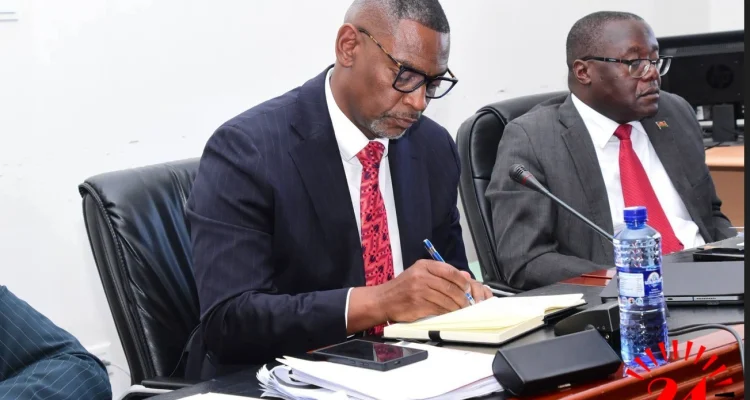
Testimonies in the ongoing parliamentary investigation into the fatal military plane crash that killed Malawi’s Vice President Saulos Chilima and eight others have unexpectedly sparked a nationwide conversation about mental health and the critical importance of communicating with loved ones.
During the hearings, investigators have routinely pressed the widows and families of the victims with specific questions: “Was he or she a good communicator?” across their various endeavors.
The profound weight of these questions was laid bare during the emotional testimony of Sarah, the widow of victim Lapukeni.
She told the committee that her husband, who was serving as a senior official in the Ministry of Foreign Affairs, had exhibited deeply unsettling communication in the days leading up to the crash.
Before an official trip to South Korea, Lapukeni told her he was organizing his office ‘because he might never return.’ When she asked what he meant, he simply replied, ‘You will understand later.’
The disturbing remarks continued on June 10, as Lapukeni prepared to travel to Nkhata Bay for the funeral of lawyer Ralph Kasambara. “He told me we should spend time together because he might not come back,” Sarah testified.
Most hauntingly, after getting into the vehicle to leave for the airport, Lapukeni suddenly returned to ask her for his passport.
“I asked why he needed a passport when he was only going to Nkhata Bay. He told me it would be a sign that would help me identify him,” Sarah revealed.
“When I asked what he meant, he again replied, ‘You will understand later.’”
Lapukeni’s cryptic warnings, now tragically clear in hindsight, underscore the heavy psychological burden of unspoken context.
While the ad hoc committee’s primary focus remains uncovering the physical root cause of the crash, this line of questioning has resonated far beyond aviation logistics.
It has highlighted that communicating what truly matters extends far beyond physical travel to encompass sharing fears, daily stressors, and unspoken disappointments.
Matias Ngaliba, Mental health expert note that leaving loved ones in the dark, whether through cryptic remarks or hiding inner struggles, breeds chronic anxiety.
The psychological toll of being shut out and left to guess what a family member is experiencing can be deeply traumatizing.
When unpredictable events occur, those unspoken details become the difference between shared support and unbearable isolation.
Conversely, when individuals bottle up their thoughts, they carry a silent weight.
Sharing this mental load with a trusted loved one acts as a necessary release valve, helping to prevent burnout, depression, and emotional detachment.
This level of transparency shifts communication from a mere exchange of facts to a vital lifeline of emotional support.
As the parliamentary ad hoc committee continues its formal audit of the crash, advocates are urging the public to conduct an informal audit of their own habits.
Citizens are being asked to examine if their silence is a product of neglect, a fear of vulnerability, or a misguided desire for absolute autonomy, recognizing communication as an essential daily practice for mental resilience.
During the hearings, investigators have routinely pressed the widows and families of the victims with specific questions: “Was he or she a good communicator?” across their various endeavors.
The profound weight of these questions was laid bare during the emotional testimony of Sarah, the widow of victim Lapukeni.
She told the committee that her husband, who was serving as a senior official in the Ministry of Foreign Affairs, had exhibited deeply unsettling communication in the days leading up to the crash.
Before an official trip to South Korea, Lapukeni told her he was organizing his office ‘because he might never return.’ When she asked what he meant, he simply replied, ‘You will understand later.’
The disturbing remarks continued on June 10, as Lapukeni prepared to travel to Nkhata Bay for the funeral of lawyer Ralph Kasambara. “He told me we should spend time together because he might not come back,” Sarah testified.
Most hauntingly, after getting into the vehicle to leave for the airport, Lapukeni suddenly returned to ask her for his passport.
“I asked why he needed a passport when he was only going to Nkhata Bay. He told me it would be a sign that would help me identify him,” Sarah revealed.
“When I asked what he meant, he again replied, ‘You will understand later.’”
Lapukeni’s cryptic warnings, now tragically clear in hindsight, underscore the heavy psychological burden of unspoken context.
While the ad hoc committee’s primary focus remains uncovering the physical root cause of the crash, this line of questioning has resonated far beyond aviation logistics.
It has highlighted that communicating what truly matters extends far beyond physical travel to encompass sharing fears, daily stressors, and unspoken disappointments.
Matias Ngaliba, Mental health expert note that leaving loved ones in the dark, whether through cryptic remarks or hiding inner struggles, breeds chronic anxiety.
The psychological toll of being shut out and left to guess what a family member is experiencing can be deeply traumatizing.
When unpredictable events occur, those unspoken details become the difference between shared support and unbearable isolation.
Conversely, when individuals bottle up their thoughts, they carry a silent weight.
Sharing this mental load with a trusted loved one acts as a necessary release valve, helping to prevent burnout, depression, and emotional detachment.
This level of transparency shifts communication from a mere exchange of facts to a vital lifeline of emotional support.
As the parliamentary ad hoc committee continues its formal audit of the crash, advocates are urging the public to conduct an informal audit of their own habits.
Citizens are being asked to examine if their silence is a product of neglect, a fear of vulnerability, or a misguided desire for absolute autonomy, recognizing communication as an essential daily practice for mental resilience.