

NBS Bank shakes up banking model to unlock growth for Malawi’s businesses
Malawian entrepreneurs could soon find it easier to grow their ideas into thriving companies as NBS Bank has scrapped its Small and Medium Enterprise (SME) Banking model in a bold shift aimed at reshaping how businesses access finance, support and long-term growth opportunities.
NBS Bank has unveiled one of the most significant strategic changes in its history, abandoning SME Banking and introducing a new Business Banking model that it says will transform how Malawian businesses are financed and supported.
The bank says the shift is not just a rebrand, but a complete change in philosophy, moving away from categorising businesses by size and instead focusing on their potential to grow into major industry players.
The announcement was made at the Bingu International Convention Centre (BICC) in Lilongwe, where the bank positioned itself as a long-term partner for entrepreneurs from start-up stage to large corporate growth.
Under the new approach, NBS Bank says the traditional SME label has become too limiting because it defines businesses by where they are today, not where they can go in future.
Chief Executive Officer Temwani Simwaka said the bank is now committed to supporting businesses based on ambition rather than size.
“We have not simply introduced a new banking proposition. We have declared a new direction,” Simwaka said. “Businesses should never have to adapt to their bank. Banks should adapt to businesses.”
He said the goal is to ensure entrepreneurs are not constrained by rigid banking structures that fail to reflect their growth potential.
Chief Wholesale Banking Officer Alfred Nhlema said the transformation was driven by a fundamental question inside the institution, what if banking evolved as fast as business?
He said the SME model often reduced businesses to numbers and turnover instead of recognising the people behind them, founders, innovators, farmers, manufacturers and job creators.
“There was nothing wrong with the name SME Banking,” Nhlema said. “But there was something missing. It defined businesses by their size. We believe businesses should be defined by their potential.”
He added that the bank now sees itself as a partner walking with entrepreneurs throughout their entire journey, from start-up to large-scale enterprise.
As part of the new model, NBS Bank has reorganised its Business Banking division into industry-focused teams covering agriculture, mining, construction, manufacturing, transport, trade, health, education and women-led enterprises.
Instead of generic services, businesses will now be supported by relationship managers with specific industry knowledge, allowing for more tailored financial solutions.
The bank says this will help address long-standing frustrations among entrepreneurs who often receive one-size-fits-all banking products that do not match their sector realities.
NBS Bank has also promised faster and more efficient service delivery, including credit decisions within five days, digital account opening and simplified lending processes.
The bank says entrepreneurs will also benefit from cash-flow-based lending and alternative collateral models that focus on business performance rather than physical assets alone.
Officials say the aim is to remove delays that often slow down business growth and cost entrepreneurs valuable opportunities.
The new strategy also introduces an integrated banking model where customers will access multiple services, including deposits, payments, trade finance, insurance and lending, under one relationship.
The bank describes this as a “one relationship, one partner, one primary bank” approach designed to simplify how businesses manage their finances.
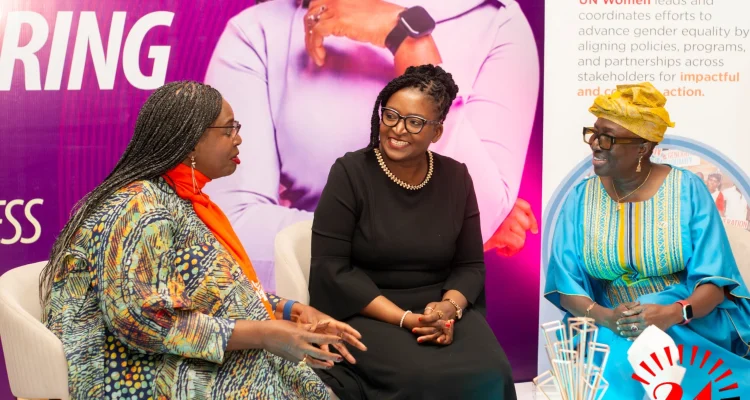
A key part of the transformation is the Bold & Bankable initiative, implemented in partnership with UN Women and SMEDCO.
The programme aims to support women-owned businesses not only with financing but also with mentorship, training, leadership development and market access.
NBS Bank says empowering women entrepreneurs will have a wider impact on households, communities and the national economy through job creation and increased incomes.
The bank has also changed how it defines success, moving away from focusing on loan volumes and balance sheet size.
Instead, it will measure success based on how many businesses grow, how many jobs are created and how much impact customers have on Malawi’s economy.
“We do not measure success by the number of loans we approve,” Simwaka said. “We measure success by the number of businesses that grow because we believed in them.”
NBS Bank has unveiled one of the most significant strategic changes in its history, abandoning SME Banking and introducing a new Business Banking model that it says will transform how Malawian businesses are financed and supported.
The bank says the shift is not just a rebrand, but a complete change in philosophy, moving away from categorising businesses by size and instead focusing on their potential to grow into major industry players.
The announcement was made at the Bingu International Convention Centre (BICC) in Lilongwe, where the bank positioned itself as a long-term partner for entrepreneurs from start-up stage to large corporate growth.
Under the new approach, NBS Bank says the traditional SME label has become too limiting because it defines businesses by where they are today, not where they can go in future.
Chief Executive Officer Temwani Simwaka said the bank is now committed to supporting businesses based on ambition rather than size.
“We have not simply introduced a new banking proposition. We have declared a new direction,” Simwaka said. “Businesses should never have to adapt to their bank. Banks should adapt to businesses.”
He said the goal is to ensure entrepreneurs are not constrained by rigid banking structures that fail to reflect their growth potential.
Chief Wholesale Banking Officer Alfred Nhlema said the transformation was driven by a fundamental question inside the institution, what if banking evolved as fast as business?
He said the SME model often reduced businesses to numbers and turnover instead of recognising the people behind them, founders, innovators, farmers, manufacturers and job creators.
“There was nothing wrong with the name SME Banking,” Nhlema said. “But there was something missing. It defined businesses by their size. We believe businesses should be defined by their potential.”
He added that the bank now sees itself as a partner walking with entrepreneurs throughout their entire journey, from start-up to large-scale enterprise.
As part of the new model, NBS Bank has reorganised its Business Banking division into industry-focused teams covering agriculture, mining, construction, manufacturing, transport, trade, health, education and women-led enterprises.
Instead of generic services, businesses will now be supported by relationship managers with specific industry knowledge, allowing for more tailored financial solutions.
The bank says this will help address long-standing frustrations among entrepreneurs who often receive one-size-fits-all banking products that do not match their sector realities.
NBS Bank has also promised faster and more efficient service delivery, including credit decisions within five days, digital account opening and simplified lending processes.
The bank says entrepreneurs will also benefit from cash-flow-based lending and alternative collateral models that focus on business performance rather than physical assets alone.
Officials say the aim is to remove delays that often slow down business growth and cost entrepreneurs valuable opportunities.
The new strategy also introduces an integrated banking model where customers will access multiple services, including deposits, payments, trade finance, insurance and lending, under one relationship.
The bank describes this as a “one relationship, one partner, one primary bank” approach designed to simplify how businesses manage their finances.
A key part of the transformation is the Bold & Bankable initiative, implemented in partnership with UN Women and SMEDCO.
The programme aims to support women-owned businesses not only with financing but also with mentorship, training, leadership development and market access.
NBS Bank says empowering women entrepreneurs will have a wider impact on households, communities and the national economy through job creation and increased incomes.
The bank has also changed how it defines success, moving away from focusing on loan volumes and balance sheet size.
Instead, it will measure success based on how many businesses grow, how many jobs are created and how much impact customers have on Malawi’s economy.
“We do not measure success by the number of loans we approve,” Simwaka said. “We measure success by the number of businesses that grow because we believed in them.”