

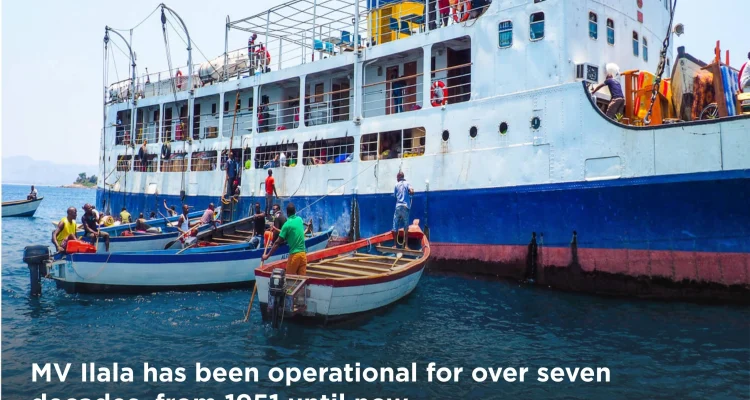
It took just one hour on the water for a fresh scare to unfold aboard Malawi’s 75-year-old MV Ilala, leaving passengers shaken and raising a question many have been asking for years: how much longer can the ageing vessel keep sailing before something worse happens?
The ageing MV Ilala lost part of its cargo on Saturday morning after travelling for about an hour from Nkhotakota on its journey to Likoma Island, an incident that has reignited concerns over the safety of one of Malawi’s oldest transport vessels.
A passenger on board, Gift Banda from Kasungu District, told the local media that the cargo involved some of the ship’s boats which reportedly became detached during the voyage, triggering panic among passengers.
According to Banda, the situation forced the captain to turn back to Nkhotakota as fears spread among those on board.
Nkhotakota District Water Transport Officer Chikumbutso Ziyaya confirmed the incident, saying the vessel later resumed its journey in the afternoon after the situation was addressed.
However, the mishap delayed the trip by more than three hours.
The incident has renewed calls for government to urgently invest in a replacement vessel before a more serious accident occurs on Lake Malawi.
On social media, many Malawians questioned why the country continues to rely on a vessel that has been operating for more than seven decades, with some warning that authorities risk waiting for a disaster before taking action.
The concerns echo long-standing criticism of MV Ilala, which has frequently been described by critics as outdated and no longer fit for modern passenger and cargo transport demands.
Last November, former Transport Minister Feston Kaupa told Parliament that replacing the vessel with a modern ship would cost about 40 million US dollars, approximately K69 billion.
Built in Scotland in 1949 and transported to Malawi in dismantled sections, MV Ilala officially entered service on Lake Malawi in June 1951.
Despite its age, the 52-metre vessel remains a critical transport link for thousands of people, connecting Monkey Bay, Chilumba, Likoma and Chizumulu, communities where alternative transport options are often limited or expensive.