

Airtel Africa is stepping up its push towards cleaner operations, reporting a major reduction in its environmental footprint as it strengthens efforts to balance business growth with sustainability across its 14 African markets.
The telecoms and mobile money giant says it saved 9.1 million litres of diesel during the 2025/2026 financial year after reducing reliance on diesel-powered operations and expanding the use of lower-carbon energy sources. The shift included converting 390 network sites to on-grid electricity, a move aimed at improving efficiency and cutting emissions.
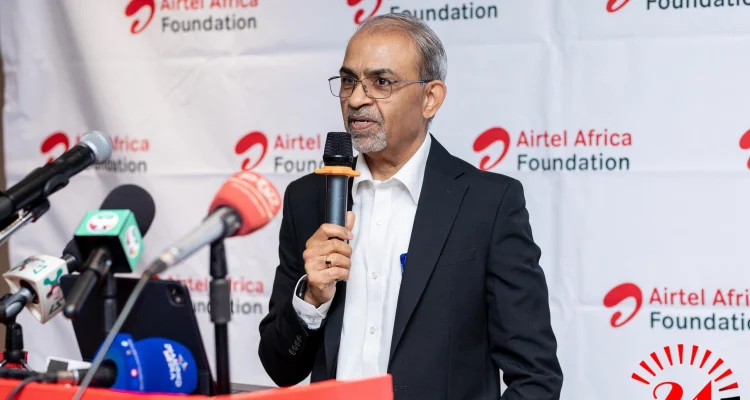
Speaking during a media roundtable in Lusaka, Zambia, Airtel Africa Chief Executive Officer Sunil Taldar said responsible growth remains central to the company’s strategy as it expands connectivity while advancing environmental and social goals across the continent.
He said the company’s approach is anchored on building a more sustainable, inclusive and connected Africa, where digital services grow alongside stronger environmental stewardship.
As part of its environmental efforts, Airtel Africa also reported a 94 percent waste recycling rate, reinforcing its commitment to circular economy practices and reducing operational waste impact.
The company’s network now covers 81.9 percent of the population across its markets, widening access to communication services, digital tools, education and economic opportunities for individuals and communities.
In the financial services space, Airtel Money continues to expand its footprint, now serving 54.1 million customers through a distribution network of 2.4 million agents. Women account for 44.1 percent of users, highlighting growing inclusion in digital financial services.
Beyond connectivity and mobile money, the Airtel Africa Foundation invested US$6.2 million in programmes targeting financial inclusion, education, environmental sustainability and digital inclusion.
Through its partnership with UNICEF, the company connected 3,296 schools to free internet, reaching over 2 million learners and 38,868 teachers, while 64 zero-rated learning platforms enabled more than 11 million learners to access educational content at no cost.
In addition, over 30,000 young people received digital skills training, while more than 250 STEM scholarships were awarded through the Airtel Africa Tech Fellowship programme, aimed at building a pipeline of future African technology leaders.
The telecoms and mobile money giant says it saved 9.1 million litres of diesel during the 2025/2026 financial year after reducing reliance on diesel-powered operations and expanding the use of lower-carbon energy sources. The shift included converting 390 network sites to on-grid electricity, a move aimed at improving efficiency and cutting emissions.
Speaking during a media roundtable in Lusaka, Zambia, Airtel Africa Chief Executive Officer Sunil Taldar said responsible growth remains central to the company’s strategy as it expands connectivity while advancing environmental and social goals across the continent.
He said the company’s approach is anchored on building a more sustainable, inclusive and connected Africa, where digital services grow alongside stronger environmental stewardship.
As part of its environmental efforts, Airtel Africa also reported a 94 percent waste recycling rate, reinforcing its commitment to circular economy practices and reducing operational waste impact.
The company’s network now covers 81.9 percent of the population across its markets, widening access to communication services, digital tools, education and economic opportunities for individuals and communities.
In the financial services space, Airtel Money continues to expand its footprint, now serving 54.1 million customers through a distribution network of 2.4 million agents. Women account for 44.1 percent of users, highlighting growing inclusion in digital financial services.
Beyond connectivity and mobile money, the Airtel Africa Foundation invested US$6.2 million in programmes targeting financial inclusion, education, environmental sustainability and digital inclusion.
Through its partnership with UNICEF, the company connected 3,296 schools to free internet, reaching over 2 million learners and 38,868 teachers, while 64 zero-rated learning platforms enabled more than 11 million learners to access educational content at no cost.
In addition, over 30,000 young people received digital skills training, while more than 250 STEM scholarships were awarded through the Airtel Africa Tech Fellowship programme, aimed at building a pipeline of future African technology leaders.