


Malawi is witnessing rising concern over the growing misuse of Artificial Intelligence (AI) to spread fake news, with experts warning it is undermining trust in information shared online.
The growing misuse of AI in Malawi is raising concern among media practitioners, law enforcement agencies, and the general public as fabricated stories increasingly circulate on social media, threatening public trust and the credibility of information.
Recent incidents show AI-powered tools being used to create convincing but false news reports, complete with fake quotations, fictional sources, and manipulated images that closely resemble real journalism.
Media experts warn that the trend poses a threat to journalism, democratic governance, and social cohesion as it becomes difficult for the public to distinguish between genuine reporting and fabricated content.
One recent example involved a widely shared story claiming that police in Balaka had arrested a coffin seller for impersonating a health worker.
The story spread rapidly across Facebook and WhatsApp, sparking widespread public debate.
However, the report was false. Balaka Police Public Relations Officer, Gladson M’bumpha, dismissed the claim and warned against the spread of fabricated information online.

“There is no such case that has been reported to or handled by Balaka Police. We urge the public to verify information before sharing it. Fake news has the potential to cause unnecessary panic and undermine public confidence in institutions,” said M’bumpha.
He added that law enforcement agencies would not tolerate individuals who deliberately create and disseminate false information capable of disturbing public order.
While AI has brought significant benefits across various sectors, media experts caution that it also presents risks when used irresponsibly.
The Executive Director and Editor of the Centre for Investigative Journalism Malawi (CIJM), Collins Mtika, said AI is transforming how information is created, distributed, and consumed.
He noted that while the technology assists journalists with research, transcription, data analysis, and fact-checking, it is also being used to generate sophisticated misinformation that many people struggle to distinguish from legitimate reporting.
“The arrival of AI in Malawi’s media landscape is a reality we can no longer ignore. While it offers opportunities for journalism, we are also witnessing its darker side as fabricated content becomes increasingly sophisticated and widespread,” he said.
Mtika said the issue was highlighted during the 2025 World Press Freedom Day commemorations, which focused on the impact of AI on press freedom and the media.
He warned that AI-generated misinformation including fabricated quotations, cloned voices, realistic images, and manipulated videos could erode public trust in credible journalism.
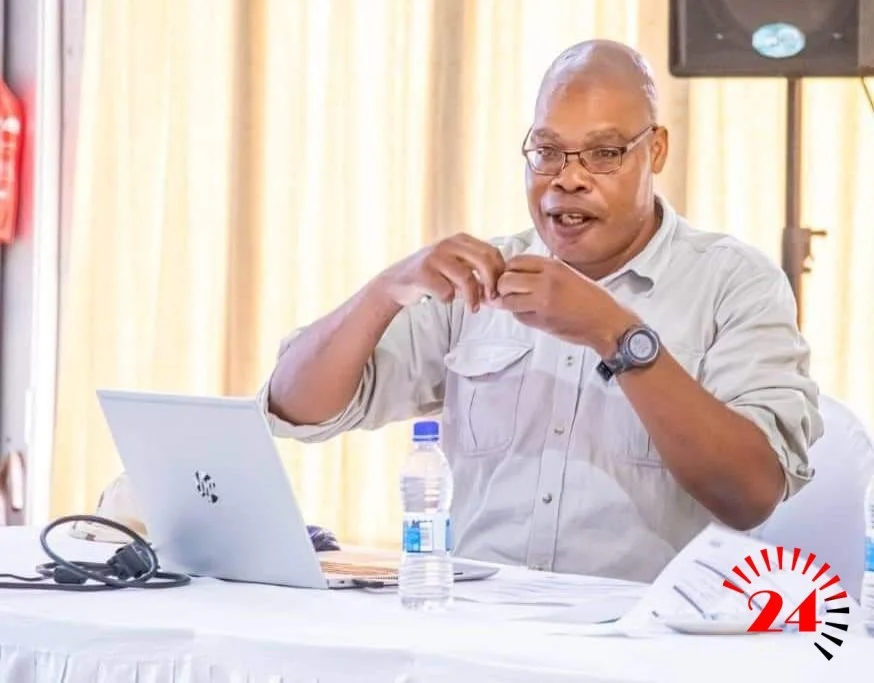
“When people can no longer distinguish between authentic reporting and synthetic content, they begin to distrust everything, including credible journalism. That is an existential threat to our profession,” he said.
According to Mtika, AI has significantly lowered the barriers to producing convincing misinformation, allowing individuals to create false content within seconds using freely available tools.
He urged journalists to strengthen verification processes through source authentication, reverse image searches, metadata analysis, and direct confirmation from official sources.
“A phone call to an official spokesperson can save a newsroom from spreading false information. Verification must become a non-negotiable part of journalism in the AI era,” he said.
Mtika also noted that Malawi’s existing legal framework is not adequately equipped to address AI-generated misinformation and called for carefully crafted legislation that targets deliberate disinformation while protecting media freedom and freedom of expression.
In addition, he urged social media companies to improve content moderation in local languages and support media literacy initiatives to help citizens identify misinformation.
Media stakeholders are now calling for increased digital literacy and urging Malawians to verify information before sharing it, particularly content designed to provoke fear, anger, or outrage.
“The first rule is simple: if you do not know where the information came from, do not share it,” Mtika said.